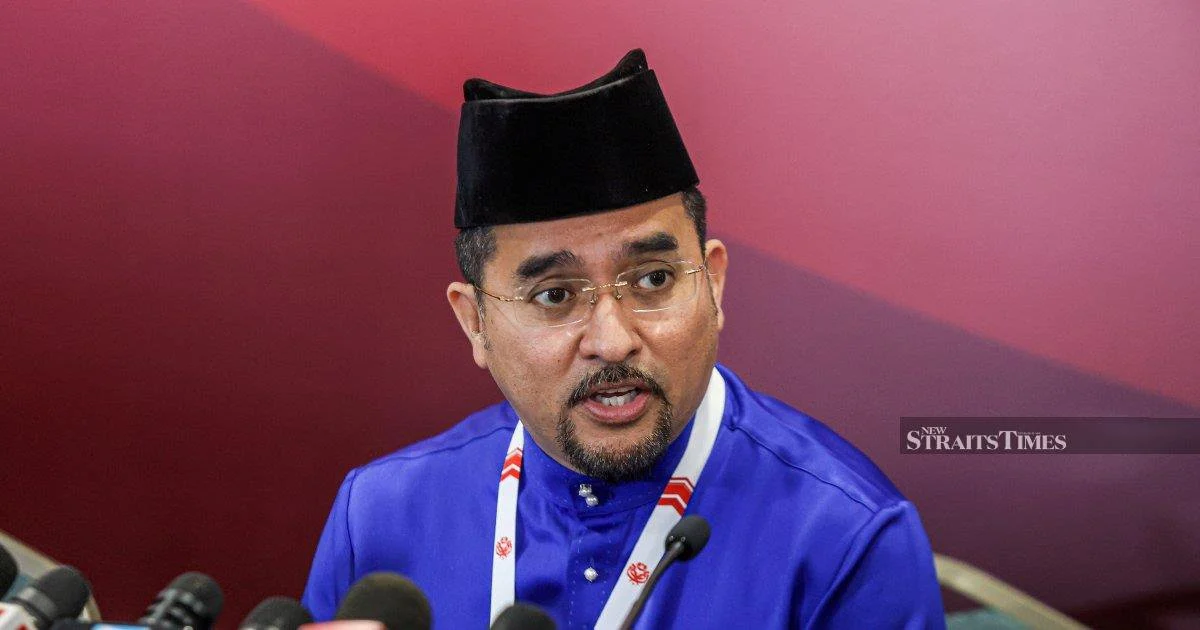
The Barisan Nasional coalition's delayed announcement of its Johor election candidates stems from a deliberately rigorous evaluation framework rather than administrative oversight, according to Umno secretary-general Datuk Dr Asyraf Wajdi Dusuki. The extended timeline reflects the coalition's commitment to implementing stringent screening mechanisms that assess potential contenders across multiple dimensions before final selection.
This deliberate approach to candidate selection underscores a broader pattern within Malaysia's dominant political coalition, which has faced public criticism in past election cycles regarding the calibre and transparency of its nominee choices. By implementing a more comprehensive vetting system, Umno and its BN partners appear to be responding to longstanding concerns about the selection process, particularly following disappointing electoral performances in recent years that observers have partly attributed to weak candidate quality.
The vetting framework likely encompasses assessments of candidates' academic credentials, professional backgrounds, party loyalty records, financial standing, and community engagement history. Such evaluations take considerable time when applied across multiple constituencies, especially in a state as politically significant as Johor, which serves as a traditional BN stronghold yet has shown increasing voter volatility. The coalition faces pressure to field candidates capable of defending seats against increasingly sophisticated opposition campaigns.
Johor holds particular strategic weight within Malaysian politics. As the country's second-largest state by population and a consistent contributor to BN's parliamentary majority, the state election results carry implications extending beyond state-level governance. Strong BN performance maintains the coalition's claim to popular support ahead of future federal elections, while weakened results would signal erosion in its traditional base—a concern that justifies investment in selecting competitive candidates.
The delay also reflects internal coordination challenges across BN's component parties, which must negotiate seat allocations and nominee approvals through consensus mechanisms. Umno typically contests the largest number of seats, but partners including MCA and MIC also require meaningful representation, and candidate vetting must satisfy multiple party leaderships simultaneously. This multi-party consensus requirement naturally extends timelines compared to single-party candidate selection processes.
Datuk Dr Asyraf Wajdi Dusuki's public explanation serves a dual purpose: it frames the extended timeline as demonstrating disciplinary rigour rather than organisational dysfunction, while simultaneously signalling to party members and voters that BN takes candidate quality seriously. This messaging becomes important in managing internal party morale, particularly among grassroots members who may harbour their own ambitions or preferences regarding nominee selections.
From a voter perspective in Johor, the outcome of this vetting process will prove more consequential than its duration. Constituencies will ultimately evaluate whether selected candidates represent improvements in legislative competence, constituent responsiveness, or policy vision compared to previous representatives. The BN's electoral fortunes will depend not on the thoroughness of internal processes but on whether voters perceive tangible benefits from accepting candidates produced through those mechanisms.
The timing considerations surrounding candidate announcements also intersect with campaign strategy and media management. Early announcements provide candidates extended periods for grassroots networking and public visibility, while delayed announcements compress campaign schedules and can disorient voter attention. Umno's explanation suggests the coalition prioritised candidate quality over campaign momentum, a calculation that reflects either confidence in its organisational capacity to mobilise support quickly or concern that premature announcements of weaker nominees would undermine campaign messaging.
Regionally, Malaysia's electoral dynamics have shifted markedly over the past decade, with voter behaviour becoming less predictable and split-ticket voting more common. Johor exemplifies these trends, having experienced fluctuating support levels for BN despite the state's historical alignment with the coalition. Selecting candidates capable of connecting with this transformed electorate requires assessment frameworks more sophisticated than those applied during periods of assured electoral dominance, potentially explaining why vetting processes now consume greater time.
The coalition's emphasis on vetting rigour also implicitly addresses persistent allegations of money politics and patronage-based candidate selection that have periodically embarrassed BN in public discourse. By foregrounding systematic evaluation procedures, party leadership attempts to establish narratives around meritocratic selection, though sceptics within Malaysian political commentary frequently question whether formal vetting processes genuinely constrain informal patronage networks that historically influence nominee selections.
Looking forward, the Johor state election campaign will test whether BN's extended candidate selection timeline translated into meaningfully stronger nominees compared to previous cycles. Voter responses will ultimately determine whether the coalition's explanation—that thoroughness justified delay—holds credibility or whether the electorate perceives the process as merely bureaucratic ritual obscuring unchanged patronage dynamics.