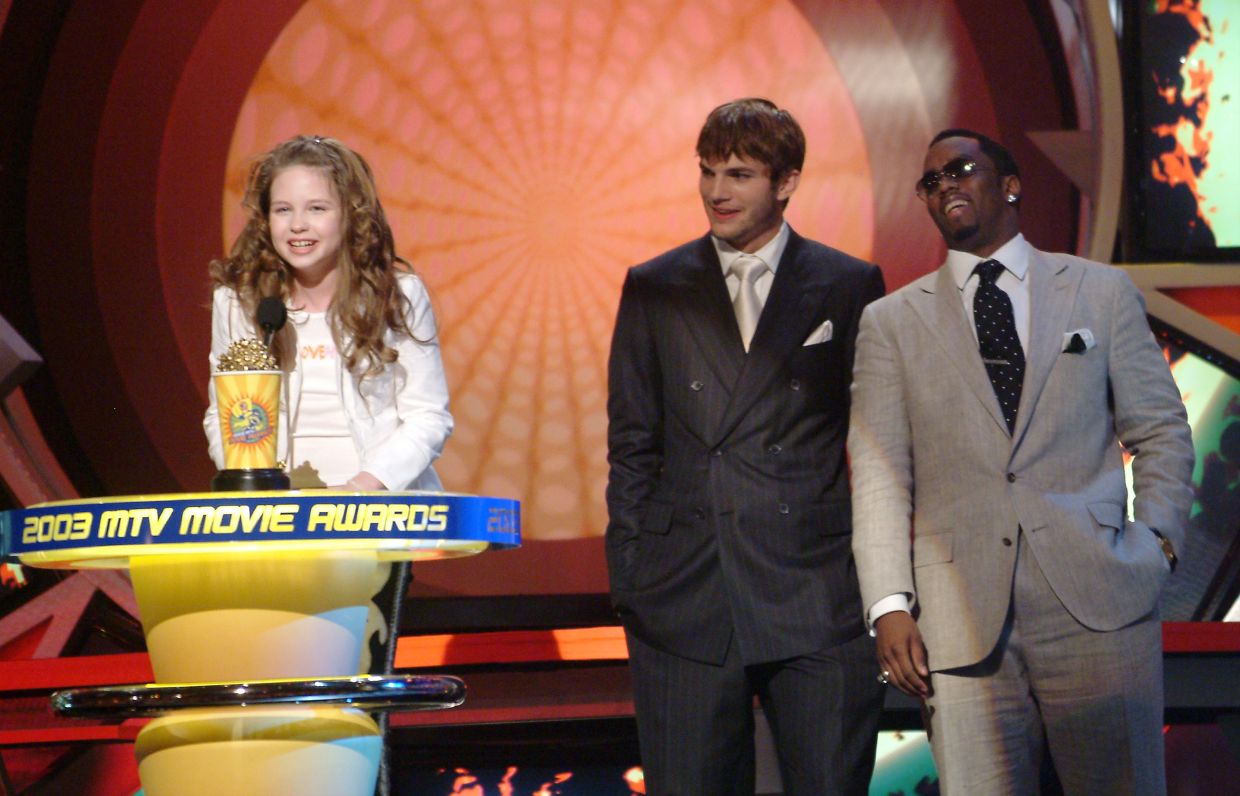
A clip dating back more than two decades, showing Sean "Diddy" Combs inviting a preteen actress to attend an after-party, has circulated widely on social media in the wake of both the girl's tragic death and the music producer's criminal conviction. The video, recorded at the 2003 MTV Awards ceremony, captures an uncomfortable moment that now carries deeply troubling implications given subsequent revelations about Combs' conduct and the fate of the young performer involved.
Daveigh Chase, who achieved recognition as a child actor for her role as the antagonist Samara Morgan in the horror film "The Ring," passed away on June 16 in a Los Angeles hospital at the age of 35. Her father, John Schwallier, disclosed that she died from complications stemming from bacterial meningitis and septicaemia, exacerbated by severe malnutrition. Her final years were marked by considerable personal turmoil, as Chase had struggled publicly with substance addiction and homelessness, living rough in the vicinity of the medical facility where she ultimately succumbed to her illnesses.
In the resurfaced footage from the awards ceremony, Combs approaches Chase immediately following her receipt of the Best Villain accolade, which she had won for her memorable performance in the supernatural thriller. Actor Ashton Kutcher, who had presented the trophy alongside Combs, remains present as the music executive—holding an alcoholic beverage—casually inquires whether the child intends to attend the celebrity after-party. Chase's affirmative nod triggers an enthusiastic response from Combs, while Kutcher's reaction suggests a degree of discomfort with the exchange captured on camera.
The timing of this clip's resurfacing carries significant weight, arriving at a moment when Combs faces unprecedented legal jeopardy. In July 2025, he was found guilty of two counts of transportation to engage in prostitution following a comprehensive federal sex trafficking trial conducted in New York. The conviction resulted in a substantial prison sentence of 50 months, with the 55-year-old currently incarcerated at FCI Fort Dix in New Jersey.
The charges against Combs centred on his notorious "freak-off" gatherings, clandestine events characterised as multi-day, drug-saturated affairs that frequently incorporated sex workers and allegedly involved coercion and exploitation. These revelations transformed public understanding of Combs' entertainment empire and social sphere, converting what had previously been industry folklore about extravagant celebrations into documented criminal conduct. Federal investigators uncovered systematic patterns of behaviour spanning decades, supported by witness testimony and physical evidence that proved instrumental in securing the conviction.
Combs' legal troubles extend considerably beyond the criminal realm. The disgraced mogul currently faces more than 100 civil lawsuits, many alleging sexual misconduct, assault, and trafficking. These proceedings represent attempts by alleged victims to obtain financial restitution and public acknowledgment of harm sustained. The sheer volume of cases signals the breadth of allegations and the number of individuals who have come forward since initial accusations prompted broader disclosure.
The September 2024 arrest at the Park Hyatt Hotel in Midtown Manhattan marked a turning point in public perception and regulatory action. What had long circulated as whispered accounts within entertainment circles became the subject of formal criminal investigation, with federal agencies dedicating substantial resources to assembling the prosecutorial case that would ultimately prove successful.
For Malaysian and Southeast Asian observers, the unfolding saga illuminates systemic vulnerabilities within the global entertainment apparatus, particularly regarding the protection of young performers and emerging artists. The industry's historical tendency to dismiss or overlook predatory behaviour, combined with the vulnerability of child actors navigating environments dominated by powerful figures, underscores the necessity for robust safeguarding mechanisms and transparent accountability structures.
Chase's trajectory from promising young talent to someone battling addiction and homelessness, culminating in premature death, raises difficult questions about duty of care within the entertainment sector. While causality cannot be definitively established, her experiences reflect broader patterns affecting vulnerable performers, particularly children who lack adequate family or institutional protection during formative career moments.
The circulation of this particular footage now functions differently than it did upon original broadcast. What may have seemed merely awkward or unprofessional in 2003 appears, through the lens of contemporary understanding and documented criminal conduct, as a potential indicator of predatory interest and inappropriate boundary-crossing with a minor. This recontextualisation reflects how society's recognition of exploitation patterns has evolved, even as institutional responses frequently lag behind public awareness.
For stakeholders across the entertainment industry—from studios and production companies to talent representatives and governing bodies—the Combs case crystallises the necessity for concrete policy reforms. These should encompass mandatory background checks, transparent reporting mechanisms for misconduct allegations, and structural protections ensuring young performers have access to independent advocates and secure channels for reporting concerns.
The resurfaced clip serves as uncomfortable documentation of a moment when a powerful industry figure interacted with a vulnerable child in circumstances that went unquestioned at the time but now demand serious reflection. As Combs serves his prison sentence and faces ongoing civil litigation, the video has become a historical artefact of an era when such interactions could occur publicly without generating institutional concern or consequence.