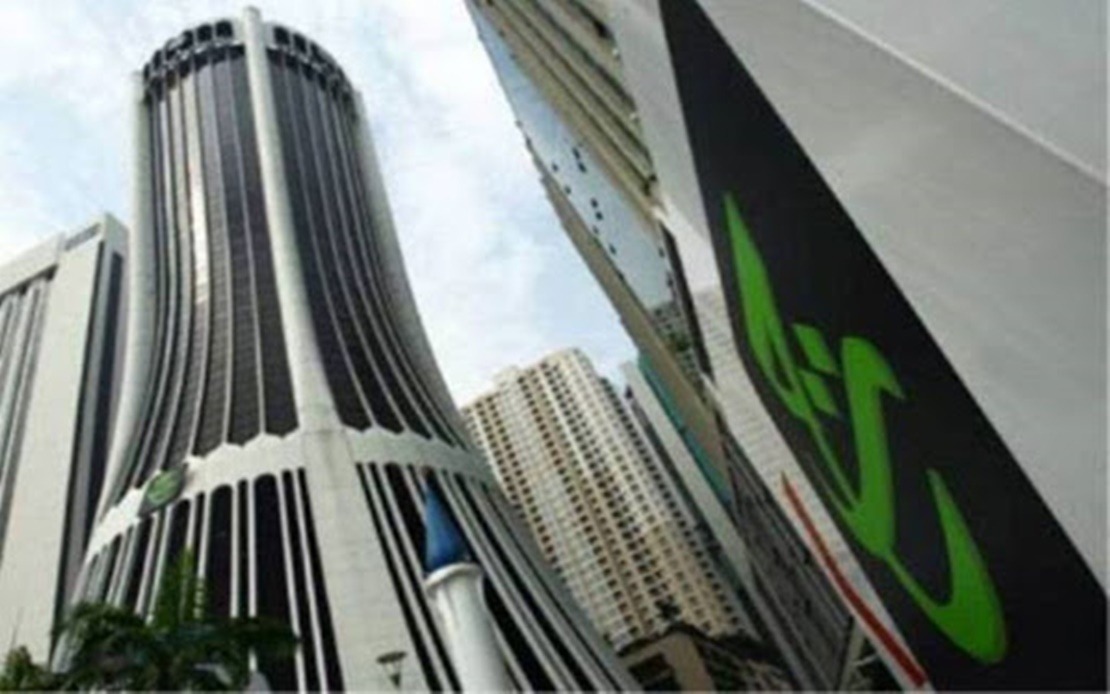
The Royal Commission of Inquiry's investigation into Tabung Haji's operations has exposed a troubling gap in the institution's financial governance framework, with findings that only RM556 million of RM4.6 billion in property asset valuations for 2017 were backed by independent professional appraisers. The remaining RM4.044 billion rested entirely on estimates produced by management itself—a practice that economists warn creates significant vulnerabilities in how the pilgrimage fund determines its financial health and distributes returns to depositors.
This distinction between management estimates and professional valuations carries profound implications for Malaysia's largest Islamic financial institution, which holds assets for millions of contributors planning their hajj pilgrimages. When asset values are determined primarily by those with a vested interest in presenting the institution favourably, the foundation for prudent financial decision-making becomes compromised. Prof Emeritus Dr Barjoyai Bardai of Malaysia University of Science and Technology emphasised that while this does not automatically indicate intentional wrongdoing, the absence of independent verification introduces material uncertainty into calculations that directly affect depositors' interests and the institution's compliance obligations.
The mechanism through which this becomes problematic centres on the Realisable Asset Value, or RAV, which Tabung Haji uses to determine its capacity to distribute hibah—dividend payments to contributors. If properties and other assets are recorded at values higher than what the market would actually pay for them, the RAV inflates, making the institution appear financially stronger than reality warrants. This optical distortion can then justify dividend distributions that exceed what conservative, evidence-based accounting would support. The consequences ripple through the entire contributor base, as payments that appear sustainable based on inflated asset figures may ultimately prove unsustainable when those assets must be realised.
The specific case of RM2.294 billion attributed to TH Plantations Berhad illustrates the scale of this problem. This substantial sum was incorporated into the overall RAV calculation despite lacking the kind of independent validation that market-listed securities or professionally appraised property would provide. Meanwhile, the RCI's report noted that Tabung Haji management deliberately departed from the asset and liability valuations appearing in the institution's own audited financial statements when calculating distributions, opting instead for RAV figures that produced higher numbers. This divergence between audited financial reporting and internally-determined distribution calculations suggests a two-tier valuation system, raising questions about institutional transparency.
Prof Dr Ahmed Razman Abdul Latiff of Putra Business School argues that the board and audit committee bore responsibility for implementing robust oversight of management assumptions before allowing them to drive major financial decisions. Given that RAV calculations determine compliance with Section 22 of the Tabung Haji Act 1995—a statutory obligation affecting depositor protections—the governance threshold should have been considerably higher. The audit function, in particular, appears to have permitted these practices to continue across multiple years without adequate escalation or challenge, according to the RCI's assessment. Ahmed Razman questioned why auditors had not flagged concerns about hibah distribution levels and the institution's underlying financial position with greater urgency during their reviews.
Tabung Haji's institutional defence that Section 22 of Act 535 lacks precise definitions of what constitutes assets, thereby granting management discretion in valuation methodology, represents a troubling interpretation of regulatory ambiguity. Rather than treating unclear statutory language as licence to employ the most aggressive valuation approach available, prudent financial governance typically demands the opposite—when rules are ambiguous, institutions should default to the most conservative, verifiable methods. The existence of regulatory grey area does not eliminate the fiduciary obligation owed to millions of contributors who depend on accurate reporting of their savings.
Barjoyai's recommendations to strengthen the governance framework align with international best practice and address the core vulnerabilities. Requiring independent professional valuations for high-value properties using consistent methodologies and market-based evidence would eliminate the inherent bias in management estimates. Creating a special oversight committee comprising investment specialists and qualified accountants to review RAV calculations would introduce external expertise and accountability. Most fundamentally, establishing that all figures determining hibah capacity must be conservative, independently verifiable, and free from the influence of parties with direct interests in the outcome would restore integrity to the distribution process.
The broader context for these concerns extends across Malaysia's Islamic financial sector, where asset valuation practices in other institutions warrant similar scrutiny. Tabung Haji's situation demonstrates how institutional structures can evolve to prioritise the appearance of financial health over substantive accuracy, particularly when governance oversight becomes complacent. The pressure to maintain attractive dividend distributions to remain competitive with alternative savings vehicles may have subtly incentivised the valuation practices the RCI criticised. This dynamic, if present at Tabung Haji, likely exists elsewhere in the financial ecosystem as well.
The PricewaterhouseCoopers audit report referenced in the RCI investigation specifically highlighted that RAV calculations deviated from market prices for listed shares and lacked independent professional assessments of property values. This audit finding, apparently noted in previous years, raises uncomfortable questions about why governance reform did not occur through normal internal channels. Either audit recommendations were ignored, or the recommendations themselves proved insufficiently forceful. Understanding what broke down in this escalation process—whether at the board level, senior management, or within the audit function itself—becomes essential for preventing similar problems from recurring.
For Malaysian depositors and policymakers, the RCI's findings underscore the importance of robust, independent valuation standards in any institution managing public savings, particularly those with religious and cultural significance. The 252-page report, released publicly in July and subsequently debated in Parliament, provided the evidence base for these concerns but does not itself mandate specific reforms. Implementation of stronger governance frameworks now depends on whether Tabung Haji's leadership embraces the structural changes economists and governance experts have outlined, or whether the institution defaults to minimal compliance with ambiguous statutory requirements. The stakes involve the financial security of millions of Malaysians and the credibility of one of the nation's most important Islamic institutions.

