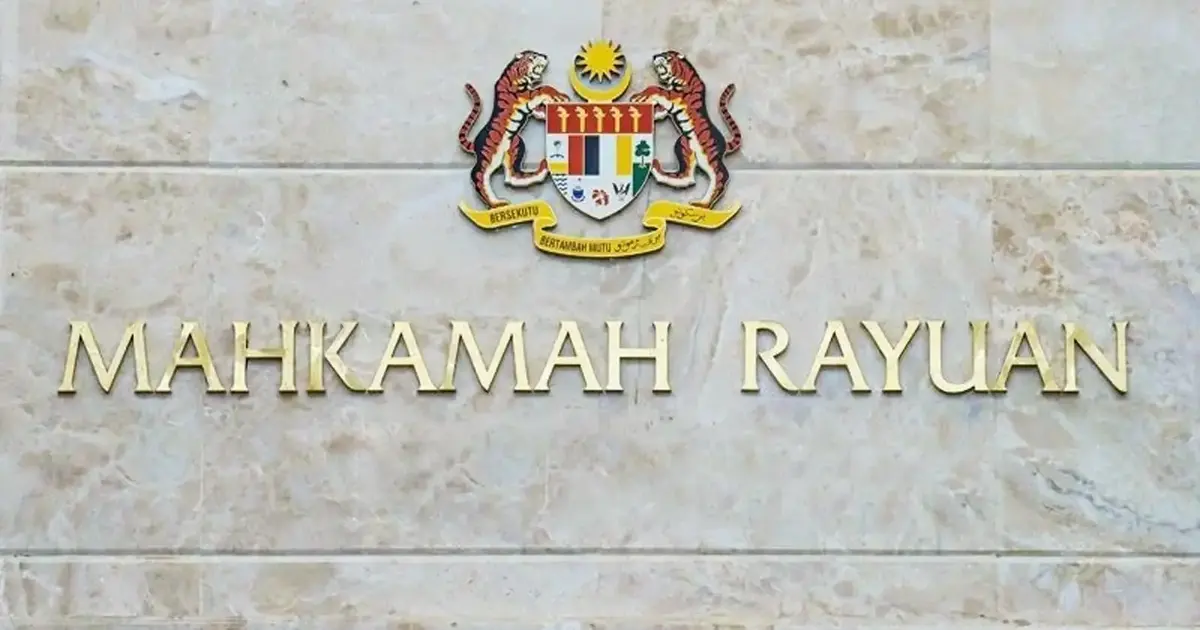
A significant ruling from Malaysia's Court of Appeal has clarified the legal standing of registered societies, determining that these organisations cannot initiate defamation proceedings against those who make disparaging statements about them. The court dismissed an appeal by Pertubuhan Ikram Malaysia, a registered society, reinforcing a principle that such entities lack the fundamental legal personality required to sustain defamation actions.
The judgment centres on a foundational concept in Malaysian law: for a party to bring a defamation claim, it must possess legal personality—the capacity to hold rights and obligations in the eyes of the law. The court reasoned that registered societies, despite their formal registration with authorities, do not acquire this status. This distinction carries profound implications for the thousands of registered societies operating across Malaysia, from educational and welfare organisations to professional and social groups.
Defamation law traditionally protects individuals and certain entities—corporations, partnerships, and other legally recognised bodies—whose reputation can suffer measurable harm when false statements damage their standing in the community. The court's decision suggests that registered societies, while regulated and administratively recognised, occupy a different legal category. They function more as associations of individuals united by common purpose rather than as independent legal entities capable of holding reputation in their own right.
Pertubuhan Ikram Malaysia's failed appeal underscores how this ruling will affect advocacy groups, community organisations, and professional associations across the country. Many such entities regularly face public criticism, allegations, and statements questioning their integrity or motives. Previously, some may have believed they could pursue legal remedies against particularly damaging claims. The Court of Appeal's decision forecloses that avenue, leaving registered societies without access to defamation law as a protective mechanism.
The implications extend beyond individual cases. This judgment creates a clear hierarchy within Malaysia's organisational landscape. Limited companies, government-linked companies, and corporations possess full legal personality and can defend their reputations through defamation actions. Registered societies, despite their scale and social significance, cannot. This asymmetry may disadvantage well-established, long-standing societies that contribute substantially to Malaysian society but lack corporate structure.
For members and representatives of registered societies, the ruling presents practical challenges. When false statements harm the organisation's reputation, individual members may theoretically pursue claims, but the society itself cannot act collectively. This fragmentation of remedy complicates legal recourse and places evidentiary burdens on individuals rather than the entity most directly affected. The distinction highlights how Malaysia's company law and societies law frameworks create different protections for different organisational forms.
Registered societies operate under the Societies Act 1966, which provides for their registration and governance but does not confer the legal personality that other statutes grant to corporations. The Court of Appeal's decision interprets this statutory framework strictly, treating the absence of explicit legal personality conferment as decisive. Societies seeking fuller legal protection face a structural problem: upgrading to incorporated association status or corporate form would require organisational restructuring and compliance with different regulatory regimes.
The ruling also bears on the broader landscape of defamation law in Malaysia. Courts have gradually tightened standards for what constitutes actionable defamation, introducing proportionality tests and public interest defences. This decision adds another constraint: certain organisational forms simply cannot invoke the law at all. The effect is to narrow the class of potential plaintiffs, making defamation law less available as a tool for protecting collective reputations.
For registered societies considering their legal options, the judgment necessitates alternative strategies. Rather than defamation actions, societies might pursue other remedies such as injunctions against false statements, complaints to regulatory authorities, or public corrections through media engagement. These approaches differ significantly in cost, speed, and effectiveness, and they lack the deterrent and compensatory power of successful defamation litigation. Societies with significant reputational stakes may increasingly feel disadvantaged relative to corporate competitors or rival entities with full legal personality.
The decision also signals to parties who might make statements about registered societies that legal exposure through defamation claims is minimal. Journalists, commentators, and critics can address registered societies with less fear of costly litigation, potentially affecting media coverage and public discourse around these organisations. While this protects freedom of expression—a legitimate social goal—it simultaneously leaves registered societies with fewer tools to combat misinformation or malicious falsehoods.
Industry observers suggest the ruling may prompt legislative attention. Malaysia's law reform bodies could consider whether the Societies Act 1966 should be amended to grant registered societies limited legal personality for specific purposes, including reputational protection. Such reforms would require balancing the interests of societies against broader free speech considerations and the administrative capacity of courts to adjudicate defamation claims involving non-corporate entities.
For Malaysian registered societies and their stakeholders, this Court of Appeal decision represents a permanent constraint on available legal remedies. The organisations must adapt their risk management and public relations strategies accordingly, accepting that reputational harm cannot be remedied through defamation law. The ruling clarifies the legal landscape but creates a gap in protection for entities that, while administratively recognised, remain legally incomplete in the eyes of Malaysian courts.