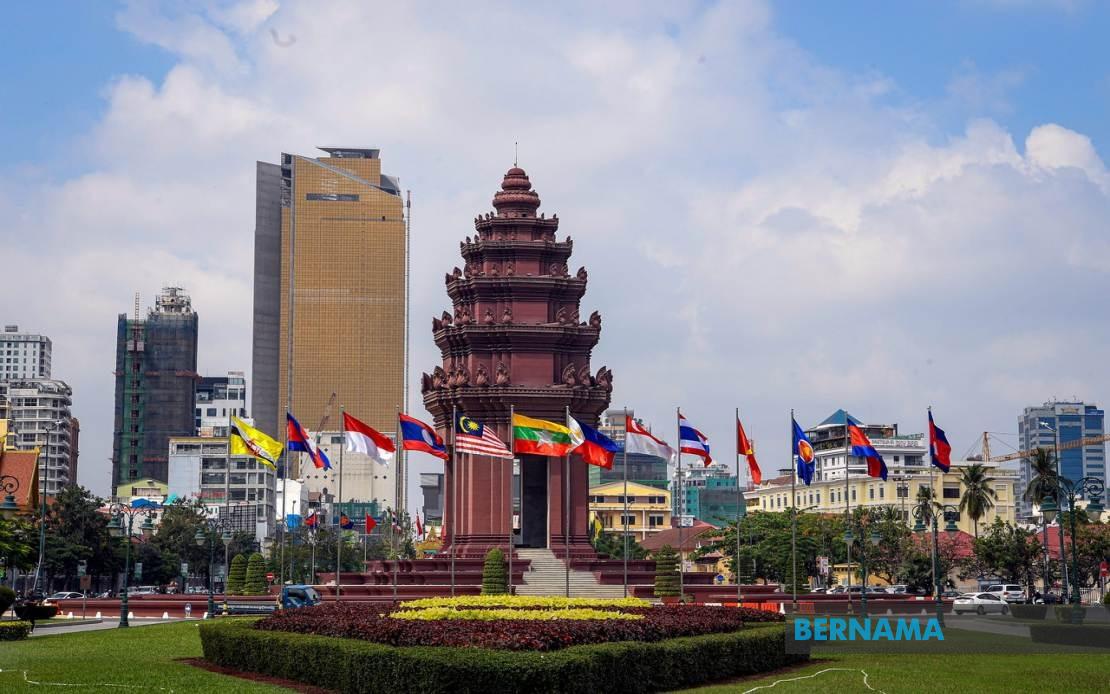
Across Southeast Asia this week, governments are pursuing significant development initiatives aimed at modernising infrastructure and strengthening rural communities. India and Cambodia have formalised collaboration through memoranda of understanding targeting the Kratie Province, with implementation occurring under the established Mekong-Ganga Cooperation framework. These initiatives underscore Delhi's strategic engagement with mainland Southeast Asian neighbours, positioning India as an infrastructure development partner beyond its traditional South Asian sphere. For Malaysia, such arrangements highlight the growing competition among major powers to shape regional development priorities, with implications for how regional nations balance relationships and investment choices.
Cambodia's push extends beyond rural development into public sector modernisation. The country's Civil Service Ministry has embarked on an ambitious reform agenda centred on professionalising human capital and integrating digital systems across government operations. This transformation reflects broader Southeast Asian trends toward administrative efficiency, with parallels to Malaysia's own digital government initiatives. The modernisation drive addresses longstanding challenges in service delivery and institutional capacity that affect economic competitiveness and citizen satisfaction across the region.
Indonesia's transportation sector is experiencing expansion as well. Transportation Minister Dudy Purwagandhi has endorsed plans to expand Lt. Col. Wisnu Airfield in Buleleng District, positioning it as northern Bali's primary air transport hub. This strategic development aims to relieve congestion at Ngurah Rai International Airport while enhancing connectivity for the region's tourism and commercial sectors. The expansion reflects Indonesia's recognition that dispersed aviation infrastructure improves national logistics efficiency and tourist accessibility—a model Malaysia itself continues to develop across its regional airport network.
Indonesia's judiciary faced notable complications this week when the National Police formally designated Febrie Adriansyah, a former Junior Attorney General for Special Crimes, as a suspect in a corruption and money laundering investigation. The case underscores persistent governance vulnerabilities in high-level law enforcement and prosecutorial institutions across the region, raising questions about institutional independence and anti-corruption mechanisms that resonate throughout Southeast Asia.
Myanmar's energy sector is advancing through renewable infrastructure projects. The newly inaugurated Anisakan Airport in Mandalay Region promises enhanced domestic connectivity and agricultural distribution capacity, while the 15-megawatt Shwemyoh solar power plant, opened in Naypyidaw, addresses electricity reliability concerns. Myanmar's planned expansion of the solar facility through Phase II (25 MW) and Phase III (30 MW) installations demonstrates commitment to renewable energy despite the nation's broader political instability. These investments signal governmental intent to strengthen economic fundamentals even amid international isolation.
The Philippines confronts both meteorological and political challenges simultaneously. Tropical Storm Inday exited the Philippine Area of Responsibility, yet the southwest monsoon continues delivering substantial rainfall across Luzon and the Visayas, creating flood risks and disruptions. Concurrently, the House of Representatives' prosecution panel has advanced the impeachment case against Vice President Sara Z. Duterte, with counsel confirming that foundational arguments have been established during the trial's inaugural week before the Senate. The dual crises—natural disaster response and constitutional proceedings—demand divided governmental attention during a critical period.
Singapore's digital economy is experiencing evolution as Meta-owned WhatsApp prepares to introduce username functionality, a privacy-enhancing feature permitting user connections without phone number sharing. Notably, WhatsApp has reserved high-profile usernames belonging to Singapore's political and government figures, a precautionary measure reflecting concerns about identity protection and account hijacking in the region. Meanwhile, Singapore's Housing Development Board reports that over 2,500 income ceiling waiver appeals for executive condominium applicants were filed during the past five years, with 845 approvals granted. This pattern reveals ongoing tension between housing affordability policy and income eligibility criteria in one of Asia's most expensive real estate markets.
Thailand faces mounting pressure on criminal enforcement and foreign property regulation fronts. Thai police have issued arrest warrants for a woman accused of directing a transnational heroin-smuggling network that allegedly concealed narcotics in elephant-print bags and recruited an air hostess as a courier to Australia. The case exemplifies Thailand's vulnerability to organised drug trafficking utilising the country's strategic geographic position and transportation networks. Simultaneously, the Department of Special Investigation has expanded investigations into suspected foreign nominee networks linked to property and tourism enterprises after conducting raids across five locations in Surat Thani Province, with investigators discovering one registered address associated with over 100 companies. These findings highlight potential regulatory loopholes in foreign ownership restrictions and corporate registration requirements that neighbouring nations monitor closely.
Vietnam also faces investigation into a tourist speedboat incident, though details of this matter remain limited. The incident adds to broader Southeast Asian concerns regarding maritime safety standards, particularly concerning commercial operations serving the region's expanding tourism sector. Together, these developments—from infrastructure expansion in Cambodia and Indonesia to energy investment in Myanmar, constitutional proceedings in the Philippines, digital privacy measures in Singapore, and security challenges in Thailand—reflect the complex governance landscape characterising contemporary Southeast Asia. Malaysia observers should note how regional neighbours navigate balancing economic development, institutional accountability, natural disaster management, and security enforcement, factors equally affecting Malaysia's own strategic positioning and policy development.

