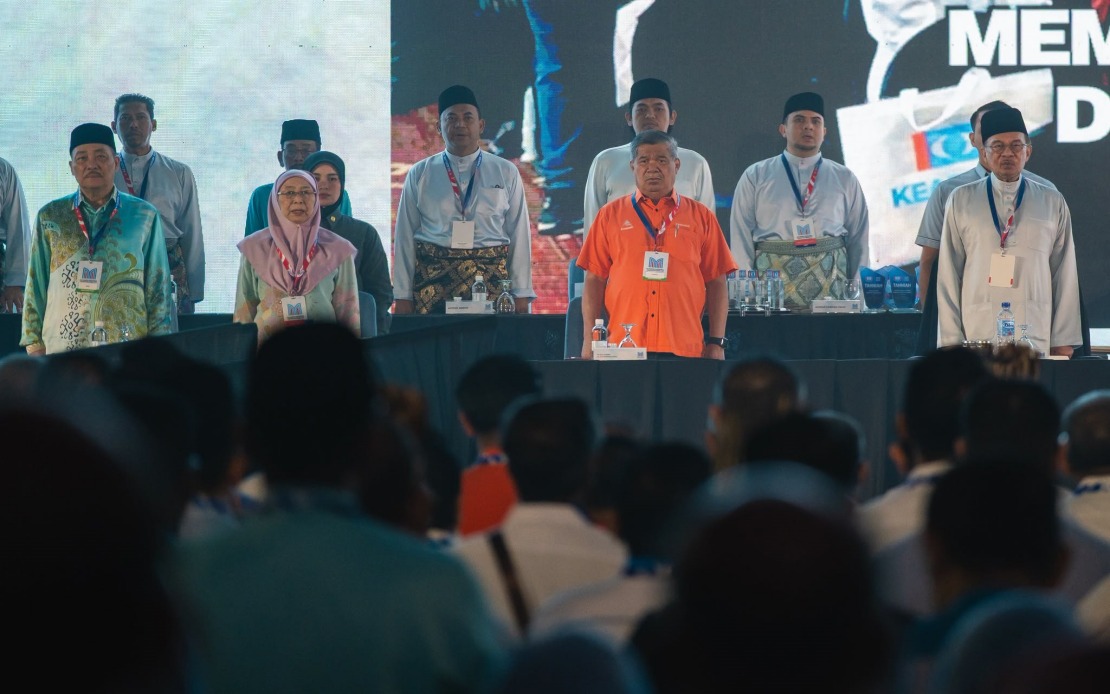
Parti Amanah Negara president Datuk Seri Mohamad Sabu has declared that the political coalition's transformation programme cannot be shelved once electoral victory is secured, warning that sustained institutional overhaul and enhanced governance standards represent the true measure of the government's legitimacy. Speaking in Melaka on August 15, the Agriculture and Food Security Minister articulated a vision where holding office brings not complacency but rather intensified pressure to deliver on long-standing commitments to the electorate, particularly in rooting out financial impropriety at all levels of state apparatus.
Mohamad Sabu emphasised that public trust granted through the ballot box demands tangible evidence of commitment through concrete deeds rather than rhetorical gestures. He stressed that the government's accountability extends beyond campaign promises, requiring continuous demonstration of resolve in tackling graft and misconduct regardless of the political affiliation or seniority of those implicated. This stance reflects an underlying tension within Malaysian politics, where the distinction between opposition accountability rhetoric and governing-party performance often narrows once administrative power changes hands. His remarks, delivered through a social media post, signal an intent to maintain pressure on his own political allies and subordinates, suggesting a governance philosophy that treats institutional reform as an ongoing process rather than a destination.
The Amanah leader also attended Parti Keadilan Rakyat president Datuk Seri Anwar Ibrahim's address to the 2026 PKR National Congress at the Melaka International Trade Centre in Ayer Keroh, where similar themes of sustained reform emerged from the coalition's leadership ranks. This synchronisation of messaging across multiple coalition parties suggests a coordinated attempt to reset expectations about the government's trajectory, potentially in response to concerns that administration momentum has slowed or that certain reform initiatives face implementation obstacles. The prominence given to reform continuity at such high-profile gatherings underscores how central this narrative has become to the current government's self-presentation and legitimacy claims.
Beyond anti-corruption matters, Mohamad Sabu articulated a broader developmental agenda centred on tangible improvements to ordinary Malaysians' quality of life. He acknowledged that macroeconomic growth statistics hold limited value if citizens experience stagnant wages, rising cost pressures, and diminished purchasing power. This framing challenges the traditional approach of highlighting GDP expansion or employment figures as primary indicators of governmental success, instead repositioning the conversation around household-level economic security and the capacity to manage inflation's erosive effects on savings and consumption patterns.
The minister also reaffirmed governmental commitment to advancing the interests of Sabah and Sarawak through rigorous implementation of the Malaysia Agreement 1963, a constitutionally significant arrangement governing the terms under which these states joined the federation. This emphasis responds to longstanding grievances within East Malaysian constituencies regarding resource distribution, autonomy in certain policy domains, and historical perceptions of subordination to peninsular interests. By explicitly linking reform efforts to MA63 compliance, the government signals that systemic overhaul encompasses federal-state relations and redressing historical imbalances rather than merely addressing corruption within existing institutional hierarchies.
Mohamad Sabu welcomed the government's commitment to repealing the Universities and University Colleges Act 1971, characterising this legislative change as expanding intellectual freedom and democratic space on tertiary campuses. The AUKU repeal represents one of the more symbolically significant reforms championed by the current administration, addressing longstanding complaints from student movements and academic freedom advocates that the legislation excessively restricted campus activism and political expression. By highlighting this commitment, the Amanah president signals alignment with youth expectations and the progressive intellectual constituencies that constitute important components of the governing coalition's support base.
The statement arrives at a juncture when the government faces mounting scrutiny regarding the pace and scope of institutional reforms promised during opposition years. Critics within civil society and opposition quarters have periodically questioned whether certain flagship reform initiatives have been diluted, delayed, or shelved entirely following the assumption of governmental responsibility. Mohamad Sabu's reassertions can be read as an attempt to counter such narratives and reinvigorate internal coalition commitment to the transformative agenda that initially galvanised the electoral coalition's campaign.
For Malaysian observers tracking governance quality and accountability mechanisms, the invocation of sustained reform carries implications extending beyond symbolic politics. Institutional transformation affecting prosecutorial independence, investigative agency autonomy, parliamentary oversight powers, and public service merit-based advancement typically encounters resistance from entrenched bureaucratic interests and sometimes from political figures reluctant to strengthen mechanisms that could eventually scrutinise their own conduct. Whether Amanah and its coalition partners genuinely prioritise these reforms above other political considerations remains an ongoing assessment that constituencies will continue monitoring through observable government actions across multiple domains.
The emphasis on continuous reform also reflects recognition that electoral mandates inherently carry expiration dates. Maintaining public confidence requires regular delivery of tangible results rather than relying on historical achievements or comparative assessment against predecessors' governance standards. This dynamic shapes incentive structures for both ruling coalition politicians and their institutional counterparts, potentially explaining why senior figures periodically reiterate commitment to transformation agendas—doing so reinforces internal organisational discipline and attempts to sustain public attention on promised deliverables.

