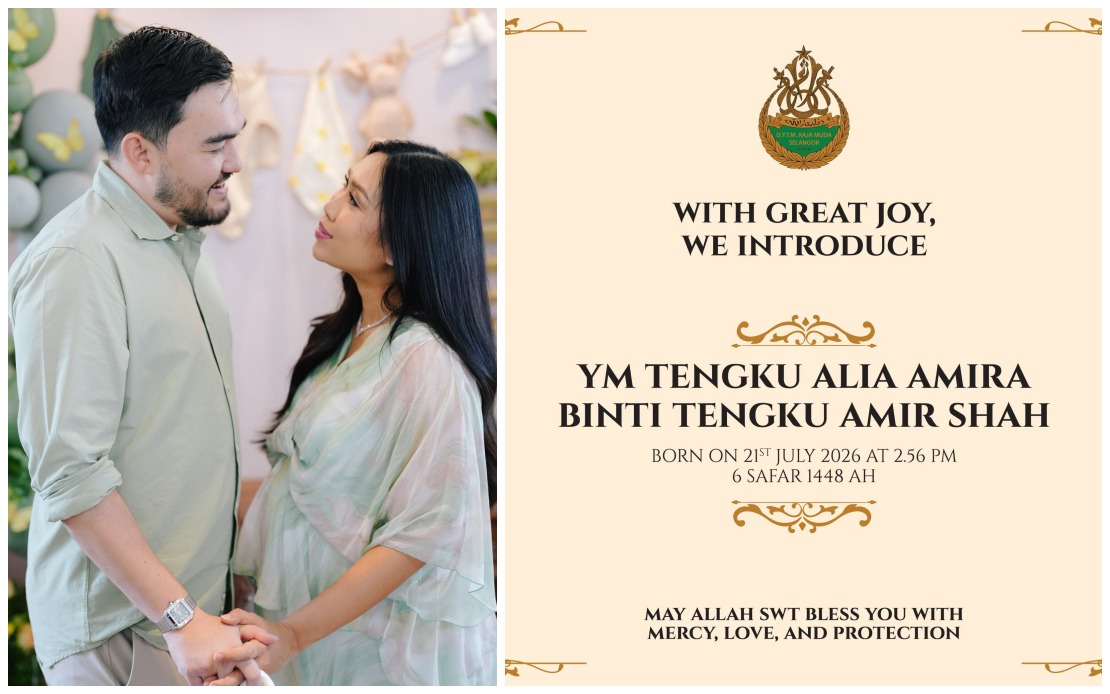
The Raja Muda of Selangor, Tengku Amir Shah Sultan Sharafuddin Idris Shah, and his wife Datin Paduka Seri Afzaa Fadini Abdul Aziz have announced the arrival of their first child, continuing the royal lineage of Selangor. Princess Tengku Alia Amira Tengku Amir Shah was born on July 21, 2026, at 2.56 pm, marking a significant moment for the Selangor palace and the wider royal household. The announcement came through the Raja Muda's official Instagram account on July 25, expressing gratitude for the safe delivery of the newborn princess.
In a personal statement accompanying the birth announcement, Tengku Amir Shah conveyed his profound appreciation to Allah SWT for the blessing of their daughter's arrival. The Raja Muda extended his thanks to those who had offered prayers and support to his family throughout this important chapter. This public acknowledgement underscores the cultural significance placed on royal births within Malaysian palace circles, where such events are viewed not merely as private family matters but as occasions of national interest and religious significance. The statement's emphasis on divine blessings reflects the Islamic values that anchor Malaysia's constitutional monarchy.
The couple's journey to parenthood began formally less than a year prior, when Tengku Amir Shah and Datin Paduka Seri Afzaa Fadini were solemnised in marriage on October 2, 2025. The royal wedding ceremony took place at Masjid Istana Diraja within Istana Alam Shah in Klang, adhering to the ceremonial protocols and customs long established within Selangor's royal traditions. The solemnisation was conducted by Selangor Mufti Datuk Dr Anhar Opir, ensuring that the union followed Islamic jurisprudence alongside royal customs. Two distinguished members of the royal family served as witnesses: Tengku Panglima Raja Selangor Tengku Ahmad Shah Alhaj and Tengku Indera Pahlawan Diraja Tengku Datuk Setia Putra Alhaj, lending their presence and approval to the ceremony.
The wedding, characterised as a private ceremony, was nonetheless graced by the Sultan of Selangor and Tengku Permaisuri Norashikin, demonstrating the significance the reigning sovereign accorded to the Raja Muda's union. This parental blessing and presence reflected the close bonds within the Selangor palace hierarchy and the importance placed on the continuation of the royal succession. The October 2025 marriage represents a calculated moment in Selangor's royal timeline, as it established the foundation for the dynasty's forward momentum through the birth of Princess Tengku Alia Amira less than nine months later.
For Malaysian observers of royal affairs, the birth of the Raja Muda's daughter carries implications for the line of succession and the future of Selangor's monarchy. While Malaysian constitutional monarchies maintain specific protocols regarding succession, the arrival of a royal heir demonstrates the vibrancy and continuity of the institution. The child's naming—Tengku Alia Amira—incorporates both regal and Islamic nomenclature, a practice consistent with how Selangor's royal family has historically honoured both heritage and religious identity through naming conventions.
The timing of this announcement in July 2026 also reflects broader patterns within Southeast Asian royalty, where births are celebrated publicly but managed carefully through official channels and careful communication strategy. The use of social media as the primary announcement vehicle modernises how palace news reaches the Malaysian public, departing from more formal press conference models of previous decades. This approach resonates with how younger members of royal families across the region increasingly engage with contemporary communication platforms while maintaining institutional dignity.
For Datin Paduka Seri Afzaa Fadini, the birth represents her debut into one of Malaysia's most prominent royal households. As the Raja Muda's spouse, she has now fulfilled a crucial role by producing an heir, cementing her position within the Selangor palace structure. This aspect of royal marriages, while reflecting traditional expectations, remains deeply intertwined with how royal women's roles are publicly understood and valued within Malaysia's constitutional framework.
The birth of Princess Tengku Alia Amira also occurs within the broader context of Southeast Asian royal families navigating modernisation while preserving tradition. Unlike some regional monarchies, Malaysia's system involves multiple state rulers and their respective households, creating a complex tapestry of royal lines and succession arrangements. Selangor, as the nation's largest state by population and economic output, holds particular significance, making developments within its royal household matters of genuine public interest beyond mere ceremonial curiosity.
Looking forward, the development of Princess Tengku Alia Amira will be watched by those interested in how the younger generation of Malaysian royalty are prepared for potential future roles within state governance and national affairs. The combination of royal lineage, Islamic grounding, and modern upbringing that characterises her early life will shape not just her personal trajectory but potentially her future contributions to Malaysia's institutional framework and regional diplomatic standing.

