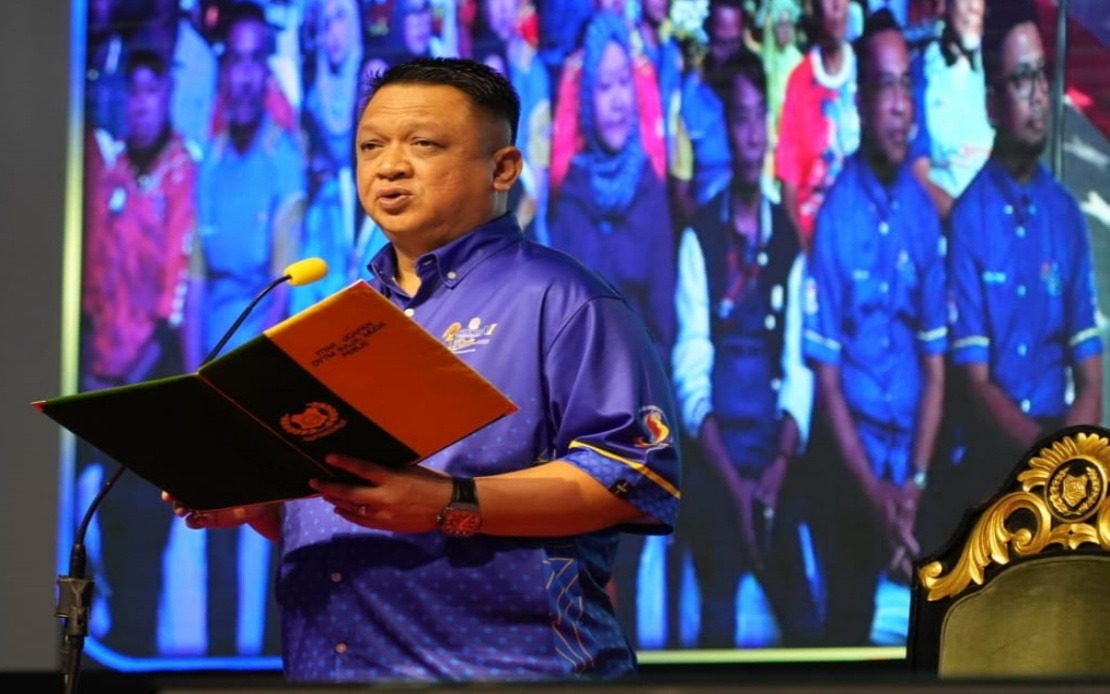
Tuanku Syed Faizuddin Putra Jamalullail, Raja Muda of Perlis, has articulated a forward-looking blueprint for Majlis Amanah Rakyat (MARA) centred on technological innovation, entrepreneurial ambition, and decisive leadership. Speaking at the 11th edition of the Sukan MARA Se-Malaysia (SUKMAS) in Kangar on August 30, His Royal Highness emphasised that the agency must position itself not merely as a respondent to change but as an active architect of Malaysia's economic future. The address comes at a critical juncture as MARA, the government body historically tasked with supporting Bumiputera enterprise, confronts mounting pressure to remain relevant in an increasingly digitalised and globally competitive marketplace.
The first strategic thrust centres on MARA's embrace of emerging technologies, particularly artificial intelligence, as a means to amplify operational efficiency and enhance problem-solving capacity among its workforce. This directive reflects broader acknowledgement across Malaysian government agencies that digital transformation has become existential rather than merely aspirational. By encouraging MARA personnel to explore and implement AI-driven solutions, Tuanku Syed Faizuddin Putra is signalling that the organisation should transition from conventional administrative modes toward innovation-led service delivery. For a development institution serving small and medium enterprises, such technological integration could fundamentally alter how MARA identifies market opportunities, allocates resources, and mentors its client base.
The second pillar focuses on strengthening MARA's entrepreneurship mission by cultivating a new generation of innovative business leaders capable of competing internationally. This emphasis on global market penetration represents an evolution from MARA's traditional domestic focus. By nurturing entrepreneurs bold enough to establish companies with world-class competitiveness, the agency would contribute meaningfully to Malaysia's economic diversification and reduce reliance on commodity exports. The Raja Muda's call for resilience and international ambition among MARA entrepreneurs underscores recognition that local champions increasingly must operate across borders to achieve scale and profitability.
Leadership transformation constitutes the third strategic element, with particular emphasis on decisiveness and strategic vision. The Raja Muda articulated that future MARA leaders must be catalysts and drivers of transformation rather than mere custodians of status quo. This framing acknowledges that institutional bureaucracies often struggle to maintain pace with market dynamics, and that bold decision-making rather than risk-averse incrementalism becomes necessary in volatile environments. For Malaysian readers, this message carries resonance beyond MARA itself, reflecting broader anxieties about whether government institutions can adapt with sufficient speed to maintain economic relevance.
The SUKMAS platform itself represents far more than a sporting extravaganza for MARA personnel. By assembling approximately three thousand athletes and officials from fourteen state-based MARA teams, the tournament functions as a unifying mechanism for an institution spanning the country. In the Malaysian context, where regional disparities in economic opportunity remain substantial, such national gatherings serve important psychological functions in fostering institutional solidarity and national belonging. The inclusion of diverse sporting disciplines—including football, netball, volleyball, sepak takraw, and tennis—ensures broad participation beyond elite athletes, reinforcing inclusivity.
According to MARA director-general Datuk Seri Zulfikri Osman, the biennial tournament simultaneously serves developmental and community-engagement objectives. Running from August 30 through September 3, the 11th SUKMAS comprises fifteen sporting events that generate substantial economic activity within Perlis while demonstrating MARA's commitment to the state. For participants and their families, the gathering represents opportunity for networking across departmental silos and geographical boundaries, potentially generating collaborative initiatives that might otherwise remain undetected within bureaucratic structures. The Perlis location also provides symbolic significance, reflecting royal patronage and state-level ownership of national development institutions.
The Raja Muda's emphasis on SUKMAS as a platform for reinforcing "the spirit of togetherness as one MARA family" reflects understanding that institutional effectiveness depends partly on cohesion and shared purpose among personnel. In Malaysia's ethnically diverse society, where institutions must navigate complex sensitivities, symbolic occasions that unite workers across backgrounds acquire heightened importance. Sports, as the Raja Muda noted, transcends linguistic and cultural particularities, functioning as universal language through which common identity coalesces.
The strategic vision articulated at SUKMAS 11 arrives amid broader scrutiny of MARA's effectiveness and relevance. Historically, the agency has faced criticism regarding equity of resource distribution, quality of mentorship provided to entrepreneurs, and capacity to keep pace with private sector dynamism. By articulating clear strategic thrusts emphasising technology, internationalisation, and bold leadership, the organisation signals willingness to undertake substantive reform rather than incremental adjustment. However, translation of rhetorical commitment into institutional practice remains challenging for large bureaucracies, particularly those whose personnel systems prioritise seniority over innovation capacity.
For Malaysian entrepreneurs and business stakeholders, the Raja Muda's emphasis on AI adoption and international entrepreneurship carries direct implications. If MARA successfully integrates these priorities into its grant programmes, mentorship frameworks, and market research capabilities, the institution could become more effective facilitator of competitive enterprise. Conversely, should these themes remain primarily rhetorical rather than operational, MARA risks further marginalisation as entrepreneurs increasingly seek support from private venture capital, accelerators, and international development partners.
The broader regional context adds weight to these strategic imperatives. Across Southeast Asia, governments recognise that traditional development approaches emphasising government procurement and protectionism prove insufficient for competing within integrated regional markets. Thailand's Digital Thailand initiative, Vietnam's drive to attract technology manufacturing, and Singapore's position as regional innovation hub demonstrate that countries increasingly prioritise technological sophistication and entrepreneurial ecosystem development. Malaysia's MARA, serving as custodian of Bumiputera economic advancement, must evolve accordingly to ensure that Bumiputera enterprises remain competitive within this dynamic regional landscape.
The engagement of Raja Puan Muda of Perlis Tuanku Dr Hajah Lailatul Shahreen Akashah Khalil in presiding over the event underscores royal emphasis on institutional development beyond ceremonial formality. Royal patronage of MARA initiatives carries weight within Malaysia's constitutional framework, where rulers occupy positions of constitutional significance and symbolic authority. This visible royal engagement lends legitimacy to reform initiatives and may facilitate resource allocation and policy support from government entities responsive to royal direction.
Moving forward, MARA faces the challenge of operationalising these three strategic thrusts within fiscal and political constraints. The 11th SUKMAS represents opportunity not merely to celebrate athletic achievement but to demonstrate institutional commitment to the transformation agenda articulated by the Raja Muda. How effectively MARA translates these principles into changed recruitment practices, revised funding criteria, and reformed mentorship structures will determine whether the agency remains central to Malaysia's developmental aspirations or gradually recedes into institutional irrelevance. The coming months will reveal whether this strategic vision represents genuine institutional commitment or rhetorical exercise.

