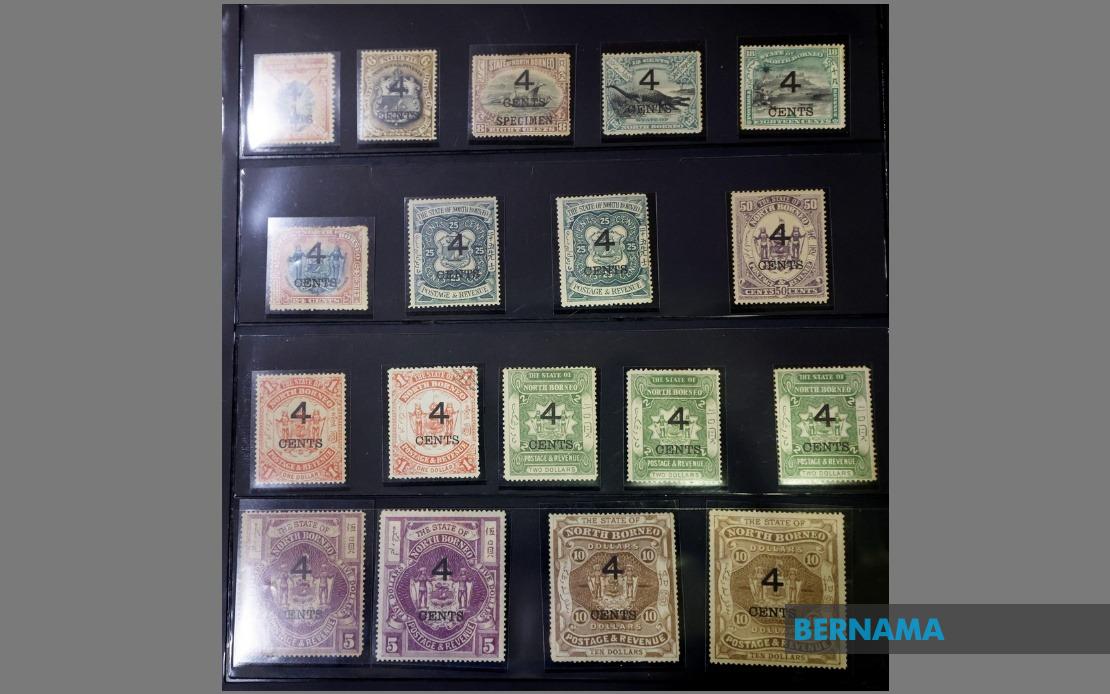
The preservation of North Borneo stamps—many now exceeding 100 years in age—has emerged as a pressing heritage concern in Sabah, driven by the twin challenges of dwindling collector interest and the scarcity of surviving specimens. These philatelic artefacts, issued across eight decades from 1883 to 1963, hold far greater significance than their postage function; they constitute what historians describe as a tangible record of the region's transformation during the colonial era and beyond. As antique dealers in Kota Kinabalu report escalating prices and diminishing availability, cultural advocates fear that without organised preservation efforts, an irreplaceable dimension of Sabah's documented history risks being lost to future generations.
Dr Shari Jeffri, founder and president of the Borneo History Association, has become a principal voice in this conservation movement. At 56, the researcher characterises the North Borneo stamp collection as a "living archive" requiring deliberate intergenerational transmission. His assessment reflects a generational rupture: whereas earlier decades saw widespread enthusiasm for stamp collecting, contemporary patterns show markedly reduced participation, with only a committed minority maintaining active interest. This demographic shift poses a genuine preservation risk, as knowledge holders retire without passing expertise forward and collections risk dispersal through commercial channels or simple neglect.
The economics of these artefacts underscores their rarity. Surveys conducted among Kota Kinabalu's antique retailers reveal that North Borneo stamps now command premium pricing determined by three interrelated variables: chronological age, physical condition, and scarcity relative to original issuance volume. One discovered holding included a six-cent denomination from 1954–1961 depicting Queen Elizabeth II alongside a Dusun woman, and a ten-cent representation of logging operations—pieces that simultaneously document imperial governance structures and regional economic activities of the mid-twentieth century.
Shari's own collecting journey illustrates how family inheritance shaped contemporary stewardship. His late grandfather, employed at the Recreation Club Jesselton during the 1920s, initiated the family collection after observing British officers pursuing the hobby. This seemingly casual observation catalysed a decades-spanning commitment: Shari encountered stamp collecting at age seven and undertook serious collecting through secondary schooling, ultimately dedicating his adult life to researching philatelic evolution within the North Borneo context. His family's accumulated holdings, preserved across generations, include two extraordinarily valuable two-cent stamps from the inaugural 1883 issue, identifiable by their sailing boat motif and authentic postal markings.
Understanding the design progression reveals how stamps functioned as miniature chronicles of territory and identity. The British North Borneo Chartered Company introduced the initial 1883 series, maintaining issuance for approximately 52 years. Early denominations ranged from two sen to one dollar, employing symbolic imagery—lions, sailing boats, tigers—that evoked British imperial aesthetics and regional exoticism. Beginning in 1894, design philosophy shifted radically toward indigenous representation, featuring Borneo's native flora, fauna, and wildlife. A subsequent redesign in 1935 more explicitly anchored Sabah's identity within the visual language of postage. These aesthetic transitions map precisely onto evolving colonial frameworks and emergent local consciousness.
Authentication and preservation techniques constitute specialist knowledge increasingly at risk. Stamps bearing complete postal cancellations—displaying mailing date, originating post office, temporal notation, and geographic origin—occupy rarified status within collector hierarchies. Such cancellation information transforms individual items into documentary evidence, recording forgotten postal routes and administrative territories. The composition of stamp paper itself, particularly the glue layer's chemical properties, determines authenticity and market value. Preserving specimens requires acid-free storage to prevent deterioration through chemical degradation—a technical requirement unknown to casual collectors but essential for long-term survival.
Shari's methodological approach reflects serious scholarship. To validate authenticity and build expertise, he consulted Singapore-based specialists Voon Kyam Foh and Tan Chun Lim, supplementing practical knowledge with specialised references such as Commonwealth & British Empire Stamps catalogues. This transnational knowledge exchange networks Sabah's philatelic community into broader Commonwealth collecting frameworks, positioning local preservation efforts within international standards. Yet such expert consultation remains accessible only to dedicated enthusiasts with linguistic capability, financial resources, and geographic mobility—barriers that effectively exclude most younger potential practitioners.
The broader context involves a medium undergoing terminal functional obsolescence. Physical letter posting, the historical driver of stamp production and collection, has been progressively displaced by digital communication technologies. Younger Malaysians inhabit an epistolary landscape fundamentally transformed from their grandparents' era; postal infrastructure itself has contracted accordingly. This technological transition renders stamps doubly anachronistic—neither functionally necessary nor culturally embedded within contemporary communication practices. The loss of habitual engagement with stamps as quotidian objects inevitably diminishes appreciation for their historical and aesthetic dimensions among demographics lacking formative exposure.
Yet the historical documentation value intensifies precisely as use-case fades. North Borneo stamps constitute visual, material evidence of specific moments within Sabah's trajectory—economic activities, territorial governance, and identity representation rendered in miniature form. A logging-activity depiction communicates information about resource extraction practices during mid-twentieth-century colonial administration. Queen Elizabeth II's presence alongside a Dusun woman visualises the imperial-indigenous relationship that structured daily life. These observations might be recovered through archival documents or historical texts, but stamps compress such information into portable, durable, tangible artefacts that maintained their evidentiary integrity precisely because they performed quotidian commercial functions rather than self-conscious historiography.
The preservation challenge extends beyond individual collections to institutional frameworks. Malaysia has not systematically mobilised museum resources, educational curricula, or heritage classification systems to protect North Borneo philatelic materials as cultural property warranting active stewardship. Unlike geological specimens, archaeological artefacts, or architectural structures, stamps occupy ambiguous institutional status—neither fully recognised as heritage requiring preservation nor completely dismissed as commercial collectibles. This classification gap means that many surviving specimens remain held within scattered private collections, vulnerable to loss through inheritance disputes, commercial dispersal, or simple destruction through ignorance.
The Borneo History Association's efforts represent grassroots intervention within this institutional vacuum. By framing stamp collecting as historical research rather than consumer hobby, advocates like Shari attempt to legitimise preservation activities and transmit specialist knowledge. Yet institutional momentum remains modest; without integration into formal education, museum programming, or government heritage strategies, the movement risks remaining confined to small cohorts of dedicated practitioners. The intergenerational knowledge transfer that sustained collecting through previous decades—observed experts mentoring younger enthusiasts—has fractured sufficiently that spontaneous revival seems unlikely without deliberate external intervention.
For Southeast Asian readers, the North Borneo stamp preservation effort reflects a wider regional vulnerability: the risk that diverse colonial-era heritage materials, accumulated across territories now constituting Malaysia, Singapore, and Brunei, might be lost as collecting traditions erode and institutional capacity for preservation remains underdeveloped. These artefacts document the region's historical entanglement with Britain's imperial system and the gradual assertion of local identity within administrative structures. Systematic preservation would enrich regional understanding of how ordinary people—postal workers, merchants, bureaucrats—encountered imperial governance and negotiated emergent nationalisms through mundane daily practices.
The stakes, then, transcend numismatic enthusiasm. North Borneo stamps represent Sabah's material memory, accessible and durable precisely because they were designed for circulation rather than display. Their preservation requires neither expensive infrastructure nor complex conservation science, yet demands institutional recognition, educational integration, and deliberate intergenerational knowledge transmission. Shari's four-decade commitment demonstrates that individual dedication can sustain collections, but sustainability ultimately requires cultural shift—making stamp collecting and philatelic research legible as legitimate historical practice rather than antiquarian eccentricity, thereby inspiring younger Malaysians to inherit not merely physical objects but the intellectual frameworks necessary to interpret them as witnesses to their territory's contested and fascinating past.

