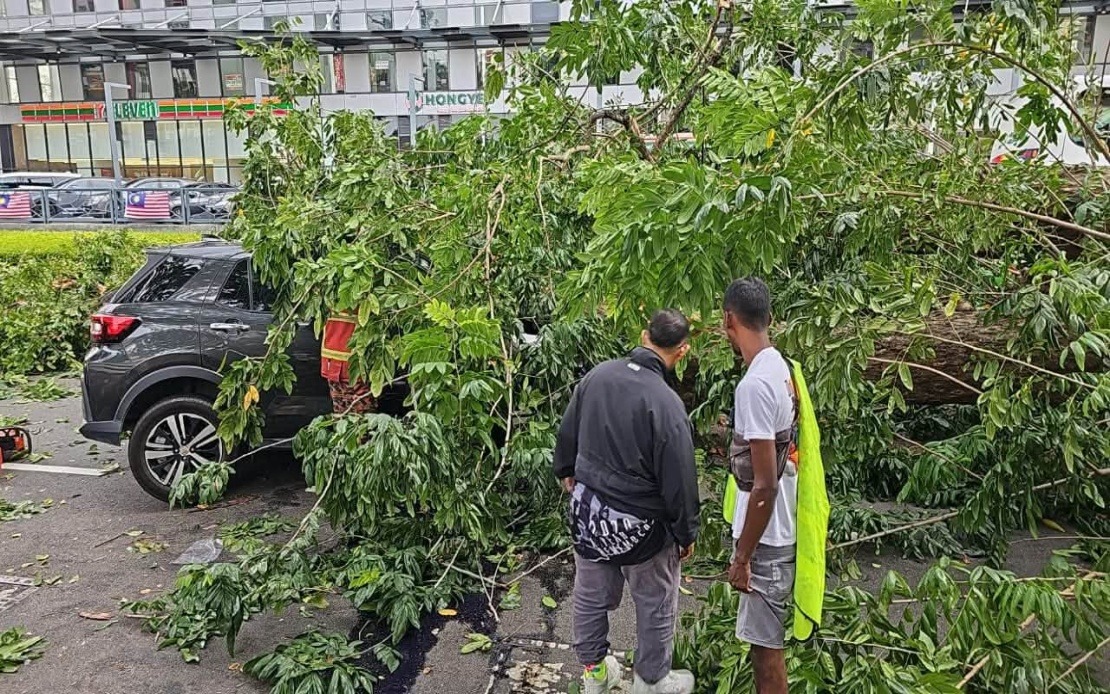
An elderly couple and their granddaughter had a fortuitous escape from potential tragedy in George Town on Friday morning when a substantial tree came crashing down onto their vehicle, trapping them inside the Perodua Ativa on Jalan Macalister. The three occupants sustained injuries in the incident, which unfolded at approximately 9:12 am, prompting an emergency response from multiple agencies concerned with the victims' welfare and subsequent scene clearance.
John Sagun Francis, Assistant Director of the Operations and Firefighting Division of the Malaysian Fire and Rescue Department (JBPM) in Penang, credited the rapid intervention of members of the public who were present at the location. Despite the fire department receiving the distress call and mobilising a team of eight personnel from the Jalan Perak Fire and Rescue Station within minutes of the alarm being raised, the bystanders had already managed to extract all three trapped individuals before professional rescue workers could arrive on scene. This civilian response likely prevented the situation from deteriorating and potentially saved lives through their swift, collaborative action.
The role of everyday citizens in emergency response situations underscores an important reality for Malaysian urban areas where traffic density and infrastructure age mean that tree falls and similar incidents pose recurring risks to road users. The quick thinking displayed by these bystanders demonstrates how public awareness and willingness to assist can bridge the critical minutes between a crisis occurring and professional emergency services achieving full deployment. Their actions removed the urgent danger of the victims remaining enclosed in a damaged vehicle, exposed to potential secondary hazards or deteriorating conditions.
Following the successful rescue of the three victims, they were transported to hospital for medical evaluation and treatment of their injuries. While specific details regarding the severity of their conditions were not disclosed in immediate reports, the fact that bystander rescue proved sufficient to free them suggests that none sustained injuries requiring extrication equipment or specialised techniques beyond what coordinated community effort could provide. Their admission to hospital for observation and treatment reflects standard medical protocol following vehicular trauma, ensuring that any internal injuries or delayed symptoms could be properly assessed and managed.
Concurrently with victim rescue operations, personnel from the Malaysian Fire and Rescue Department worked alongside local authorities to address the broader public safety implications of the incident. Clearing fallen trees from a major thoroughfare such as Jalan Macalister requires significant effort, particularly when debris must be sectioned and systematically removed without causing further damage to the roadway or surrounding properties. By midday Friday, these clearance operations were still ongoing, demonstrating the labour-intensive nature of restoring infrastructure after such events.
The incident's impact extended beyond the immediate scene to the wider urban transport network. Road closure for debris removal and emergency operations triggered substantial traffic congestion throughout the area, affecting countless commuters and commercial vehicles attempting to navigate George Town's transport corridors. For Malaysian urban centres already grappling with congestion challenges, such incidents compound existing pressures and highlight the cascading effects that localised infrastructure failures can produce across broader city systems.
Tanjong Member of Parliament Lim Hui Ying, who serves as Deputy Minister of Women, Family and Community Development, moved swiftly to acknowledge the incident and coordinate official support. Her Facebook statement indicated that she and her team were en route to the scene to gather additional information directly from relevant authorities and affected parties, signalling political attention to the matter and commitment to ensuring that appropriate assistance reached the victims and their families. This response reflects broader governmental awareness that such incidents warrant swift senior-level engagement to ensure coordination and accountability across relevant departments.
Lim's public advisories to motorists reflected standard safety guidance for areas experiencing infrastructure incidents or emergency operations. Road users proceeding through affected zones were urged to remain vigilant, heed traffic control instructions from deployed personnel, and exercise heightened caution given the presence of emergency vehicles, debris, and altered traffic patterns. Such messaging serves a dual purpose: protecting the general public from secondary incidents while facilitating the smooth operation of emergency and clearance operations.
The incident raises broader questions about tree maintenance and infrastructure management in Malaysia's urban areas. While severe weather and age-related deterioration account for many fallen trees, systemic monitoring and preventative trimming programmes can reduce incidence rates. Malaysian local authorities in major cities increasingly recognise that managed vegetation programmes—including regular inspection, pruning of diseased or weakening limbs, and removal of compromised specimens—represent investments in public safety rather than routine expenses. Penang, as one of Malaysia's older major urban centres, may face particular challenges in balancing heritage vegetation with contemporary safety requirements.
The resilience displayed by both the public and emergency services in responding to this crisis demonstrates established protocols functioning effectively under pressure. However, such incidents also serve as reminders that personal safety on Malaysian roads extends beyond vehicle maintenance and defensive driving to encompassing awareness of environmental hazards and infrastructure conditions. Motorists traversing older urban areas or routes flanked by mature trees should remain conscious of weather conditions and visible signs of tree damage or poor maintenance.
As investigation into the precise cause of the tree's failure proceeds, the focus for immediate authorities remains on completing clearance operations and restoring normal traffic flow. For the three victims and their family, the Friday morning incident—while frightening and injurious—concluded with outcomes substantially more positive than could have resulted had bystander intervention not occurred so promptly and effectively.

