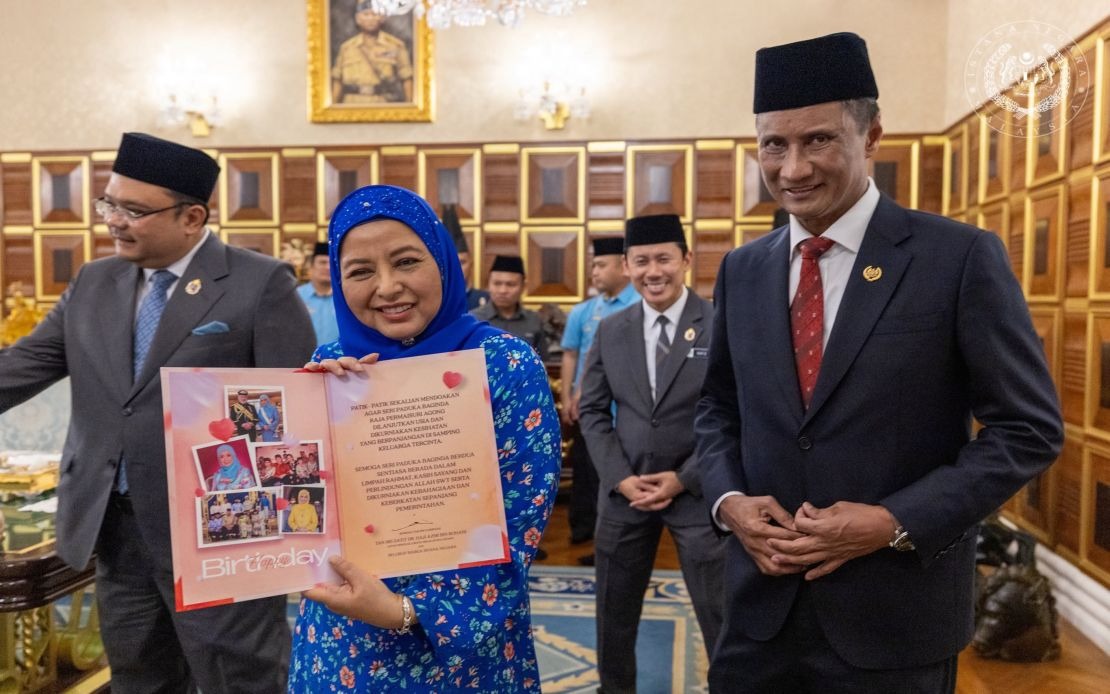
Her Majesty Raja Zarith Sofiah, Queen of Malaysia, marked her birthday with a formal audience at Istana Bukit Serene in Johor, where senior officials from Istana Negara paid their respects and delivered greetings from the royal household's management and staff. The occasion underscores the ceremonial calendar that punctuates the Malaysian monarchy's annual schedule, with palace leadership making time to acknowledge significant personal milestones of the royal family through traditional protocols.
The courtesy call was conducted by Tan Sri Dr Azmi Rohani, the Comptroller of the Royal Household, alongside Datuk Azuan Effendy Zairakithnaini, who holds the position of Datuk Paduka Maharaja Lela or Grand Chamberlain. Their presence reflected the formal structure of palace administration, where senior officials maintain channels of communication and respect with members of the royal family through scheduled visits and ceremonial exchanges. Puan Sri Dr Noor Azizah Abdul Latif, the wife of Azmi, accompanied the delegation, adding to the symbolic importance of the visit.
The gathering at Johor's royal residence served as a platform for palace leadership to convey institutional well-wishes to Her Majesty. As Comptroller, Azmi holds responsibility for overseeing the day-to-day operations of Istana Negara and ensuring the smooth functioning of royal household affairs. His attendance, coupled with that of the Grand Chamberlain, demonstrated the hierarchical respect accorded to significant occasions within the monarchy's ceremonial calendar. Such visits represent customary practice within royal institutions, where formal acknowledgment of important dates reinforces institutional bonds and demonstrates the palace staff's loyalty and regard.
The presentation of gifts during the meeting held particular symbolic weight. Her Majesty received a birthday cake along with yellow glutinous rice, items prepared by the senior management and broader staff of Istana Negara. The choice of yellow glutinous rice carries cultural significance within Malaysian tradition, often associated with celebratory occasions and festive moments. That such items were specifically prepared by palace personnel rather than sourced externally underscores the personal investment of the royal household in marking the occasion properly.
Azmi's remarks on behalf of Istana Negara's collective workforce conveyed prayers and heartfelt wishes for Her Majesty's continued health, well-being, and happiness. Such formalized expressions of goodwill, though ceremonial in nature, reflect the institutional relationship between the sovereign and those in administrative positions within the palace structure. These occasions provide opportunities for palace leadership to reinforce their commitment to supporting the royal family's needs and welfare.
The meeting was documented through official channels, with Sultan Ibrahim Sultan Iskandar's social media presence serving to communicate the event to the broader public. This approach to sharing information about royal engagements has become increasingly common in contemporary Malaysia, where digital platforms supplement traditional press releases in informing citizens about palace activities. The transparency afforded by such announcements allows Malaysians to remain connected to the ceremonial life of their monarchy.
Birthday acknowledgments within the royal household follow established protocols and traditions that have evolved over decades of institutional practice. For the Queen, whose role encompasses supporting the King in state functions and representing the monarchy domestically and internationally, such occasions provide moments to step back from official duties and receive recognition from those who work within the palace environment. These ceremonies, while appearing simple on the surface, carry deeper institutional meaning within Malaysia's constitutional monarchy.
The venue chosen for the meeting, Istana Bukit Serene, stands as one of Malaysia's most historically significant royal residences. Located in Johor Bahru, the palace has long served as the seat of Johor's rulers and continues to play an important role in the state's ceremonial and administrative life. That the Queen chose to receive the Istana Negara delegation at this location rather than in Kuala Lumpur speaks to her time and presence across Malaysia's various royal residences.
Such ceremonial exchanges between palace leadership and members of the royal family contribute to maintaining the institutional coherence and morale of Istana Negara as an organization. The royal household employs hundreds of individuals across various departments and roles, from protocol officers to support staff. Creating occasions where leadership can formally convey respect and well-wishes to the royal family helps sustain the sense of shared purpose and dignity that characterizes palace service. For those working within Istana Negara, such moments affirm the value of their roles in supporting Malaysia's constitutional monarchy.
The gathering also reflects broader patterns within Southeast Asian monarchies, where formal ceremonies and protocol remain central to institutional identity and legitimacy. Unlike some contemporary democracies that have moved toward more casual approaches to state ceremony, Malaysian practice maintains structured formality in interactions between officials and the royal family. This approach aligns the nation with other regional monarchies and reflects particular cultural values regarding respect, hierarchy, and institutional relationships that continue to resonate within Malaysian society.
Birthday celebrations for members of the royal family, while personal in nature, maintain public significance within Malaysia's constitutional framework. The Queen's position as consort to the King carries responsibilities that extend throughout the year, encompassing charity patronages, state visits, and representation at national events. Formal recognition of her birthday by institutional leadership acknowledges not only her personal standing but also her contributions to the monarchy's broader role in national life. Such acknowledgments, properly conducted and appropriately documented, reinforce public confidence in the stability and continuity of Malaysia's royal institutions.

