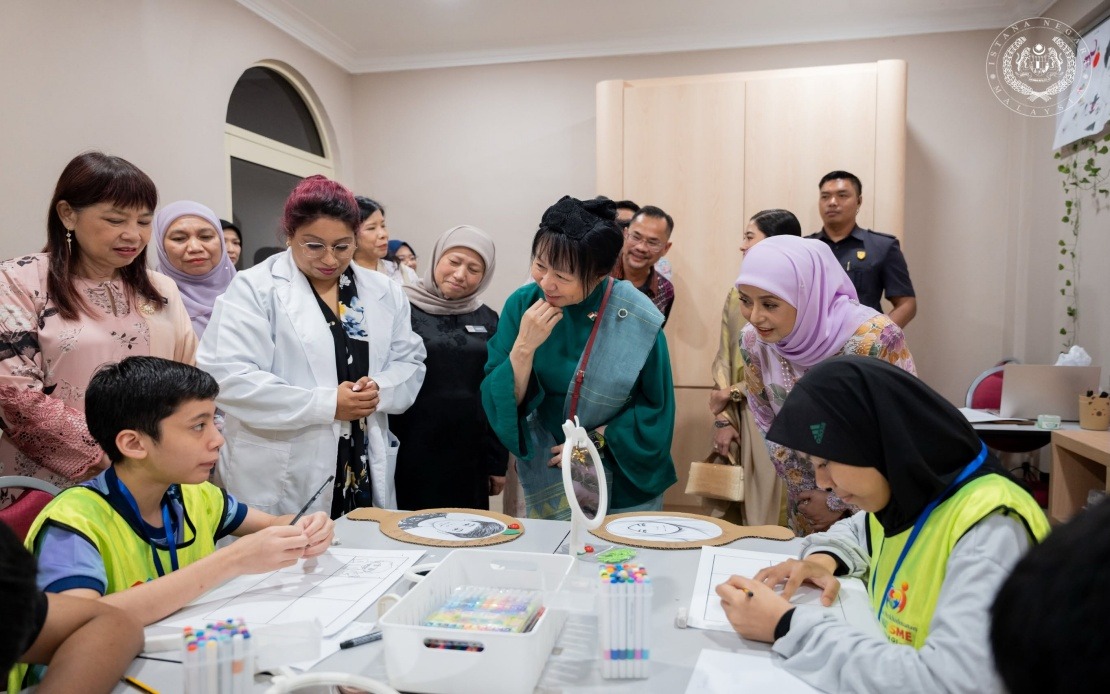
Her Majesty Raja Zarith Sofiah, Queen of Malaysia, welcomed Singapore First Lady Jane Ittogi Shanmugaratnam to the Bangi Autism Service Centre in a ceremonial visit on July 14 that underscored growing regional cooperation on social welfare. The engagement took place as part of Singapore President Tharman Shanmugaratnam's ongoing state visit to Malaysia, reflecting the high-level diplomatic dimensions that Malaysia-Singapore social development initiatives have assumed in recent years.
The carefully choreographed visit brought together key figures from both nations' leadership circles. Jane Ittogi was formally received by Her Majesty upon arrival, alongside Tunku Tun Aminah Sultan Ibrahim, demonstrating the protocol typically reserved for significant bilateral engagements. Malaysian Prime Minister's wife Datuk Seri Dr Wan Azizah Wan Ismail attended alongside Women, Family and Community Development Minister Datuk Seri Nancy Shukri and her deputy Lim Hui Ying, signalling the Malaysian government's commitment to elevating autism support within its national development agenda.
The delegation's tour of the Bangi facility encompassed comprehensive observation of the centre's therapeutic infrastructure and pedagogical approach. Visitors examined the Activities of Daily Living room, where individuals with autism receive structured training in essential self-care and independent functioning skills. The Occupational Therapy Room demonstrated Malaysia's adoption of evidence-based interventions, while the gymnasium showcased physical wellness components integrated into the holistic treatment framework. This multifaceted approach reflects international best practices in autism spectrum disorder management, positioning Malaysia alongside developed nations in therapeutic service delivery.
Data presented during the visit underscores the scale of autism support requirements in Malaysia. As of June of the preceding year, the Social Welfare Department had registered 93,199 individuals with autism across the country. Minister Nancy Shukri's remarks acknowledged that this figure represents only documented cases, and projections anticipate continued growth driven by heightened public awareness and expanded diagnostic capabilities. The trajectory suggests Malaysian authorities anticipate substantial increases in identified cases as screening services reach more underserved communities and rural areas gain access to professional assessment.
The rising prevalence figures carry implications extending beyond statistics. Each registered case represents families navigating complex healthcare and educational systems while managing substantial economic and emotional demands. Malaysia's autism population has grown considerably as parents and educators have become more informed about developmental indicators, yet infrastructure and specialist personnel remain stretched. The Bangi centre's existence demonstrates recognition of these gaps, though the volume of demand continues outpacing available institutional capacity across the region.
The Bangi Autism Service Centre itself exemplifies a governance model increasingly prevalent in Malaysian social services delivery. Rather than relying solely on government administration, the facility operates through strategic partnerships engaging the public sector alongside non-governmental organisations. The National Autism Society of Malaysia and the Damansara Damai Community-Based Rehabilitation Centre contribute expertise, management capacity, and community networks that complement government resources. This hybrid structure enables Malaysia to leverage civil society strengths while maintaining public accountability and oversight.
Singapore's interest in the facility reflects broader regional trends in social welfare cooperation. Both nations have made autism support a national priority, and Singapore's First Lady's participation signals that cross-border knowledge exchange on evidence-based interventions constitutes legitimate diplomatic discourse. The visit created opportunity for Malaysian administrators to showcase their service delivery model to neighbouring expertise, potentially facilitating future technical cooperation arrangements or joint training initiatives that could benefit both populations.
The timing of this engagement during a presidential state visit elevates social welfare to the diplomatic foreground typically dominated by economic, security, and trade considerations. Bilateral relations increasingly encompass human development dimensions, reflecting recognition that quality of life indicators and social inclusion serve as measures of national progress alongside GDP and infrastructure metrics. Malaysia's willingness to showcase autism services suggests confidence in its institutional development and desire to position itself as a regional leader in inclusive social policy.
For Malaysian autism advocates and families, the high-level attention carries symbolic and practical significance. Official visits by queens and first ladies elevate public consciousness regarding conditions that, despite their prevalence, remain socially stigmatised in parts of Southeast Asia. The participation of the Women, Family and Community Development Ministry ensured alignment with broader government objectives around family support and inclusive development, potentially translating into budgetary considerations and policy prioritisation in subsequent financial cycles.
The visit concluded mid-morning on July 14, enabling both delegations to maintain their busy diplomatic schedules. Yet its brevity should not obscure its substantive implications. Such carefully orchestrated engagement between Malaysian and Singaporean leadership regarding social service delivery establishes frameworks within which technical cooperation can flourish. Officials from both nations departed with enhanced understanding of peer approaches and potential avenues for collaborative problem-solving around shared challenges in autism spectrum disorder diagnosis, intervention, and long-term support.
Moving forward, the precedent established through this visit may encourage similar high-level engagement with other sectors facing capacity constraints in Malaysian social service delivery. Early childhood development, mental health, disability inclusion, and elderly care all represent domains where cross-border learning and bilateral cooperation could strengthen institutional responses to demographic and epidemiological trends reshaping Southeast Asian societies.

