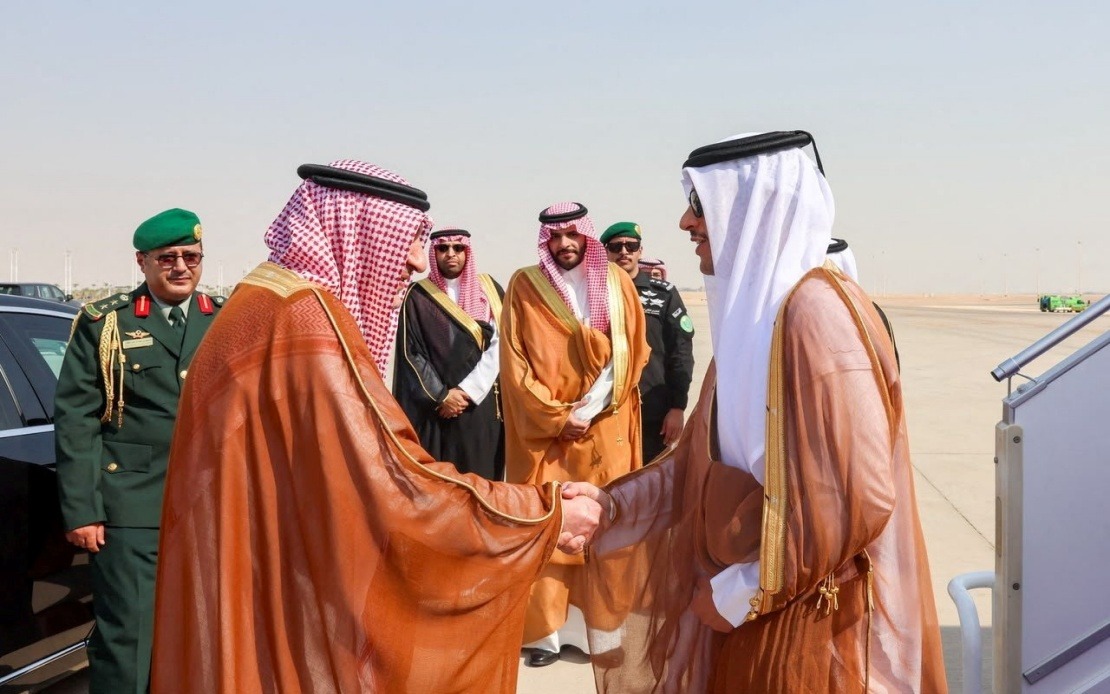
The Qatari Prime Minister Sheikh Mohammed bin Abdulrahman bin Jassim Al Thani touched down in Riyadh on Wednesday for a state visit centred on advancing diplomatic solutions to the mounting pressures confronting the Gulf region. His arrival marked a significant engagement at the highest political level between two of the Arabian Peninsula's most influential actors, signalling a renewed emphasis on dialogue as tensions simmer across multiple fronts in the Middle East.
Upon landing in the Saudi capital, Sheikh Mohammed was received by Saudi Deputy Foreign Minister Waleed bin Abdulkarim Al-Khereiji, setting the formal tone for a visit focused on substantive bilateral engagement. The welcoming ceremony reflected the diplomatic weight both governments attached to the discussions, though officials remained circumspect about the visit's expected duration and specific agenda beyond the broad framework of regional stability.
The centrepiece of the visit involved talks between Sheikh Mohammed and Saudi Foreign Minister Faisal bin Farhan, two of the region's most experienced diplomats. Their conversation ranged across bilateral relations and contemporary regional developments, but the primary focus remained the various diplomatic initiatives designed to lower temperatures across the Gulf and surrounding waters. Both officials emphasised the importance of channelling disputes through negotiation rather than confrontation, a position that carries particular significance given the volatility characterising Gulf politics in recent years.
A joint statement from the Qatari Foreign Ministry underscored the shared commitment to what both sides termed "diplomatic efforts to de-escalate tensions and enhance security and stability." This language reflected a deliberate choice to position dialogue as the preferred mechanism for managing disagreements, a stance increasingly important as multiple regional actors grapple with competing strategic interests. The emphasis on coordinated diplomatic approaches suggested both nations recognise that unilateral action carries risks that outweigh potential gains.
Beyond the bilateral dimension, the two officials agreed on the necessity for broader regional and international coordination to prioritise sustained dialogue. This point carries implications extending well beyond Saudi-Qatari relations, suggesting both capitals view their partnership as instrumental in shaping a more collaborative regional architecture. The call for expanded coordination mechanisms indicates recognition that the proliferation of security challenges—from maritime threats to proxy conflicts—requires multilateral rather than bilateral solutions.
Maritime security featured prominently in the discussions, with both sides stressing the critical importance of safeguarding navigation corridors in the Arabian Gulf and Red Sea. These waters constitute vital conduits for global commerce, and any disruption carries consequences far beyond the Gulf itself. For Malaysia and Southeast Asia, maintaining open sea lanes through these regions remains economically vital, making Saudi-Qatari coordination on maritime issues a matter of regional interest. The joint emphasis on protecting trade flows acknowledged this economic reality while framing security as a collective responsibility rather than a zero-sum competition.
The timing of this high-level visit cannot be separated from the broader context of escalating tensions between Iran and the United States, dynamics that have reverberated throughout the Gulf region with particular intensity. Saudi Arabia's longstanding alliance with Washington creates a complex strategic position, requiring careful balancing between commitment to security partnerships and managing direct relations with neighbouring powers. Qatar's diplomatic efforts, by contrast, have historically included more nuanced engagement with various regional actors, positioning the emirate as a potential bridge between competing interests.
The visit suggests both nations have concluded that unchecked escalation serves neither state's fundamental interests. Qatar's investment in dialogue contrasts sharply with more confrontational approaches adopted by some regional players, reflecting a calculation that sustained diplomatic engagement offers better prospects for securing long-term stability. The Qatari leadership's prominent role as both prime minister and foreign minister underscores the personal significance attached to these discussions at the highest levels of government.
For observers across Southeast Asia, this engagement between two major Gulf powers carries instructive value regarding the mechanisms through which regional powers pursue stability amid acute tensions. The emphasis on coordinated diplomatic efforts, maritime security cooperation, and structured dialogue provides a model applicable to similar challenges elsewhere. The visit demonstrates that even amid profound strategic disagreements, major regional actors can identify sufficient common ground to maintain communication channels and pursue incremental confidence-building measures.
The absence of detailed announcements regarding specific outcomes reflects the preliminary nature of these discussions in what appears an ongoing process of diplomatic engagement. Rather than representing breakthrough agreements, the visit functions as an opportunity to maintain high-level communication and signal renewed commitment to collaborative approaches. This diplomatic posture, while sometimes lacking the drama of sudden breakthroughs, often proves more durable in practice than sporadic moments of agreement.
For Malaysia and the broader Southeast Asian community, the success or failure of such Gulf-level diplomatic initiatives carries indirect but meaningful consequences. Regional stability in the Middle East affects energy markets, shipping routes, and the broader geopolitical environment within which ASEAN nations conduct their external relations. The Qatari Premier's visit to Saudi Arabia thus represents more than bilateral diplomacy; it reflects broader patterns in how major regional actors manage crises and pursue shared objectives through dialogue rather than escalation.

