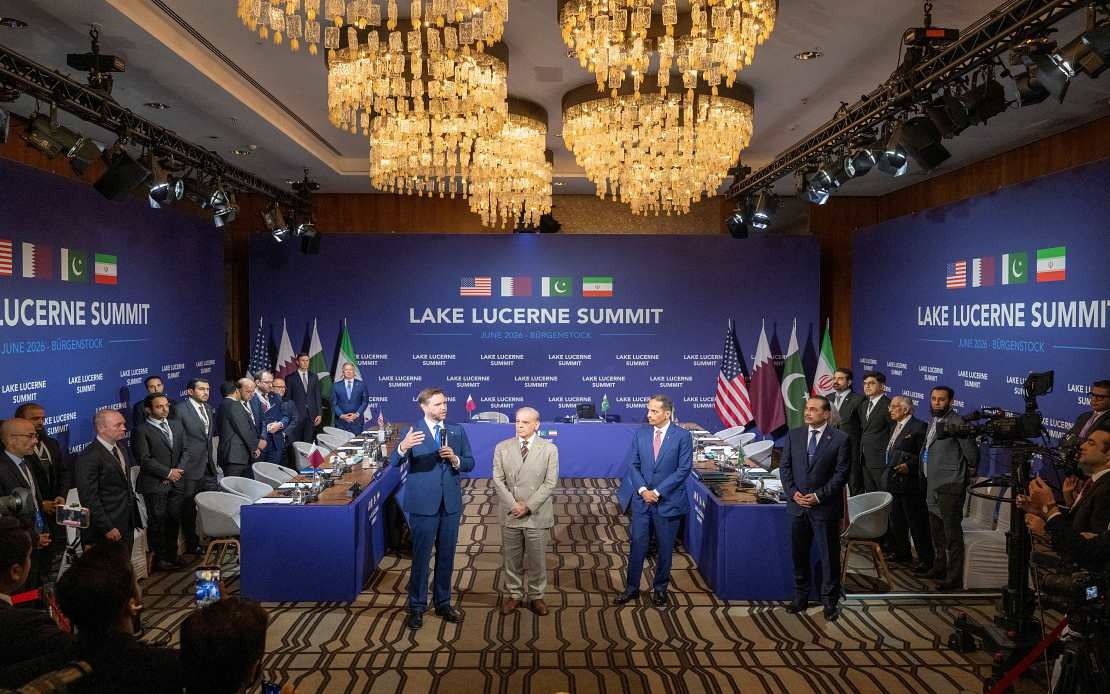
Diplomatic efforts to bridge the widening gap between the United States and Iran have entered a new phase of structured engagement, with Qatar and Pakistan jointly announcing substantial progress following the initial round of high-level negotiations at the Lake Lucerne Summit in Switzerland. The two Gulf and South Asian mediators, speaking through a coordinated statement released early Monday, characterised the opening session as constructive and forward-looking, marking a tangible shift from previous periods of stalled communication between Washington and Tehran.
The framework that emerged from these first-day discussions reveals an ambitious architecture designed to transform tentative goodwill into concrete agreements. Officials established a formalised mechanism specifically dedicated to sustaining technical-level negotiations, recognising that complex issues surrounding Iran's nuclear programme and international sanctions require sustained specialist attention rather than episodic diplomatic conferences. This operational structure addresses a persistent challenge in previous negotiation attempts, where momentum frequently evaporated between official meetings.
Central to the emerging agreement is the creation of a high-level political oversight committee that will function as the strategic backbone of the entire mediation process. Rather than allowing technical experts to negotiate in a vacuum, this committee will maintain direct oversight of the various working groups and receive regular briefings from lead negotiators responsible for individual negotiating tracks. This hierarchical approach ensures that political leaders remain engaged and can make timely decisions when technical discussions reach impasses that require higher-level judgment calls.
The negotiating teams have charted an ambitious timeline, with the high-level committee adopting a roadmap that targets completion of final agreements within 60 days. This compressed schedule reflects recognition among all parties that prolonged negotiations risk losing momentum and allowing domestic political pressures to derail progress. The urgency of the timeline also signals genuine commitment from Washington and Tehran to resolve outstanding disputes, though observers in the region remain cautious about whether such compressed timeframes can accommodate the complexity of issues under discussion.
The agenda encompasses the Iranian nuclear programme, a perennial flashpoint between Tehran and Western powers, alongside the intricate web of international sanctions that have crippled Iran's economy and created grievances across Tehran's political establishment. The negotiators have also established dedicated dispute resolution mechanisms, acknowledging that disagreements will inevitably emerge even during good-faith negotiations and that advance agreement on how to handle such disagreements proves essential for maintaining forward momentum.
The memorandum of understanding signed during preparations for this summit serves as the foundational document for all subsequent negotiations. The technical working groups will now conduct detailed examinations of how this agreement can be operationalised, translating broad political commitments into specific, verifiable actions that both sides can implement and monitor. This granular approach to follow-through has often been lacking in previous diplomatic initiatives, where statements of principle frequently remained disconnected from operational reality.
Perhaps equally significant is the establishment of a direct communication channel between American and Iranian representatives, designed specifically to prevent misunderstandings and reduce the risk of accidental escalation during the negotiation period. This channel incorporates specific provisions outlined in paragraph five of the memorandum, creating bounded protocols for emergency contact and crisis communication. The mechanism reflects hard-won lessons from previous periods of US-Iran tension, when miscalculation and failures of communication escalated minor incidents into major confrontations.
The negotiators have also prioritised maritime security, establishing provisions to ensure the safe passage of commercial vessels through the Strait of Hormuz, the strategically vital waterway through which approximately 20 percent of global petroleum traffic flows. Any escalation between the US and Iran directly threatens international commerce and energy markets, with implications extending far beyond the two directly involved parties. Southeast Asian nations, including Malaysia, maintain substantial commercial interests in the region and have experienced disruptions to shipping when tensions in the Gulf spike.
For regional observers, particularly in Southeast Asia, the negotiation framework suggests that even deeply polarised adversaries can establish structured pathways toward resolution when third-party mediators possess genuine credibility with both sides. Qatar's role as a financial and diplomatic powerhouse with historically stable relations across the ideological spectrum in the Middle East, combined with Pakistan's longstanding connections throughout the Islamic world and its developing relationship with Washington, positioned both nations uniquely to facilitate these discussions.
The 60-day timeline will test whether the diplomatic mechanisms established at Lake Lucerne can withstand the inevitable pressures and setbacks that accompany negotiations over issues of such strategic importance. Success would represent a substantial achievement for global security, reducing tensions that have periodically erupted into military confrontations and disrupted regional stability. Failure would likely trigger recriminations and a return to more confrontational postures.
Malaysian policymakers will monitor these negotiations closely, given the country's dependence on stable Gulf security and freedom of navigation through adjacent waters. Any sustainable resolution between Washington and Tehran would reduce volatility in energy markets and regional geopolitics more broadly, potentially creating space for Malaysia to pursue its own regional diplomatic initiatives without navigating around active US-Iran tensions.

%22%2F%3E%3C%2Fpattern%3E%3C%2Fdefs%3E%3Crect%20width%3D%22100%25%22%20height%3D%22100%25%22%20fill%3D%22url(%23ph27kaag)%22%2F%3E%3Crect%20width%3D%22100%25%22%20height%3D%22100%25%22%20fill%3D%22url(%23ph27kaap)%22%2F%3E%3Ctext%20x%3D%2250%25%22%20y%3D%2250%25%22%20text-anchor%3D%22middle%22%20dominant-baseline%3D%22central%22%20fill%3D%22rgba(255%2C255%2C255%2C0.95)%22%20font-family%3D%22Georgia%2C%20'Times%20New%20Roman'%2C%20serif%22%20font-weight%3D%22700%22%20font-size%3D%22320%22%20letter-spacing%3D%22-0.02em%22%3EPM%3C%2Ftext%3E%3C%2Fsvg%3E)
%22%2F%3E%3C%2Fpattern%3E%3C%2Fdefs%3E%3Crect%20width%3D%22100%25%22%20height%3D%22100%25%22%20fill%3D%22url(%23ph19gl2g)%22%2F%3E%3Crect%20width%3D%22100%25%22%20height%3D%22100%25%22%20fill%3D%22url(%23ph19gl2p)%22%2F%3E%3Ctext%20x%3D%2250%25%22%20y%3D%2250%25%22%20text-anchor%3D%22middle%22%20dominant-baseline%3D%22central%22%20fill%3D%22rgba(255%2C255%2C255%2C0.95)%22%20font-family%3D%22Georgia%2C%20'Times%20New%20Roman'%2C%20serif%22%20font-weight%3D%22700%22%20font-size%3D%22151%22%20letter-spacing%3D%22-0.02em%22%3EMuhyiddin%3C%2Ftext%3E%3C%2Fsvg%3E)