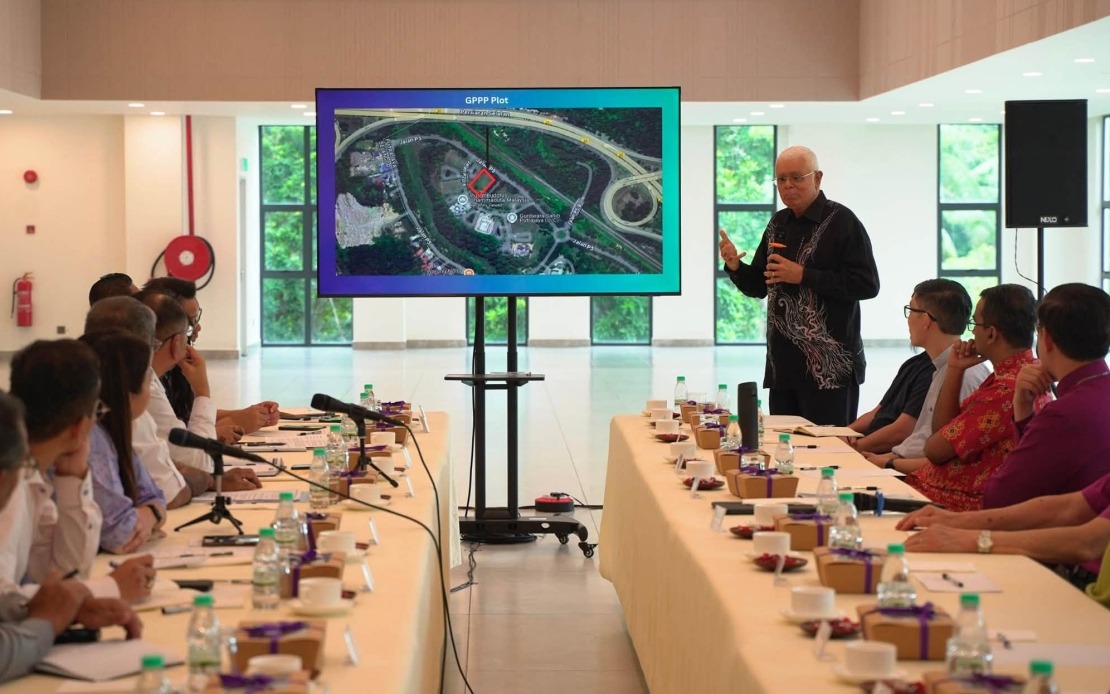
The federal government has systematically planned Precinct 20 in Putrajaya as a dedicated zone for non-Muslim religious facilities, a commitment that dates back over a decade to 2013. National Unity Minister Datuk Aaron Ago Dagang outlined this vision during an official visit alongside Minister in the Prime Minister's Department (Federal Territories) Hannah Yeoh to meet with representatives of the Prince of Peace Church, a recently established congregation within the precinct.
The designation of Precinct 20 for religious pluralism represents more than administrative allocation of land. Rather, it embodies a deliberate urban planning philosophy that recognises Malaysia's multicultural character and seeks to translate that recognition into tangible infrastructure. By carving out dedicated spaces for communities of different faiths to establish worship centres, the government frames religious coexistence as an integral component of contemporary city development rather than an afterthought or accommodation granted reluctantly.
Aaron emphasised that this approach directly supports Policy 17 of the Putrajaya Structure Plan 2050, titled "Putrajaya Towards an Inclusive Compassionate Community." The policy framework explicitly prioritises building a society where different groups live together with mutual respect and shared understanding. This connection between urban planning documents and ground-level religious accommodation demonstrates how strategic governance at the highest levels can translate into practical outcomes affecting daily life for religious minorities in the capital.
The initiative also aligns with the Harmoni MADANI initiative, launched by the National Unity Ministry in 2024. This framework promotes the principle of "Understand, Respect, Accept and Celebrate" across Malaysia's multireligious landscape. By situating the Precinct 20 development within this broader national programme, authorities position interfaith cooperation as a core element of contemporary Malaysian governance rather than a peripheral concern.
The physical reality on the ground reflects this planning commitment. The Prince of Peace Church now operates as an established place of worship within Precinct 20, serving its congregation. Alongside it stands the Dhammaduta Malaysia Buddhist Centre, which has been functioning since 2023 and has become an established anchor institution within the precinct. These operating facilities demonstrate that the policy framework has moved beyond theoretical planning into practical implementation.
Expansion remains underway across the precinct. Construction of Gurdwara Sahib Putrajaya is currently progressing, alongside development of the Dewi Sri Lalithaambigai Alayam temple and the San Qing Taoist Temple. Additionally, authorities have allocated a dedicated site for the future construction of a Roman Catholic church. This layered development schedule indicates a deliberate pacing of religious infrastructure rather than rushed or haphazard expansion, suggesting careful coordination among stakeholders and authorities.
The diversity of faiths represented—Christian, Buddhist, Sikh, Hindu, Taoist, and Catholic—creates what government officials describe as an emerging interfaith hub. This designation carries significance for Malaysia's wider project of maintaining social cohesion in an increasingly diverse society. Rather than scattering religious facilities across urban space, concentrating multiple faith communities in a single dedicated precinct creates opportunities for inter-religious dialogue, shared understanding, and coordinated community engagement.
For Malaysian readers, this development reflects an ongoing evolution in how federal authorities approach religious pluralism in public space. The capital city serves as a testing ground for national policies and urban concepts, meaning Precinct 20's experience will likely inform future development patterns across other federal territories and potentially influence municipal approaches elsewhere. The success or challenges of this interfaith cluster could shape how subsequent governments balance religious accommodation with urban planning objectives.
The two-decade timeframe from initial planning in 2013 to current implementation underscores the patient, long-term commitment required to establish such infrastructure. This extended timeline also reflects the complexity of coordinating between multiple religious organisations, government agencies, and community groups. Each faith community has brought its own requirements, cultural considerations, and governance structures to the table, requiring careful negotiation and planning.
For Southeast Asia more broadly, Putrajaya's approach offers a model of how plural societies can institutionalise religious coexistence through urban design and intentional policy integration. As other regional capitals grapple with managing religious diversity amid rapid urbanisation, the Malaysian capital's experience of designating specific precincts for multifaith infrastructure provides both lessons and practical reference points.
The positioning of these religious facilities within a modernising administrative capital carries symbolic weight beyond the practical provision of worship space. It signals that religious pluralism is not marginal to the nation's identity or future direction, but rather central to how Malaysia envisions its urban and social development. By integrating diverse faith communities into the very infrastructure of the capital, the government articulates a vision where religious minority communities belong fully within the national project.

