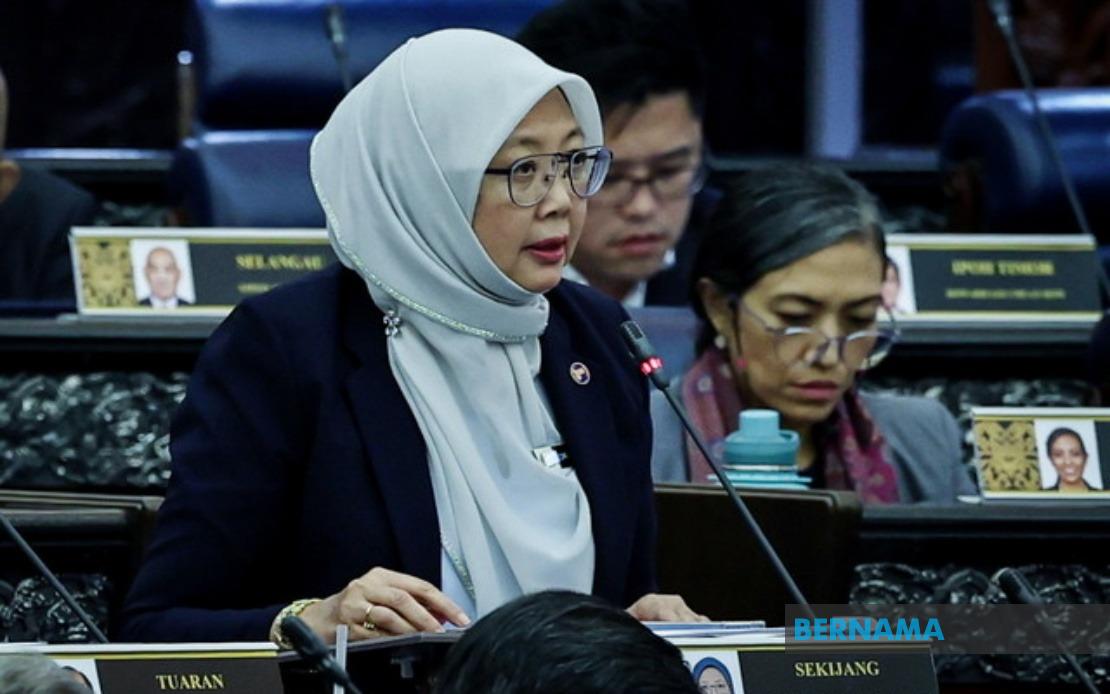
The push for greater transparency surrounding Tabung Haji's troubled financial history has intensified, with a prominent government legislator demanding that Parliament and the public receive a comprehensive account of reform efforts underway at the pilgrimage savings institution. Datuk Seri Dr Zaliha Mustafa, who chairs the Government Backbenchers Club and represents Sekijang, made the call during parliamentary debate following a ministerial briefing on the Royal Commission of Inquiry report, arguing that full disclosure would be essential to rebuilding the confidence of millions of Malaysian Muslims who rely on Tabung Haji to safeguard their savings for the haj pilgrimage.
The Royal Commission was established in 2021 to investigate management failures at Tabung Haji, with its inquiry panel formally appointed on January 20, 2022. The resulting 211-page report was presented to the Yang di-Pertuan Agong on August 30, 2022, but remained confidential for more than a year before being made public only recently. The document identified systematic weaknesses spanning the 2014 to 2020 period and laid out 25 specific recommendations aimed at strengthening the institution's governance and financial management. As of late July this year, Tabung Haji had implemented approximately three-quarters of these recommendations, leaving a quarter still in progress or awaiting action.
Dr Zaliha's intervention focuses particular attention on three critical dimensions of Tabung Haji's operations: its financial position and the dividend distributions made to account holders, its investment portfolio and the decisions surrounding capital deployment, and the broader framework of governance accountability. Her emphasis on these three pillars reflects deep-seated concerns within parliamentary circles about how the institution managed funds entrusted to it by some of the country's most vulnerable savers. The failure to address these issues comprehensively, she suggests, risks further eroding public trust in an institution that holds sacred significance for Malaysian Muslims planning to undertake one of Islam's Five Pillars.
Central to the RCI's investigation was its finding that political pressure in the lead-up to a general election served as a critical catalyst for Tabung Haji's financial deterioration. This revelation carries profound implications for how Malaysian institutions handle their fiduciary responsibilities during periods of electoral activity. Dr Zaliha's comments on this aspect suggest growing parliamentary concern that institutional independence may be compromised when political considerations become paramount. She framed this as a matter of fundamental integrity, questioning how calls for Muslim unity hold meaning if the institutions designed to serve the community are compromised by mismanagement and the decisions of those responsible remain inadequately scrutinised.
The former leadership of Tabung Haji, particularly its previous chairman Datuk Seri Abdul Azeez Abdul Rahim, comes under direct examination in Dr Zaliha's parliamentary remarks. Despite holding a non-executive chairman position—a role traditionally understood to involve limited day-to-day operational involvement—Abdul Azeez apparently wielded substantial influence over the institution's most critical investment decisions. His simultaneous holding of positions across multiple Tabung Haji subsidiaries and affiliated entities created structural conflicts of interest that the RCI investigation likely identified as problematic. The scale of these concerns is underscored by allegation that accounts connected to the former chairman accumulated balances reaching RM170 million at certain points, a figure that warrants detailed public clarification.
Dr Zaliha's call for a structured parliamentary presentation of implementation progress reflects recognition that mere completion statistics—such as the 75 percent figure reported as of late July—provide insufficient clarity to either lawmakers or depositors. What matters to stakeholders is not only how many recommendations have been actioned but precisely which ones remain outstanding, what obstacles impede their completion, and by when each pending reform can realistically be achieved. Without such granular transparency, political accountability becomes impossible and public trust remains justifiably fragile. The implicit criticism here is that the government has been content with partial disclosure, whereas the scale and sensitivity of Tabung Haji's crisis demands comprehensive openness.
The call for parallel public reporting on loss recovery efforts addresses a complementary concern. Depositors have legitimate need to understand what quantifiable progress has been made in recovering funds lost through mismanagement or poor investment decisions, what recovery mechanisms are being pursued, and what realistic expectations can be set regarding restoration of their capital. Without such information, speculation and rumour flourish. By contrast, detailed disclosure of recovery efforts—whether through legal action, asset recovery, or other means—provides a factual foundation upon which public confidence can gradually be rebuilt. This is particularly important given that many Tabung Haji account holders belong to modest-income groups for whom the funds represent essential savings accumulated over years of disciplined contribution.
The institutional context surrounding Tabung Haji adds another dimension to these governance concerns. As Malaysia's only state-owned Islamic financial institution dedicated specifically to facilitating the haj pilgrimage, Tabung Haji holds a unique position in the country's financial ecosystem. It serves not merely as an investment vehicle but as a trusted custodian of religious obligation savings. The betrayal of this trust through management failures or inadequate reform responses carries implications extending beyond ordinary financial institution concerns. For Malaysian Muslims, the institution represents something closer to a sacred trust, making the demand for complete transparency and accountability entirely justified and proportionate to the circumstances.
Regional perspectives on this matter also merit consideration. Malaysia positions itself as a leader in Islamic finance and governance across Southeast Asia and globally. The manner in which it addresses institutional failures at a flagship Islamic financial entity speaks to the credibility of Malaysian financial regulation more broadly. Neighbouring countries, international investors, and the global Islamic finance industry will all be observing whether Malaysian authorities demonstrate sufficient commitment to transparency and accountability to justify continued confidence in the country's regulatory framework. The push for comprehensive public disclosure thus carries implications beyond Tabung Haji itself, affecting Malaysia's standing in regional financial markets.
The parliamentary debate also highlights the role that backbench scrutiny can play in enforcing government accountability. Dr Zaliha's intervention, coming from within the government's own coalition, suggests that even supportive legislators are unwilling to accept inadequate transparency. This dynamic is healthy for institutional governance, as it indicates that political alignment does not necessarily translate to uncritical acceptance of executive actions. The pressure from within government ranks for fuller disclosure may ultimately prove more persuasive than external criticism, creating space for constructive movement toward greater openness. Whether this parliamentary pressure translates into actual government commitment to comprehensive public reporting will be a significant indicator of whether Malaysia's institutions are genuinely committed to reform or merely undertaking cosmetic adjustments.

