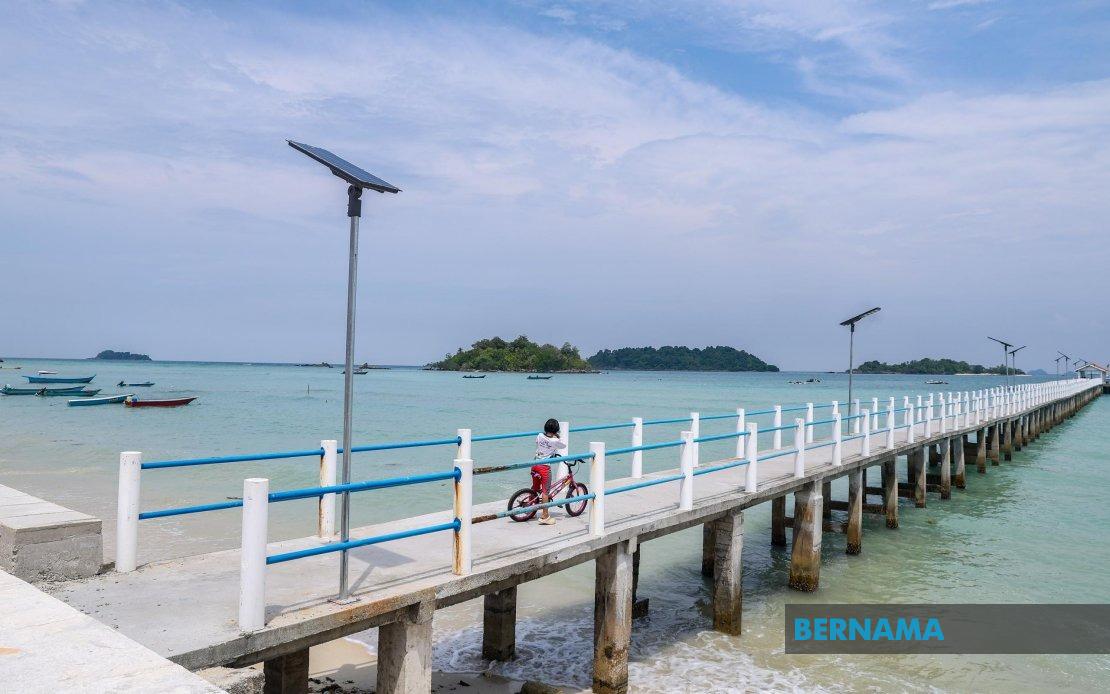
With polling day approaching for the Johor state election, a small island community off the coast of Mersing is making clear demands of its incoming representatives. Residents of Pulau Tinggi, whose approximately 150 inhabitants occupy two villages, have identified infrastructure decay and economic hardship as their most pressing concerns, hoping that fresh political attention will translate into concrete action on problems that have festered for years.
The Kampung Pasir Panjang jetty stands as the focal point of community frustration. For residents and tourists alike, the structure has become increasingly hazardous, with deterioration beginning as far back as 2017 but worsening considerably since. Though some fishermen and visitors still venture onto the aging facility out of necessity, safety has become a genuine concern. Village chief Rossana Hussin, who assumed her role in 2024, underscored the urgency of the situation, noting that the applications to fund the upgrade have been pending since March when they were formally submitted to the Mersing District Office. Despite receiving what officials characterized as positive initial feedback, no concrete progress has materialized on the ground, leaving residents frustrated by bureaucratic delays.
Alongside infrastructure deficits, economic hardship among the island's predominantly fishing population demands immediate intervention. The second major concern raised by community leaders centres on housing assistance for B40 category fishermen in Kampung Tanjung Balang. Many families face incomplete home repairs, while others struggle with basic housing maintenance they cannot afford. For a population dependent on volatile marine livelihoods and struggling with poverty-line incomes, such housing challenges compound an already precarious economic situation. Village chief Rossana emphasized that targeted housing assistance would not merely provide temporary relief but could meaningfully improve living conditions and dignity for some of the state's most vulnerable residents.
The island's deteriorating economic prospects represent a deeper concern underlying these immediate demands. Pulau Tinggi was once home to a significantly larger population, but decades of limited employment opportunities have driven residents away in search of livelihoods elsewhere. Some relocated to Felda schemes, others to urban centres, reflecting a pattern of rural-to-urban migration common across Malaysia. This exodus represents not just population loss but a gradual erosion of community fabric and cultural continuity. Eighty-five-year-old Mariam Mamat articulated this anxiety, hoping that the elected Tenggaroh state representative would prioritize tourism revitalization as a mechanism for job creation and economic regeneration.
The tourism dimension deserves particular attention, as it represents both the island's historic strength and its unrealized potential. Pulau Tinggi's natural attractions once drew visitors, generating supplementary income for local residents and supporting small businesses. However, without investment in basic infrastructure such as functional jetties and adequate accommodation options, attracting tourists becomes nearly impossible. The deteriorating jetty particularly hampers this potential, as reliable transport access forms the bedrock of island tourism development. Addressing the jetty upgrade could therefore catalyze broader economic revival rather than representing a standalone infrastructure project.
The timing of these community appeals carries strategic weight. With approximately 2.7 million eligible voters preparing to cast ballots in the 16th Johor state election on Saturday, the electoral cycle offers a window of heightened political receptivity. Residents of small communities like Pulau Tinggi understand that elected representatives, freshly mandated by voters, often possess greater political capital and motivation to address constituency concerns during their honeymoon period in office. By articulating their demands clearly before election day, community leaders position themselves to hold incoming representatives accountable while momentum for change remains high.
The Tenggaroh state representative position carries responsibility for addressing these island concerns, though effective resolution will require coordination across multiple governmental levels and agencies. District-level administration, state government resources, and possibly federal development programs must align to tackle both infrastructure and social welfare dimensions. Village chief Rossana's explicit hope that the elected representative and "relevant parties" would coordinate efforts acknowledges this reality, signalling community understanding that isolated efforts by any single official cannot succeed.
For Malaysian readers beyond Johor, Pulau Tinggi's struggles illustrate broader patterns affecting remote and maritime communities nationwide. Small island populations, fishing-dependent economies, aging infrastructure, and youth outmigration represent challenges replicated across Sabah, Sarawak, and peninsular Malaysia's coastal regions. Solutions developed in response to Pulau Tinggi's particular circumstances—whether through innovative tourism models, targeted rural infrastructure programs, or community-focused poverty alleviation—could generate insights applicable elsewhere. The election cycle's focus on Johor therefore carries relevance for regional policymaking and development strategy.
The human dimension of these demands deserves emphasis. Behind applications submitted in March and positive feedback received lie actual families facing genuine hardship—fishermen unable to afford home repairs, residents warned to avoid a deteriorating jetty they nonetheless depend upon, young people departing because sustainable livelihoods cannot be found at home. Rossana Hussin's careful documentation of community concerns and her formal engagement with district administration demonstrate responsible local leadership, yet her frustration with bureaucratic delays reflects the wider gap between government responsiveness and community need that periodically surfaces during electoral campaigns.

