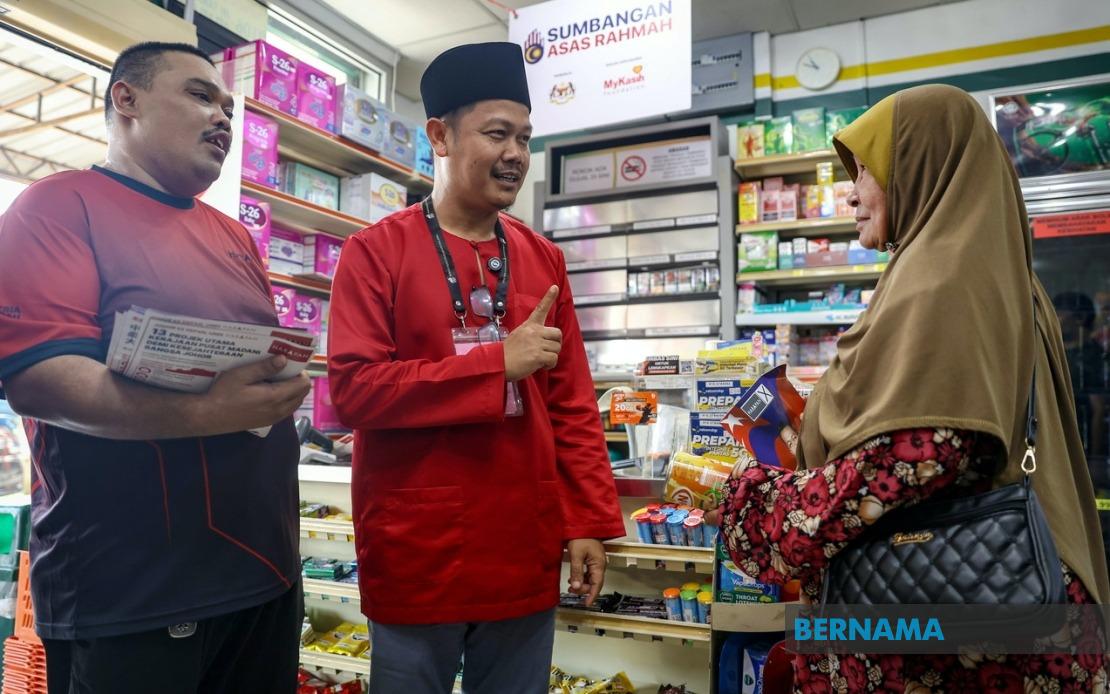
The Pulai Sebatang state constituency has emerged as one of Johor's most competitive battlegrounds as the 16th state election approaches on July 11, with two contrasting visions for the constituency's future now vying for voter support. Pakatan Harapan's Haniff @ Ghazali Hosman is positioning himself as an agent of transformative change, emphasising sustainable development and investment attraction, while incumbent Barisan Nasional representative Hasrunizah Hassan is banking on demonstrated achievements over her first term to secure a renewal of her mandate.
The 46-year-old Haniff, who previously contested the parliamentary seat of Pontian in 2013 and the Benut state seat in 2022, has centred his campaign around repositioning Pulai Sebatang as a premium destination that balances economic growth with protection of traditional livelihoods. Speaking from PH's operations centre in Pontian, Haniff characterised the constituency as an underexploited gem possessing considerable untapped economic potential. He emphasises that the area's geographic positioning—encompassing Pontian town and proximity to established economic corridors in the wider region—presents substantial opportunities for targeted investment that could generate employment and revenue without displacing the agricultural and fishing communities that have historically anchored the local economy.
Haniff's campaign strategy reflects a grassroots-focused approach, relying heavily on walkabouts and direct door-to-door engagement with residents to understand their priorities and concerns firsthand. This methodology contrasts with broader campaign narratives and allows him to address hyperlocal issues that might escape attention in media coverage. His platform specifically addresses long-standing grievances including compensation demands from fishermen operating in Pontian Besar and persistent drainage infrastructure problems that regularly precipitate flooding in the farming regions of Parit Datuk. Haniff expresses confidence that PH can replicate its 2018 performance in Pulai Sebatang, suggesting that feedback gathered during his community engagements has been encouraging.
Hasrunizah Hassan, the BN incumbent who assumed office in 2022, has anchored her campaign around tangible accomplishments and ongoing infrastructure initiatives rather than aspirational promises. The most prominent issue raised consistently by constituents throughout her campaigning has been the proposed expansion of Pontian Hospital, a project that has moved closer to realisation following approval for a new hospital block, with procurement procedures now underway. This represents a significant infrastructure commitment for a largely rural constituency where healthcare access has historically been a challenge. The hospital expansion embodies Hasrunizah's framing of her tenure as results-oriented governance focused on delivering essential services to residents.
Beyond healthcare infrastructure, Hasrunizah has committed to completing the remaining 25 village road projects identified from 75 initial applications since her entry into representative office two years ago. This substantial infrastructure agenda addresses rural connectivity challenges that have long constrained economic development in farming and fishing communities. The BN representative has also pledged to maintain implementation of state-level welfare schemes including the Kasih Johor assistance programme, housing support initiatives, and first-home ownership schemes that provide material benefits to lower-income households. These welfare commitments represent continuity of social protection measures that have likely benefited significant portions of the electorate.
Hasrunizah's campaign encompasses both traditional door-to-door outreach and strategic deployment of social media platforms to reach digitally-connected voters. Her messaging emphasises BN's institutional experience and track record over the past term, arguing that demonstrated competence and established relationships with state and federal resources position the coalition to continue delivering for constituents. This appeals to voters who prioritise stability and incremental improvement over transformative change, particularly those who have directly benefited from specific programmes or projects.
Pontian Member of Parliament Datuk Seri Ahmad Maslan has provided institutional endorsement for Hasrunizah, describing her alongside Benut BN candidate Datuk Mohd Sumali Reduan as capable representatives possessing strong educational credentials and established track records of public service. Ahmad's framing of BN candidates emphasises their credibility and preparedness for elected office. He characterised BN's campaign machinery as highly motivated, suggesting that organisational energy and ground-level coordination would translate into electoral momentum extending through polling day.
The contest between Haniff and Hasrunizah reflects broader tensions shaping Malaysian electoral competition between incumbent parties emphasising stability and proven delivery against opposition parties offering visions of renewal and transformation. In rural constituencies like Pulai Sebatang, this dynamic acquires particular salience given the concentration of agricultural and fishing communities whose livelihoods depend on supportive government policies and infrastructure investment. The outcome will partly depend on whether voters in Pulai Sebatang prioritise continuation of existing welfare and infrastructure programmes against the potential for broader economic transformation and diversified investment attraction.
The Pulai Sebatang contest also reflects demographic and economic transitions occurring across Johor's rural constituencies as traditional sectors face pressures from modernisation and climate variability while younger residents seek economic opportunities beyond agriculture and fishing. This creates space for candidates to appeal to residents across different demographic cohorts with distinct priorities—established farmers and fishermen concerned with protecting their livelihoods versus younger workers seeking new employment avenues and entrepreneurial possibilities. Haniff's emphasis on investment attraction and sustainable development may resonate particularly with voters seeking economic diversification, while Hasrunizah's focus on welfare programmes and incremental infrastructure improvements appeals to constituencies benefiting from existing state support.
Early voting for the Johor state election is scheduled for July 7, with the main polling day on July 11. The Pulai Sebatang race represents one of multiple competitive constituencies where shifting voter preferences and campaign effectiveness will determine the overall composition of the new state legislature. The outcome in this particular seat will offer insights into whether voters in Johor's mixed urban-rural constituencies prefer continuity with demonstrated track records or are prepared to embrace opposition parties offering alternative development visions and programmatic approaches to governance.

