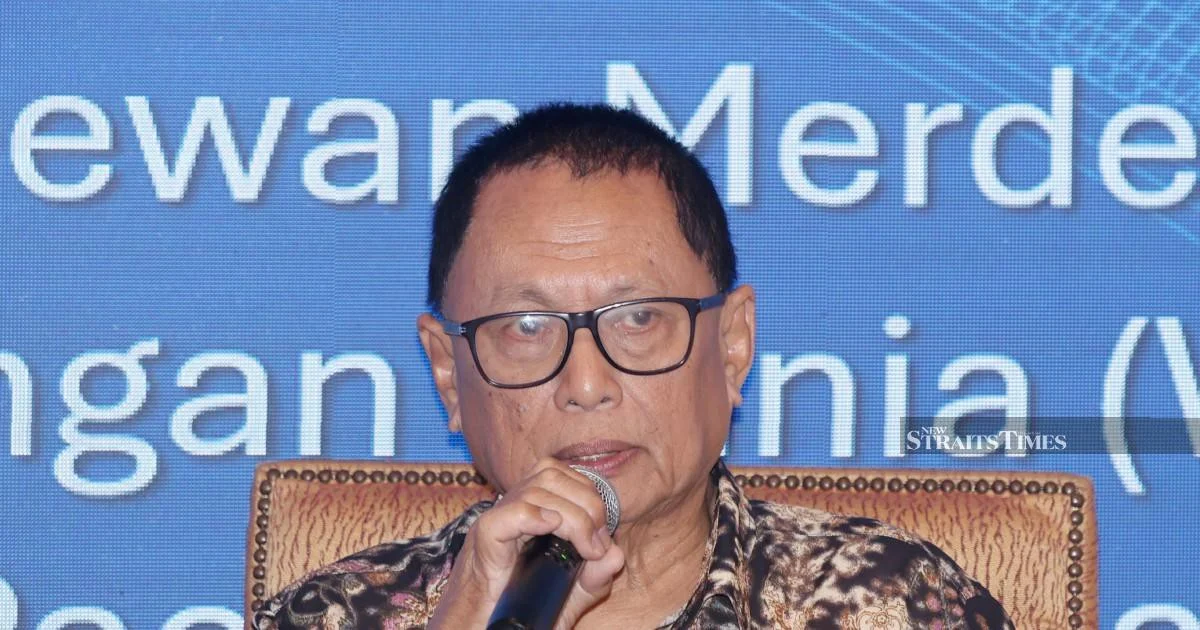
Datuk Dr Mohd Puad Zarkashi has characterised his recent departure from Umno as a calculated manoeuvre designed to provoke serious introspection within the party's leadership structure rather than an act of impulsive frustration. Speaking in Johor Baru, the former Supreme Council member pushed back against speculation that his exit was rooted in disappointment stemming from his son's failure to secure a candidacy nomination, framing the decision instead as a strategic intervention aimed at forcing the party hierarchy to confront pressing internal challenges.
The characterisation of his departure as "kamikaze" in nature suggests a willingness to incur personal political cost in pursuit of what Puad perceives as a greater institutional good. This terminology carries significant weight within Malaysian political discourse, where such self-sacrificial rhetoric often signals deep-seated frustration with the trajectory of established organisations. For Umno, the intervention represents a rare instance of a senior party figure publicly departing and simultaneously levelling structural critiques rather than simply fading quietly from the political landscape.
Puad's rejection of the personal motivation narrative stands as a critical distinction in understanding his motivations. By explicitly denying that his son's candidacy disappointment drove the decision, he attempts to redirect the conversation toward substantive party governance issues. This defensive posture suggests awareness that permitting a narrative of personal grievance would fundamentally undermine his credibility and reduce what he presents as principled criticism to mere factional squabbling. The effort to separate personal circumstances from institutional concerns reflects a sophisticated understanding of political communication dynamics.
The timing of such resignations within Umno carries particular significance given the party's ongoing internal tensions and its role as a cornerstone of Malaysia's political establishment. Umno has faced repeated cycles of internal upheaval over recent years, ranging from leadership transitions to questions about organisational relevance and generational renewal. Against this backdrop, a figure of Puad's standing departing the Supreme Council sends ripples through factional networks and raises questions about whether others harbouring similar misgivings might follow suit.
Puad's invocation of the need to "wake party leaders up" identifies specific deficiencies in how the party's top tier operates and makes decisions. Rather than offering vague criticism, this phrasing suggests concrete concerns about attentiveness, responsiveness, or strategic vision at the highest levels. For Umno members and observers, such language invites speculation about which specific decisions or omissions prompted such dramatic action and whether other senior figures share comparable frustrations about leadership performance.
Within the Malaysian political context, where factional loyalty and institutional continuity have traditionally been valued, a public resignation coupled with explicit criticism represents an unusual move. Most high-level figures navigate disputes through internal channels or simply distance themselves gradually from party activities. Puad's willingness to make his departure and its underlying rationale public suggests either a conviction that internal mechanisms have failed or a deliberate choice to amplify pressure on leadership to respond to his concerns.
The dynamics of party management in Malaysia make such interventions potentially consequential. Umno's internal cohesion remains central to the broader political landscape, and prominent departures can trigger broader reassessment within the membership about party direction and leadership capability. Whether Puad's intervention catalyses meaningful change or becomes absorbed as isolated dissent will partly depend on how comprehensively his concerns align with anxieties held by other influential party members.
For younger and reform-minded Umno figures, Puad's action potentially establishes a precedent for voicing structural critiques rather than simply accepting decisions from above. This could reinvigorate conversations about party modernisation and generational transitions that have simmered beneath the surface. Conversely, entrenched leadership may interpret the resignation as evidence that challenges to their authority must be met with firmer consolidation rather than accommodation.
The broader Southeast Asian context adds another dimension to understanding this development. Regional political parties across ASEAN struggle with questions of institutional renewal, generational transition, and maintaining relevance amid shifting voter expectations. Umno's experience navigating these pressures resonates across the region, and how the party responds to figures like Puad articulating internal discontent will likely influence discussions about party governance elsewhere in Southeast Asia.
Going forward, the substance of Puad's specific concerns regarding party leadership decisions and direction will prove crucial in determining whether his resignation generates sustained momentum for change or recedes as a notable but ultimately circumscribed incident. His framing of the departure as a deliberate intervention rather than reactive withdrawal suggests he maintains engagement with these issues despite formally relinquishing his Supreme Council seat, potentially positioning him as a focal point for ongoing discussions about Umno's institutional future and strategic priorities.

