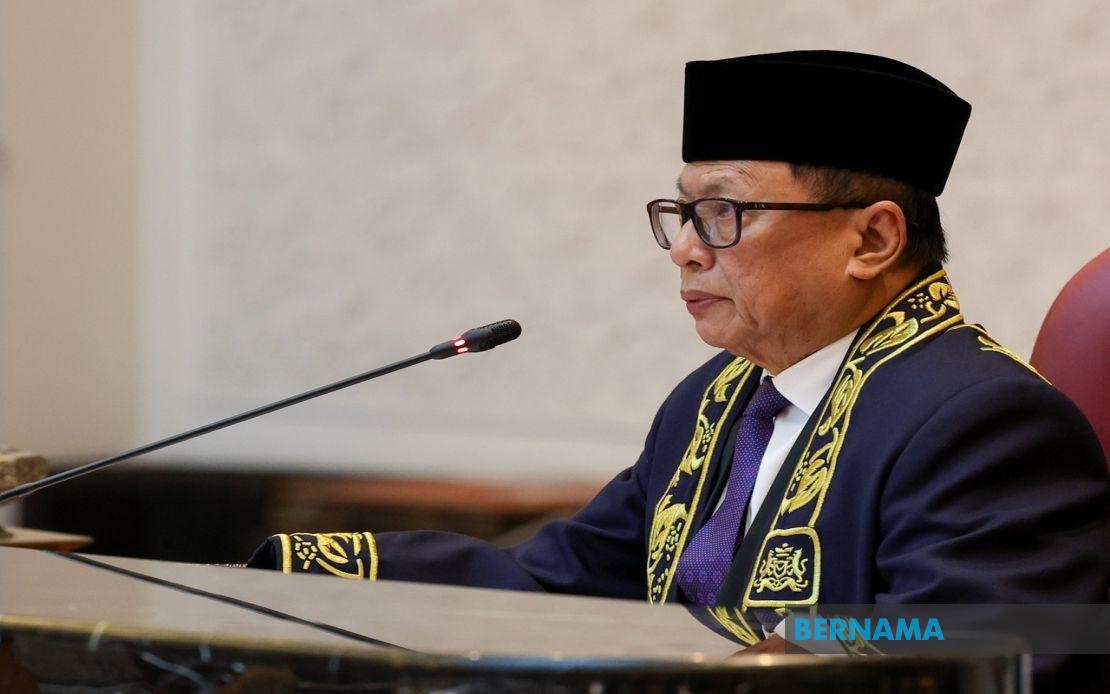
Datuk Dr Mohd Puad Zarkashi, a sitting member of UMNO's Supreme Council and current holder of the Rengit state assembly seat, formally announced his exit from the party on June 25, with immediate effect. The veteran politician made his decision public through a Facebook statement, framing his departure as a principled stand that would grant him the freedom to articulate his perspectives without fear of internal party retaliation or accusations of disloyalty.
In his statement, Puad emphasised that he had made this choice autonomously, without external pressure or manipulation. He argued that his resignation would spare UMNO the procedural necessity of expelling him from the organisation, while simultaneously liberating him from the constraints that party membership imposed. By stepping away voluntarily, he suggested, he could now openly criticise the party without being branded as a traitor—a consideration that underscores the fractious internal dynamics plaguing UMNO in recent years.
The crux of Puad's grievance centres on Johor Chief Minister Onn Hafiz, whom he characterised as a "pak turut," or yes-man, in the context of state party operations. This allegation carries significant weight given Puad's seniority within UMNO structures and his intimate knowledge of the party's machinery. He went further, contending that Onn Hafiz's demeanour has effectively reduced Johor UMNO to a "tethered puppet"—a metaphor suggesting that state-level party decisions are dictated by unseen external forces rather than emerging from genuine local leadership or democratic party processes.
Puad framed his resignation as an act of "political courage," positioning himself as willing to expose what he perceives as systemic misconduct within the party apparatus. This language reveals his intention to establish a moral high ground, distinguishing his exit from mere opportunism or careerism. He rejected suggestions that personal interests had motivated his decision, though such denials often accompany high-profile party departures in Malaysian politics, where factional rivalries and individual ambitions frequently intertwine with broader ideological disputes.
The timing of his announcement followed hints he had made the previous day regarding candidate selection irregularities for the Barisan Nasional slate in the forthcoming Johor state election. These hints suggested that Puad had identified what he considered procedural improprieties in how potential candidates were chosen, lending credibility to his broader critique of governance within Johor UMNO. His decision not to defend his own Rengit seat—despite winning it comfortably in the 2022 state election—adds another layer to the narrative, suggesting he may have been sidelined in candidate discussions or felt compelled to withdraw rather than contest under circumstances he deemed unfair.
Puad's political trajectory illuminates why his departure commands attention beyond routine party defections. He previously served as Deputy Education Minister from 2009 to 2013 and later headed the Special Affairs Department from March 2015 to April 2018, positions that reflect his standing within UMNO's federal hierarchy. At the parliamentary level, he won the Batu Pahat seat in the 12th General Election with a substantial majority of 12,968 votes, though he subsequently lost the seat in the 13th General Election to PKR's Datuk Mohd Idris Jusi by a narrow margin of just 1,524 votes. This electoral vulnerability may have contributed to his exclusion from current candidate selection processes, though Puad has framed his Rengit withdrawal as a magnanimous gesture to provide opportunities for younger party members rather than as a forced withdrawal.
For Malaysian observers, Puad's exit represents another visible crack in UMNO's unity at a moment when the party confronts challenges from multiple directions. The allegation that a state chief minister functions as a subordinate entity rather than an independent leader strikes at the heart of federalism and party accountability within Malaysia's system. If seasoned party figures perceive leadership as lacking autonomy, this perception can cascade through grassroots membership, potentially undermining campaign effectiveness and volunteer mobilisation during elections.
The substance of Puad's criticism—that Johor UMNO operates as a controlled instrument rather than an authentic political organisation responsive to its membership—touches on enduring structural tensions within the party. Malaysian political history reveals recurring patterns of factional dominance, patronage networks, and concentration of decision-making authority among small circles of power brokers. Whether Puad's specific allegations reflect unique circumstances within Johor or exemplify broader systemic problems remains ambiguous from his statement alone, yet the charge warrants scrutiny given his insider knowledge.
Regionally, Puad's departure occurs amid broader volatility affecting UMNO's position throughout Malaysia. The party continues navigating its post-2018 transformation from government to opposition in various states, while attempting to consolidate influence within Barisan Nasional. Each high-profile exit or internal criticism risks eroding the narrative of institutional renewal and strategic direction that party leadership has sought to establish. For Southeast Asian analysts, the episode illustrates how governance challenges within Malaysia's dominant Malay-Muslim political organisation can reflect or shape broader questions about democratic accountability and institutional integrity across the region.
Puad's invocation of "political courage" as justification for his departure may resonate differently depending on one's perspective. Supporters may view him as a principled dissident willing to sacrifice party affiliation for integrity, while critics might characterise his move as opportunistic or motivated by factional rivalry. What remains unambiguous is that a senior UMNO figure has publicly articulated serious concerns about leadership quality and autonomous decision-making at the state level, concerns that the party must address substantively if it seeks to rebuild internal cohesion and public confidence.

