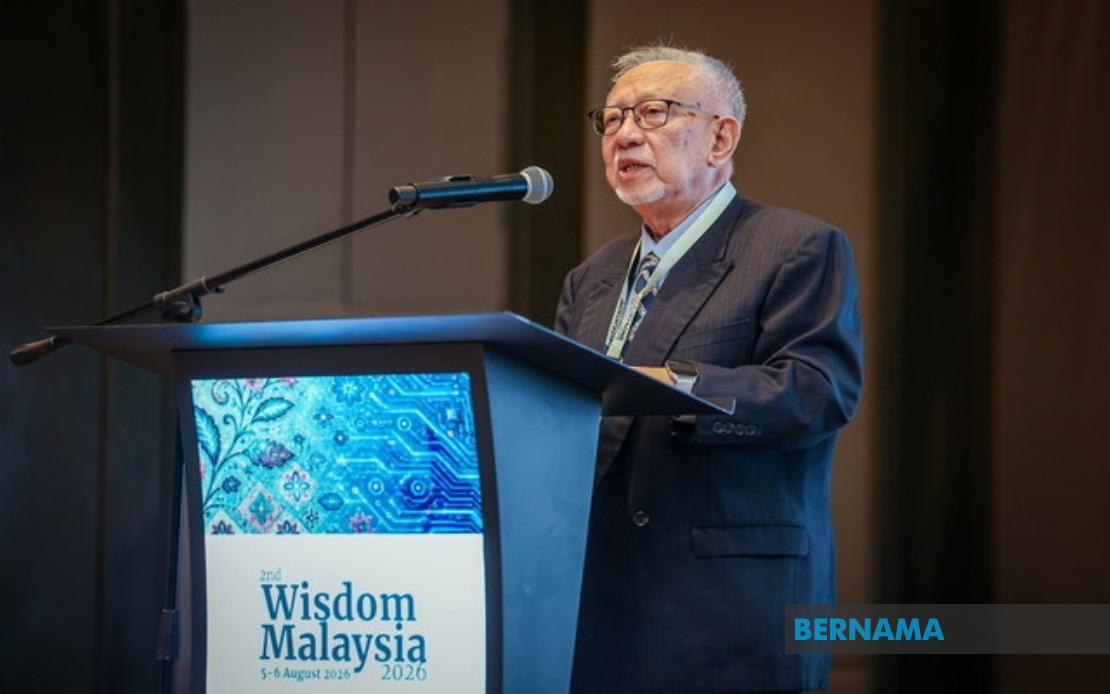
Intimidating whistleblowers rather than investigating corruption allegations exposes nations to escalating financial scandals and organised crime, according to Datuk Syed Ahmad Idid Syed Abdullah, a former High Court Judge of Malaya and Borneo. Speaking at the 2nd Wisdom Malaysia Conference 2026 in Kuala Lumpur, he cautioned that without robust protections for those who expose misconduct, organisations become breeding grounds for undetected abuse and systemic dishonesty among those in authority.
The former judge emphasised that when institutions punish or marginalise individuals for reporting wrongdoing, they inadvertently cultivate an environment where wrongdoing flourishes unchecked. Honest employees, fearful of retaliation or professional consequences, retreat into silence rather than risk their careers and safety by speaking truth to power. This dynamic fundamentally weakens accountability mechanisms that underpin good governance and the rule of law. In Syed Ahmad Idid's view, the choice between protecting whistleblowers and permitting corruption is not a marginal policy decision but one that determines whether organisations can maintain basic integrity.
Clarifying the distinction between legitimate whistleblowing and defamation, Syed Ahmad Idid argued that exposing corrupt practices constitutes an act of justice, not slander. Whistleblowers who come forward with evidence of misconduct perform a civic and professional duty. Their actions aim to dismantle corrupt networks, protect public resources, and restore trust in institutions. Yet many jurisdictions and organisations conflate honest reporting with malicious accusation, a conflation that discourages principled individuals from acting on their conscience. This semantic confusion serves corrupt actors by allowing them to portray whistleblowers as troublemakers rather than guardians of institutional health.
Beyond governance theory, Syed Ahmad Idid highlighted the tangible financial consequences of successful anti-corruption efforts. He proposed that if Malaysia were to successfully recover all illicit proceeds diverted through corruption and systemic leakages, those recovered funds would represent a transformative resource for public development. The scale of this potential windfall illustrates why protecting and empowering whistleblowers yields enormous economic returns, not merely moral satisfaction.
To illustrate the practical impact, he suggested that recovered corruption funds could finance construction of at least two fully equipped general hospitals in every Malaysian state. Beyond healthcare, he indicated that the resources could establish between 20 and 50 high-quality schools throughout the nation, complete with modern infrastructure, comprehensive learning materials, and enhanced teacher training programmes. These investments would not merely expand capacity but fundamentally elevate educational quality to international standards, addressing long-standing gaps in Malaysia's school system.
The broader implications extend beyond immediate infrastructure gains. A world-class education system, Syed Ahmad Idid contended, would cultivate human capital of exceptional calibre. Beyond producing skilled professionals for private enterprise, superior educational outcomes translate directly into more effective security personnel and elite athletes representing the nation internationally. This multiplier effect—where corruption prevention funds systemic excellence across multiple domains—demonstrates how anti-corruption frameworks create cascading improvements in national competitiveness and social wellbeing.
Syed Ahmad Idid also directed attention to how public discourse surrounding corruption shapes institutional and individual behaviour. When political leaders, media commentators, or organisational hierarchies offer lenient or distorted interpretations of corrupt conduct, they normalise misconduct and weaken collective commitment to justice. Society's willingness to engage in semantic games—characterising theft of public money as "mismanagement," or embezzlement as "administrative irregularities"—creates permissive environments where corrupt actors operate with reduced fear of meaningful consequences. He called for unwavering adherence to principles of justice and integrity as foundational to national security and prosperity.
The 2nd Wisdom Malaysia Conference 2026, organised by Kerjaya One PLT, positioned this discussion within a broader forum where experienced public and private sector leaders share accumulated knowledge with emerging leaders and professionals. Such forums serve crucial functions in Malaysian civic life, creating spaces where principled figures can articulate values-based perspectives on governance without the constraints of official positions or political party discipline. Syed Ahmad Idid's intervention contributed to this tradition, offering veteran judicial perspective on institutional ethics during a period when Malaysia continues navigating complex questions about corruption control and institutional reform.
His remarks arrive against Malaysia's ongoing efforts to strengthen anti-corruption frameworks following high-profile cases and public scandals of recent years. The judiciary, civil service, and law enforcement agencies have implemented various reforms, yet structural vulnerabilities persist. Whistleblower protection mechanisms remain inconsistently applied across government agencies and private organisations. Some sectors maintain robust protections while others leave potential reporters vulnerable to retaliation, creating uneven incentives for disclosure. Syed Ahmad Idid's emphasis on consistent, comprehensive whistleblower protections suggests that piecemeal reforms inadequately address systemic corruption.
For Malaysian readers and policymakers, his analysis underscores a critical insight: corruption prevention depends not merely on stronger laws or increased enforcement resources, but on cultivating institutional cultures where speaking truth incurs reward rather than punishment. This cultural transformation requires consistent messaging from senior officials, transparent investigation procedures, and genuine career protection for those who report misconduct. Without such protections, even well-designed anti-corruption machinery operates at fraction of potential effectiveness, as would-be whistleblowers remain silent and corruption festers unseen.

