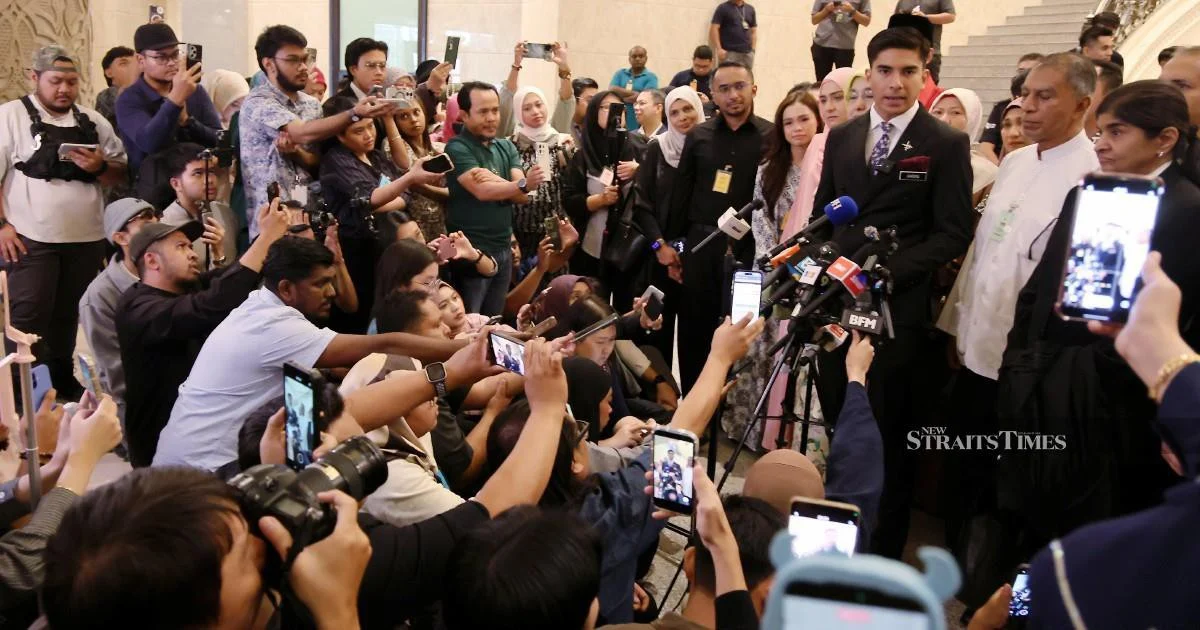
The prosecution has formally accepted the Federal Court's landmark decision to uphold the acquittal and discharge of Muar member of parliament Syed Saddiq Syed Abdul Rahman from corruption-related charges, marking a definitive end to a high-profile legal battle that captured national attention. The statement, issued from Putrajaya, signals the prosecution's respect for the apex court's ruling and indicates that no further legal challenges will be mounted in the matter.
Syed Saddiq, a prominent political figure who served as Youth and Sports Minister under the Mahathir administration, had faced serious allegations centring on his handling of funds related to his political activities. The case represented one of several accountability proceedings initiated against politicians during and after the transition from the Pakatan Harapan government, making it symbolically significant beyond the individual circumstances involved.
The Federal Court's decision to maintain the acquittal carries substantial implications for the Malaysian legal system's approach to corruption cases involving sitting members of parliament. By upholding the lower courts' findings, the apex bench reinforced the principle that evidence must meet rigorous evidentiary standards regardless of the defendant's political standing or public profile. This consistency in legal reasoning helps maintain public confidence in judicial independence and impartial fact-finding.
The prosecution's acceptance of the ruling demonstrates institutional discipline within Malaysia's legal framework. Rather than pursuing additional avenues or seeking review mechanisms, the prosecution has chosen to respect the finality of the Federal Court's decision. This approach contrasts with scenarios where prosecutorial bodies might attempt to re-litigate similar issues through parallel legal channels or alternative procedural mechanisms, thereby affirming the supremacy of the Federal Court in the Malaysian judicial hierarchy.
For Syed Saddiq personally, the decision represents a complete legal vindication after years of proceeding through multiple court levels. The 30-something politician's navigation of the Malaysian justice system—from the High Court through the Court of Appeal to the Federal Court—consumed considerable time and undoubtedly affected his political career and personal circumstances. The finality now achieved allows him to move forward without the legal cloud that has shadowed his activities since charges were initiated.
The case also reflects broader patterns in Malaysia's anti-corruption efforts during a period of significant political turbulence. Between 2018 and 2023, numerous high-ranking figures faced investigations and prosecutions as part of what authorities characterised as comprehensive accountability measures. The outcomes of such cases, whether resulting in convictions, acquittals, or discharge, collectively shape the trajectory of public trust in Malaysia's commitment to fighting corruption and the perceived impartiality of enforcement mechanisms.
From a Southeast Asian perspective, Malaysia's handling of political corruption cases draws scrutiny from international observers assessing the region's governance standards and rule of law development. The Federal Court's decision to uphold Syed Saddiq's acquittal, coupled with the prosecution's dignified acceptance, contributes to a narrative of Malaysia's judicial system functioning according to established legal principles rather than political considerations. This perception matters for international investment decisions, diplomatic relationships, and the broader reputation of Malaysian institutions.
The legal arguments that led to the acquittal merit consideration, though detailed reasoning typically emerges through published Federal Court judgments accessible to legal professionals and interested observers. Such judgments often provide valuable precedent for future cases involving similar legal questions, potentially influencing how evidence is evaluated in comparable circumstances. The Malaysian legal community will likely analyse the judgment extensively to understand its implications for corruption prosecutions moving forward.
Looking ahead, this closure allows Malaysian politics to move beyond litigation that has occupied media attention and parliamentary discussion for an extended period. While Syed Saddiq's political rehabilitation and future political trajectory remain matters of public interest, the removal of criminal allegations clears the path for assessments based on his political performance and public standing rather than pending legal proceedings. This distinction between legal accountability and political accountability becomes increasingly important as Malaysia navigates its evolving democratic landscape.
The prosecution's statement also signals consistency with Malaysia's international commitments regarding rule of law and judicial respect. As Malaysia works to improve its standing in international corruption perception indices and governance assessments, the willingness of prosecutorial authorities to accept unfavourable court decisions demonstrates respect for judicial determinations—a fundamental hallmark of credible legal systems. This acceptance, though perhaps less celebrated than successful convictions, ultimately strengthens the institutional legitimacy of Malaysia's justice apparatus.

