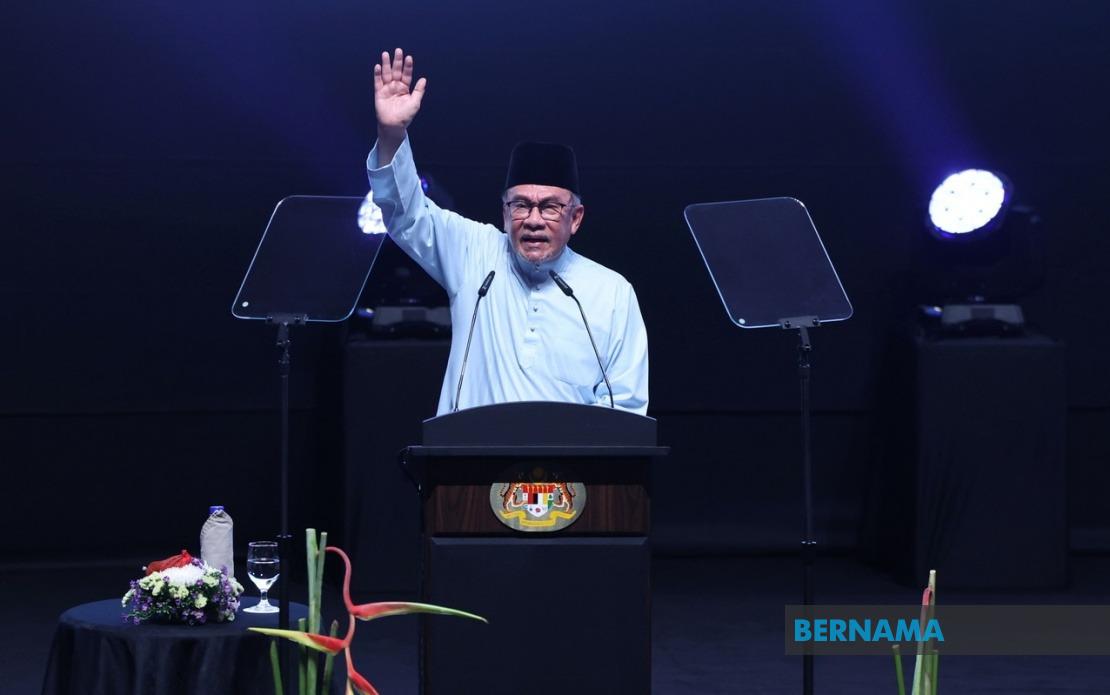
The Ministry of National Unity has confirmed that the Prime Minister's address ceremony for the 2026 National Day celebration will take place at the Putrajaya International Convention Centre at 2 PM, marking a significant scheduling adjustment made in response to contemporary environmental and safety considerations affecting the nation's marquee patriotic observance.
The timing change reflects a broader decision to relocate the ceremony from its traditional venue at Dataran Merdeka in Kuala Lumpur to the PICC facility in Putrajaya. According to the National Day and Malaysia Day Celebration Working Committee operating under the Ministry of Communications, this repositioning directly addresses the persistent haze conditions affecting multiple regions across the country. The meteorological outlook issued by the Malaysian Meteorological Department forecasted high concentrations of haze in Johor, Melaka, Negeri Sembilan, Selangor, Kuala Lumpur and Putrajaya extending through August 31, with deteriorating conditions expected in Sabah from late August.
Institutional priorities centred on participant welfare motivated the scheduling recalibration. The Ministry of National Unity's official statement emphasised that the time and location adjustments were calibrated to safeguard the health, safety and comfort of invited guests and members of the general public participating in the festivities. Beyond immediate welfare considerations, organisers stressed the operational necessity of ensuring a seamless ceremonial implementation, reflecting the complexity of orchestrating a significant state occasion during challenging environmental circumstances.
The 2026 National Day address ceremony holds substantial symbolic weight within Malaysia's contemporary political and social landscape. Officials framed the event as a critical institutional platform through which the MADANI government's leadership could articulate its foundational aspirations and articulate the nation's broader strategic vision. The ceremony serves as an occasion to reinvigorate the collective independence spirit, consolidate patriotic sentiment among citizens, and cultivate a pervasive sense of shared responsibility and stewardship toward national interests and long-term prosperity.
The relocation and rescheduling underscore persistent environmental challenges confronting Southeast Asia's transnational region. Transboundary haze episodes, often originating from land-clearing activities and agricultural burning in neighbouring territories, have become a recurring disruption to public life across Malaysia and the broader region. The decision to modify arrangements for a national ceremony demonstrates the tangible operational consequences these environmental phenomena impose on governance, public administration, and civic participation structures. For Malaysian policymakers and administrators, such adjustments reflect the mounting necessity to integrate climate and air quality considerations into comprehensive planning frameworks across all institutional domains.
The inclusive messaging accompanying the ceremony announcement emphasises the government's commitment to fostering societal cohesion. Authorities explicitly invited all Malaysians to participate in celebrating National Day, positioning the observance as a unifying occasion transcending conventional demographic boundaries. The official narrative accentuated values encompassing mutual comprehension across communities, interpersonal respect, and deliberate acceptance of Malaysia's multifaceted diversity architecture. These emphases align with broader MADANI governance philosophy, which positions social harmony, institutional integrity, and inclusive prosperity as interconnected pillars of national development strategy.
The adjustment carries implications extending beyond ceremonial logistics. National Day observances function as significant moments for public discourse, collective memory formation, and symbolic reinforcement of national identity. Relocation to an indoor convention facility, while practically justified by environmental conditions, subtly reshapes the experiential dimensions of public participation. The traditional Dataran Merdeka venue carries profound historical resonance, intimately connected to Malaysia's independence narrative and preceding decades of nationalist mobilisation. The Putrajaya relocation, by contrast, connects the ceremony to Malaysia's purpose-built administrative capital, symbolically linking contemporary governance frameworks with the nation's independent identity.
From a regional perspective, Malaysia's adaptive response to transboundary environmental pressures illustrates broader Southeast Asian governance challenges. The haze phenomenon stems from transnational environmental dynamics extending beyond any single nation's administrative jurisdiction, yet individual governments must implement operational responses within their sovereign territories. Malaysia's approach—pragmatically adjusting ceremonial arrangements while maintaining the substantive observance—reflects the constrained flexibility available to national authorities operating within geopolitical and environmental systems they cannot unilaterally control or substantially modify.
The Ministry of National Unity's coordination role reflects institutional responsibilities for maintaining social cohesion and managing national symbolic occasions. The public communication emphasising safety, comfort, and operational coherence demonstrates official acknowledgment that contemporary governance requires transparency regarding decision-making rationales, particularly when adjustments affect anticipated public participation in significant national events. This communicative approach aligns with evolving expectations regarding governmental accountability and stakeholder engagement in administrative processes.
Looking forward, the 2026 ceremony represents Malaysia's continuing effort to balance traditional observances with practical contemporary realities. The nation's identity formation narratives remain rooted in independence and national sovereignty, yet the operational management of these symbolic occasions increasingly intersects with environmental, health, and transnational considerations transcending classical state-centric governance frameworks. The ceremony at PICC on August 31 will accordingly embody both Malaysia's enduring commitment to national commemoration and the pragmatic adaptation requirements characterising twenty-first-century governance in a regionally integrated, environmentally interconnected world.

