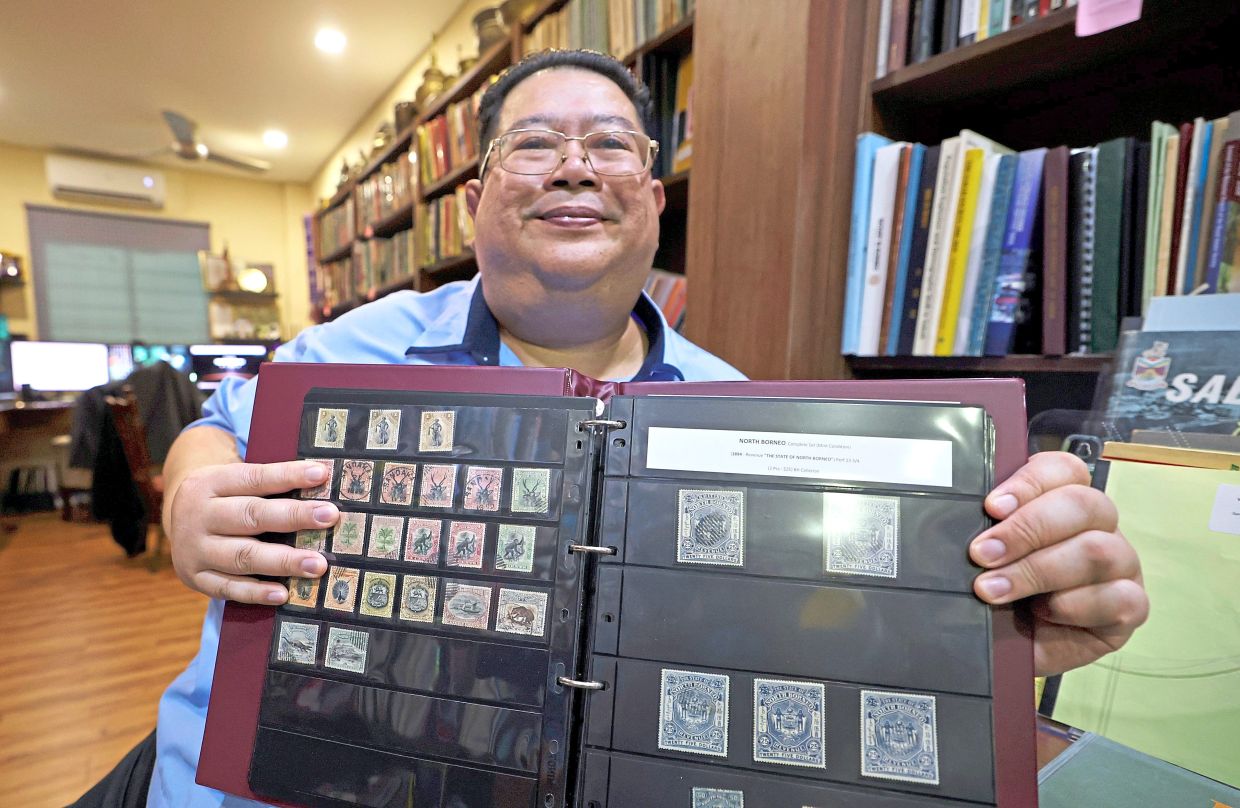
The philatelic treasures of North Borneo, issued between 1883 and 1963, represent far more than postal artifacts—they form a tangible chronicle of Sabah's transformation during a critical period of development and colonial administration. Yet this invaluable historical record faces an uncertain future as collector interest dwindles and the community of enthusiasts shrinks dramatically. Dr Shari Jeffri, the 56-year-old founder and president of the Borneo History Association, has emerged as a passionate custodian of this legacy, arguing forcefully that these stamps merit preservation as what he calls a "living archive" deserving transmission to succeeding generations.
The accessibility crisis is immediate and measurable. Recent surveys of antique dealers throughout Kota Kinabalu reveal that genuine North Borneo stamps have grown progressively scarce, their market value fluctuating based on age, physical condition, and rarity. When specimens do surface, they command premium prices reflecting their historical significance and declining supply. Among documented discoveries are albums preserving specimens such as a six-cent issue from the 1954-1961 series showcasing Queen Elizabeth II alongside a Dusun woman, alongside a ten-cent stamp depicting logging operations—both powerful visual records of economic activity during Sabah's mid-twentieth century development.
Dr Shari's own connection to philately traces back through family lineage, shaped by inheritance rather than deliberate collecting ambition. His late grandfather, employed by the Recreation Club Jesselton during the 1920s, developed his stamp collection while observing the hobby's popularity among British officers stationed in the settlement. This grandfather deliberately cultivated an interest in stamp collecting, hoping to establish a generational tradition of preservation and appreciation. Young Shari received his first exposure to philately at seven years old, though genuine engagement came later during secondary school years when he transformed casual inheritance into serious curatorial practice.
Among Dr Shari's most prized possessions are two two-cent stamps from the foundational 1883 issue, featuring imagery of a brown sailing boat and retaining complete postmark impressions. These inaugural stamps represent the baseline reference point for serious collectors—their presence essential to any comprehensive North Borneo collection. For specialists in this field, completeness without the 1883 series remains unthinkable, as each specimen transcends its mundane function as postage documentation, instead serving as a material gateway into the consciousness and aspirations of a particular historical moment.
The chronology of North Borneo stamp production reveals a deliberate evolution in imagery and purpose. The British North Borneo Chartered Company initiated postal issues in 1883, maintaining circulation for approximately 52 years until the territory's administrative transformation. Early designs incorporated symbolic imagery—lions, tigers, and boats—alongside the Latin motto Pergo et Perago ("I undertake and I achieve"), functioning as promotional instruments intended to establish the territory's identity and position within the British colonial world-system. From 1894 onwards, design philosophy shifted decisively toward showcasing Borneo's distinctive ecological resources. The 1935 series particularly succeeded in articulating Sabah's unique identity through its visual language, appearing in denominations ranging from two cents to one dollar, with each denomination often featuring distinct imagery reflecting regional characteristics.
Preservation presents both technical and cultural challenges of substantial magnitude. The botanical and zoological subjects dominating later stamp designs require specialized conservation approaches to prevent inevitable deterioration through fading and paper degradation. Dr Shari emphasizes that acid-free albums represent the essential preservation methodology, protecting these fragile documents from chemical degradation that would render them historically illegible and aesthetically valueless. Beyond environmental controls, stamps retaining complete postal cancellations possess enhanced significance for researchers, as these impressions provide meticulous records of postal operations—documenting exact mailing dates, originating post offices, time of posting, and geographic location information that enriches understanding of Sabah's historical communication networks and settlement patterns.
Authenticity verification requires specialized knowledge extending beyond visual inspection. The specific paper composition and adhesive formulations employed in different production periods serve as critical indicators distinguishing genuine issues from later reproductions or forgeries. These technical specifications, which appear mundane to untrained observers, carry profound importance for collectors and historians establishing provenance and determining both monetary and scholarly value. Dr Shari developed his expertise through mentorship relationships with recognized philatelic authorities, studying intensively under Singaporean specialists Voon Kyam Foh and Tan Chun Lim while consulting authoritative reference works including the Commonwealth & British Empire Stamps catalogue.
The generational decline in stamp collecting reflects broader shifts in communication technology and leisure practices. As email and digital messaging have supplanted letter writing as primary communication channels, the social infrastructure supporting stamp collection has eroded substantially. Current youth demonstrate markedly reduced exposure to stamp collecting compared to preceding generations, with only a modest cohort maintaining genuine enthusiasm for the hobby. This demographic transition threatens not merely a recreational pursuit but the custodial continuity essential for preserving specialized historical knowledge and technical skills that require hands-on training to transmit effectively.
The significance of North Borneo's philatelic heritage extends beyond specialized collector interests into broader historical consciousness and cultural memory. These stamps constitute primary source documentation of Sabah's development trajectory during the late colonial period, capturing the territory's economic activities, indigenous populations, natural resources, and administrative aspirations through visual representation. The transition from generic imperial symbolism toward locally-inflected imagery reflects changing perceptions of colonial territories and their place within broader imperial frameworks. For Malaysian historians and cultural institutions, these stamps represent irreplaceable evidence of regional identity formation during the transformative decades preceding independence.

