President Prabowo Subianto's ambitious free nutritious meals initiative has been struck by yet another leadership disruption, with serious implications for one of his administration's highest-profile campaign pledges. Nanik Sudaryati Deyang, who had taken charge of the National Nutrition Agency (BGN) less than two months earlier, announced her resignation on Wednesday, citing the need for urgent medical treatment abroad for a heart condition that she attributed partly to the immense pressures of overseeing the sprawling programme. Her departure comes amid a cascade of governance challenges, operational failures, and a separate corruption investigation that has already claimed her predecessor and two of his deputies, painting a troubling picture of institutional dysfunction at a major federal agency.
Nanik's exit represents the second high-profile leadership change at the BGN in rapid succession. She had been promoted from her previous role as deputy chief specifically to restore institutional confidence following the arrest of former head Dadan Hindayana in early June on corruption-related charges connected to alleged procurement irregularities and financial mismanagement. The expectation had been that Nanik, already familiar with the agency's inner workings, could stabilise operations and implement corrective measures. Instead, the weight of responsibility appears to have taken a severe personal toll. In her resignation announcement, she described the experience of managing the programme's enormous budget as inflicting "acute trauma," using the strikingly vivid metaphor of standing precariously at the edge of a precipice where even minor errors could prove catastrophic. Her accounts of intense anxiety over financial stewardship—to the point where she refused to sign off on decisions unilaterally and obsessively second-guessed every policy matter—offer a rare glimpse into the crushing institutional pressures surrounding the scheme's administration.
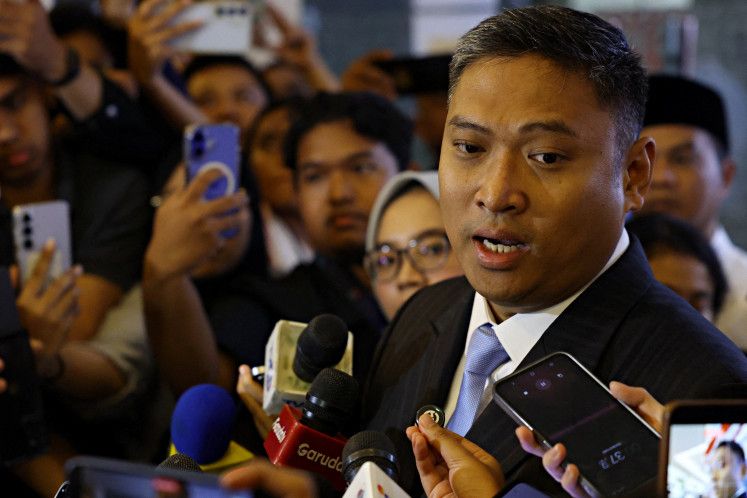
Within hours of accepting Nanik's resignation, Prabowo moved swiftly to install a replacement. Sudaryono, currently serving as Deputy Agriculture Minister and a prominent figure within Prabowo's Gerindra Party, was inaugurated as the new BGN chief at a ceremony held at the State Palace in Jakarta on Wednesday. Sudaryono's political credentials are unmistakably aligned with the President—he previously served as Prabowo's aide during the 2010s—yet the appointment represents a strategic decision to prioritise political loyalty and continuity with the programme's original vision over fresh external expertise. At his inauguration, Sudaryono outlined his mandate in language emphasizing transparency and modernisation: eliminating opacity, digitalising remaining manual processes, and ensuring comprehensive record-keeping. However, his stated commitment to bring accountability and openness to the agency stands in contrast with questions about whether a political appointee closely tied to the President himself can exercise the institutional independence necessary to conduct genuine reform.
The recurring crises at the BGN reveal fundamental planning deficiencies that extend far beyond individual administrative missteps. The free meals scheme has been beset by operational and safety challenges since its rollout in early 2025, with persistent concerns about food quality and troubling incidents of mass food poisoning reported across multiple regions. These problems prompted Nanik to impose a moratorium on new kitchen openings while some 28,000 existing food preparation facilities nationwide underwent mandatory review. That decision, although well-intentioned from a safety perspective, triggered fierce backlash from thousands of prospective kitchen operators who had invested substantial resources into establishing their facilities and faced the prospect of indefinite delays in commencing operations. The controversy underscores the programme's difficulty in balancing multiple competing objectives: ensuring food safety, accommodating private sector participation, maintaining public confidence, and delivering services at massive scale.
The troubled rollout has necessitated significant scaling back of the initiative's original ambitions. The BGN announced this week that it was slashing the provisional 2026 budget from an initially planned Rp268 trillion (approximately US$12.8 billion when converted at current exchange rates) down to Rp229 trillion. More dramatically, the agency substantially reduced its target beneficiary population for the coming year to 62.7 million people, representing a sharp contraction from the initial target of 82.9 million recipients encompassing schoolchildren, toddlers, and pregnant women. The retrenchment reflects a tacit acknowledgement that the programme overreached in its scope and ambitions. Agustina Arumsari, the BGN's deputy chief, reframed this retreat as a strategic reprioritisation, emphasising that improving service quality and ensuring food safety had superseded the pursuit of ever-larger beneficiary numbers. This rhetorical repositioning, however, effectively amounts to a public admission that the scheme's architects underestimated the challenges involved in delivering reliable, nutritious meals to tens of millions of Indonesians across the sprawling archipelago's diverse regions.
The political dimensions of these institutional failures warrant particular scrutiny for Malaysian observers and policymakers considering similar large-scale social programmes. Wasisto Raharjo Jati, a respected political analyst, has offered a diagnosis that extends beyond the immediate operational problems: the free meals programme, despite commanding genuine presidential priority, has been driven primarily by political aspiration rather than rigorous technocratic planning and preparation. This distinction carries profound implications. A flagship initiative championed at the highest political levels often attracts substantial resources and media attention, yet without adequate foundational planning, institutional capacity-building, and realistic assessment of implementation complexities, such programmes risk becoming vehicles for demonstrating political intent rather than delivering sustained, effective public services. The contrast between Prabowo's campaign promise and the messy reality of delivery has exposed cracks in Indonesia's governmental machinery that may take years to remediate.
For Southeast Asian observers, the Indonesian experience offers cautionary lessons about the risks of pursuing transformative social spending without sufficient institutional groundwork. The corruption investigation touching the previous BGN leadership, the health-related resignation of Nanik citing overwhelming stress, and the continued operational failures point to systemic deficiencies in procurement oversight, financial controls, and personnel selection. These are not isolated incidents but symptoms of deeper institutional weaknesses. The appointment of Sudaryono, while providing political continuity, does little to address whether the BGN possesses the technical expertise, management systems, and organisational culture necessary to operate effectively. State Secretary Prasetyo Hadi's statement that Prabowo had ordered comprehensive agency reforms suggests recognition at the highest levels that fundamental restructuring is required, yet the appointment of another politically-connected figure raises questions about whether such reforms will pursue genuine institutional strengthening or merely shuffle personnel while maintaining existing power structures.
The apparent disconnect between political commitment and administrative capacity extends to the very conception of the programme's scope. Providing nutritious meals to over 80 million beneficiaries across an archipelago as geographically diverse and administratively complex as Indonesia demands robust supply chain management, quality assurance protocols, and oversight mechanisms that appear to have been inadequately developed. The moratorium on kitchen expansion, though necessary for safety, inadvertently revealed the brittleness of the programme's expansion strategy. Thousands of individual operators had been incentivised to make capital investments based on programme expectations, yet the government lacked sufficient mechanisms to ensure food safety and quality across this distributed network. This represents not merely an operational stumble but a fundamental conceptual challenge: scaling social programmes across Indonesia requires either exceptional institutional capacity or more modest, phased rollout timelines than political imperatives typically permit.
Looking forward, the succession of leadership upheavals and the substantial budget and beneficiary reductions signal that the free meals programme, while retaining symbolic importance to the Prabowo administration, has entered a consolidation phase. Whether Sudaryono can reverse the accumulating credibility deficit while managing political pressures to expand rather than consolidate remains uncertain. His early emphasis on transparency and digitalisation suggests at least rhetorical acknowledgement of the need for institutional improvement. Yet the pattern established by his predecessor's rapid burnout under pressure suggests that structural problems—whether relating to decision-making authority, resource allocation, or oversight capacity—remain unresolved. For policymakers elsewhere in Southeast Asia considering analogous programmes, the Indonesian experience underscores that political will, while necessary, is insufficient without adequate institutional preparation, realistic timelines, and genuine investment in building management capacity before attempting rapid national rollout of complex social interventions.

