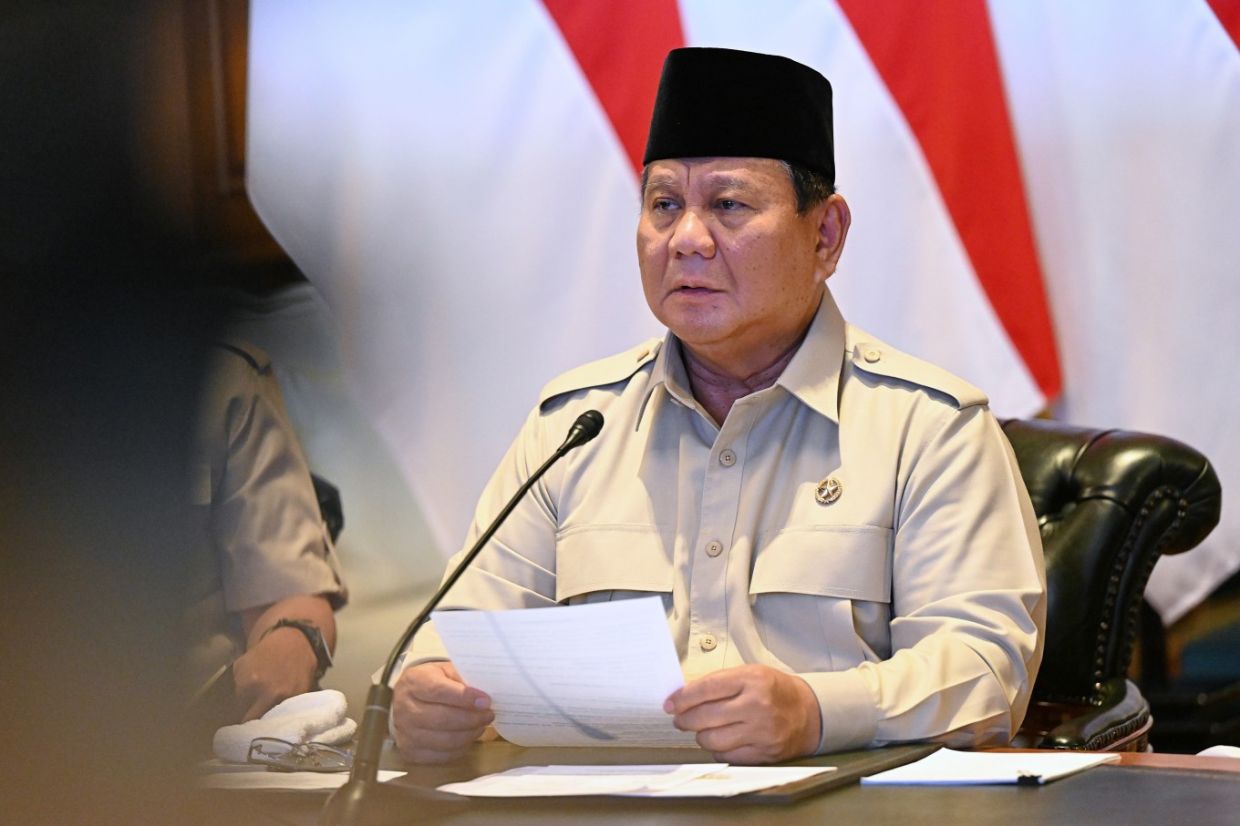
President Prabowo Subianto's exceptional run of public goodwill has conclusively ended, with his approval rating tumbling to 51.1 percent in July 2026 from a commanding 81.2 percent just eight months earlier. The sharp reversal marks a critical inflection point in his tenure, moving him from the realm of rare political invulnerability into the more familiar territory of democratic accountability where results matter more than rhetoric. The data from Saiful Mujani Research and Consulting, Indonesia's most closely watched polling organisation, underscores a fundamental truth that transcends national boundaries: sustained mass approval depends ultimately on tangible improvements in people's daily lives, not the durability of campaign momentum or the frequency of presidential pronouncements.
Prabowo's unusually extended honeymoon had itself been a remarkable phenomenon. Unlike his predecessor Joko Widodo, who opened his first term around 62 percent approval before crashing to 41 percent following an unpopular fuel price increase, Prabowo sustained approval ratings in the 70 to 80 percent range throughout 2025 and into the second half of this year. The persistence of such elevated numbers reflected more than residual enthusiasm from his 2024 election victory. His administration's flagship free nutritious meal programme, launched in January 2025 and rolled out nationwide, appeared to generate genuine public satisfaction that extended his political capital far beyond what incoming presidents typically enjoy. This social spending initiative, combined with his visible leadership style and aggressive communications apparatus, created a buffer against the normal friction points that erode executive popularity in any democracy.
The magnitude of the decline demands closer examination, particularly when compared to international precedent. Prabowo's 30-point drop in nine months substantially exceeds the patterns observed among other leaders navigating economic turbulence. American President Donald Trump entered his second term in January 2025 with just 47 percent approval, while both Barack Obama and Joe Biden experienced sharp early declines from their respective opening positions. None achieved anything approaching Prabowo's sustained plateau of 70 to 80 percent support. The contrast suggests that while democratic attrition is inevitable, the scale and speed of Prabowo's reversal carries particular weight as an indicator of shifting public expectations and potential dissatisfaction with core governance outcomes.
Economic performance, or more precisely the perception of economic deterioration, emerges as the primary culprit behind this transformation. SMRC executive director Deni Irvani identified declining public confidence across three interconnected domains that directly impact household welfare. Positive perceptions of the economy collapsed to just 15.7 percent by July 2026, reflecting widespread concern about the rupiah's weakness, sluggish stock market performance, and mounting pressure on household finances. Simultaneously, positive views of the political environment plummeted from 35.8 percent in November 2025 to 13.5 percent by mid-year, suggesting growing frustration with the administration's capacity to translate electoral promises into policy achievements. Public confidence in law enforcement stood at a modest 26.4 percent, indicating persistent concerns about corruption and institutional integrity despite Prabowo's explicit campaign pledge to curb graft and strengthen institutional capacity.
These survey findings gain credibility through corroboration. Indikator Politik Indonesia, an independently managed polling operation, surveyed 4,250 respondents during July 14-24 and produced strikingly similar results showing approval at 49.5 percent, down from 68 percent in April and 81 percent in December 2025. This convergence across separate methodologies and samples substantially undermines suggestions that SMRC's founder, Saiful Mujani, a known government critic, may have introduced systematic bias. While such criticism from Prabowo administration loyalists merits acknowledgment, two independent institutions arriving at parallel conclusions indicates a genuine shift in public sentiment rather than polling artifact. The consistency of the downward trajectory across both surveys, moreover, reflects a secular decline rather than methodological quirk.
Prabowo's governance strategy has centred on maintaining high public visibility through frequent televised addresses, a sophisticated communications operation, and a combative posture toward critics and journalists. This approach generated dividends when underlying economic conditions remained sufficiently benign that rhetoric could plausibly bridge the gap between campaign promises and partial delivery. The July numbers, however, suggest an uncomfortable ceiling has been reached where presidential visibility and communication firepower cannot overcome the daily economic experiences of ordinary citizens. Inflation pressures, exchange rate volatility, employment uncertainty, and the logistical failures affecting the free meal programme's implementation now drive public judgment more powerfully than any president's screen presence or rhetorical force.
The substantive policy gaps between campaign commitments and current reality form the foundation of this approval erosion. Prabowo explicitly pledged to elevate Indonesia's GDP growth rate from its recent five percent trajectory toward eight percent, while simultaneously addressing corruption and institutional capacity. These objectives now face significant headwinds that public expectations, shaped by campaign rhetoric, poorly anticipated. The weakened rupiah constrains import competitiveness and feeds inflation; the slack stock market signals investor caution about medium-term prospects; and concerns about central bank independence and fiscal discipline suggest structural constraints on the administration's capacity to simultaneously pursue growth acceleration while maintaining macroeconomic stability. Citizens experiencing real wage erosion or depleted household purchasing power judge these outcomes primarily through their own circumstances rather than through the lens of economic theory or political messaging.
Palace insiders have begun acknowledging these pressures and signalling potential course corrections. According to officials with access to discussions within the Presidential Palace, Prabowo has convened meetings with Indonesia's National Economic Council to evaluate policy effectiveness and identify mechanisms for improving economic outcomes in areas where public satisfaction has deteriorated most markedly. The administration anticipates expanding social assistance programmes, a tacit admission that the initial meal provision initiative, while generating goodwill, has proven insufficient to anchor broader household economic security. Simultaneously, officials express concern that El Niño weather patterns could generate agricultural disruptions and food price inflation that would further compress household purchasing power, compelling the administration to maintain fuel prices at current levels to prevent cascading inflationary pressure.
Prabowo's immediate circle has also commissioned polling feedback from consultants instrumental in his 2024 presidential campaign victory, suggesting efforts to recalibrate his strategic communications approach. These internal advisors have reportedly urged more aggressive attention to implementation failures afflicting marquee programmes, particularly the free nutritious meal initiative and the Red and White Cooperatives scheme, both of which have encountered logistical or execution challenges that diverge from public expectations. One consultant involved in these discussions noted that approval could recover if the administration executes credible improvements within its inner governance circles, implying that the current decline reflects not philosophical rejection of Prabowo's broader agenda but rather frustration with administrative competence and programme delivery.
Historically, the 30-point approval drop represents neither unprecedented catastrophe nor insurmountable obstacle. Numerous presidents have recovered from steeper declines when underlying conditions improved or when political circumstances shifted. Jokowi himself stabilized and eventually recovered his public standing despite the early crash following fuel price increases. Prabowo retains substantial structural advantages compared to many regional counterparts, including control of military and security apparatus, a supportive legislative coalition, and residual affection among substantial population segments. The trajectory, however, delivers an unambiguous message that Indonesian voters operate within democratic norms emphasizing results over personalities, and that even exceptionally favourable starting positions erode when economic conditions deteriorate and implementation failures accumulate.
The coming months will test whether the administration can translate its acknowledged shortcomings into revised policy approaches capable of generating measurable improvements in household welfare and institutional performance. Public satisfaction with economic management and political integrity represents recoverable terrain if the government demonstrates concrete progress on anti-corruption initiatives and devises approaches to stabilize household incomes and essential commodity prices. Failure to execute credible improvements, by contrast, risks consolidating current sentiment into a more durable assessment of administrative incapacity. Indonesia's democratic voters have demonstrated their willingness to extend generous honeymoons to newly elected leaders, but their patience with unfulfilled promises appears, like that in any functioning democracy, finite.
For Malaysia and other Southeast Asian economies, Prabowo's experience carries instructive implications about the relationship between electoral legitimacy and governing performance. Indonesia's broader economy influences regional currency stability, trade patterns, and investment flows, making the political sustainability of its government more than a domestic concern. If economic pressures continue to mount and public confidence erodes further, political instability could emerge that affects regional dynamics. Conversely, successful implementation of revised economic and anti-corruption strategies could restore confidence and reinvigorate Indonesia's position as the region's largest economy. The next year will likely determine whether this downturn represents a temporary correction from unsustainably elevated approval levels or the beginning of a more structural loss of public confidence in Prabowo's governance capacity.

