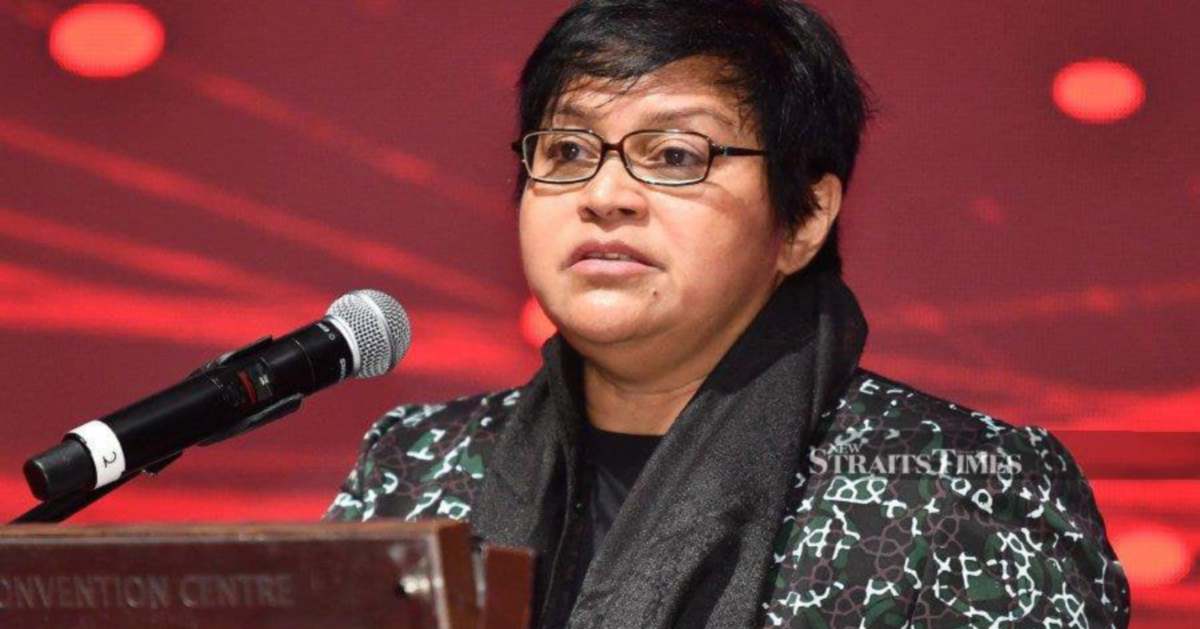
Umno's information chief Datuk Seri Azalina Othman Said has struck a cautious tone regarding political negotiations in Johor, insisting that any discussions about constructing a coalition or unity government must await the official announcement of election results. Speaking from Putrajaya, Azalina's remarks reflect a measured approach to post-electoral politics at a time when speculative conversations about potential alliances typically gather momentum in the lead-up to voting day.
The timing of such statements carries significance in Malaysia's fractious political landscape, where pre-election coalition discussions can both energize supporters and create unnecessary uncertainty about party intentions. By explicitly tethering coalition negotiations to concrete electoral outcomes, Umno's communications apparatus appears to be managing expectations across its party base while signalling a pragmatic readiness to explore various political configurations once voters have delivered their verdict.
Johor, Malaysia's second-largest state by population and economically significant as a manufacturing and trade hub, has historically served as a political bellwether. The state's political composition directly influences the federal government's stability and the balance of power within the ruling coalition. Umno's historical dominance in Johor gives the party considerable leverage in negotiations, yet the state has witnessed shifting voter sentiment in recent election cycles, making assumptions about post-election scenarios risky without definitive results.
Azalina's intervention appears designed to curtail speculation that could potentially fragment Umno's campaign messaging or create friction with prospective coalition partners who might interpret preliminary discussions as indicative of party preferences. In Malaysian politics, where coalition mathematics involves intricate calculations of seat distribution, ministerial portfolios, and regional influence, premature public discussions about government formation can inadvertently alienate potential allies or embolden opposition parties to intensify their campaigns.
The emphasis on waiting for election results also reflects broader democratic principles and electoral norms, wherein coalition formation should logically follow rather than precede the determination of voter preferences. By adhering to this sequencing, Azalina positions Umno as respecting the democratic process while simultaneously preparing behind-the-scenes frameworks for rapid negotiation once ballots are counted. This disciplined approach contrasts with instances in Malaysian politics where inter-party discussions have occurred extensively before elections, occasionally creating public controversy.
Johor's electoral dynamics have become increasingly competitive, with Pakatan Harapan, Perikatan Nasional, and independent candidates challenging Umno's traditional strongholds. The fragmentation of the opposition and coalition blocs means that seat distribution across various constituencies could significantly vary from historical patterns, making preliminary coalition assumptions potentially misleading. Azalina's call for patience acknowledges this unpredictability and the necessity of flexibility in coalition-building.
For Malaysian voters and political observers, such statements signal that major parties are maintaining contingency planning while publicly maintaining focus on their campaigns and policy platforms. This approach allows parties to appear committed to their electoral mandates while preserving diplomatic channels with potential partners. The Johor situation demonstrates how coalition governments in Malaysia require careful orchestration, with timing and sequencing of negotiations affecting both the legitimacy and stability of eventual administrations.
The reference to "unity government" merits particular attention, as this terminology has gained prominence in Malaysian political discourse as a mechanism for addressing electoral fragmentation and ensuring stable governance. If election results produce a fractured legislature without a clear majority for any single coalition, unity government frameworks could become relevant. Azalina's inclusion of this possibility indicates Umno's recognition that various post-election scenarios might necessitate broader-based administrations incorporating parties across the political spectrum.
Regionally, Johor's political trajectory influences broader Southeast Asian perceptions of Malaysian stability and governance effectiveness. International investors and regional analysts monitor Johor's electoral outcomes and subsequent coalition formations as indicators of Malaysia's institutional health and political maturity. By emphasizing orderly, results-based coalition discussions, Azalina contributes to projecting an image of Malaysian politics operating within democratic and institutional frameworks.
For Umno specifically, maintaining this disciplined messaging discipline around coalition discussions serves multiple purposes: it preserves party unity by preventing premature public disagreement about partnership preferences, maintains leverage with potential partners by avoiding early capitulation or concessions, and demonstrates respect for voters' decision-making authority. The statement essentially establishes Umno's negotiating position that coalition discussions will be comprehensive and serious only once the electoral mandate is clarified.
The broader implication of Azalina's comments is that Malaysian political parties, despite historical instances of pre-election coalition-building, are increasingly conscious of appearing to subordinate electoral process integrity to political maneuvering. Whether this represents genuine institutional evolution or strategic positioning remains to be observed following actual election results, but the messaging itself reflects contemporary political sensibilities regarding democratic propriety and transparent governance.
As Johor approaches its electoral moment, Azalina's emphasis on sequential negotiations—first voting, then coalition discussions—establishes a framework for evaluating subsequent political developments. Her intervention signals that Umno intends to exercise significant agency in determining coalition compositions but will do so only after electoral mathematics become definitive.

