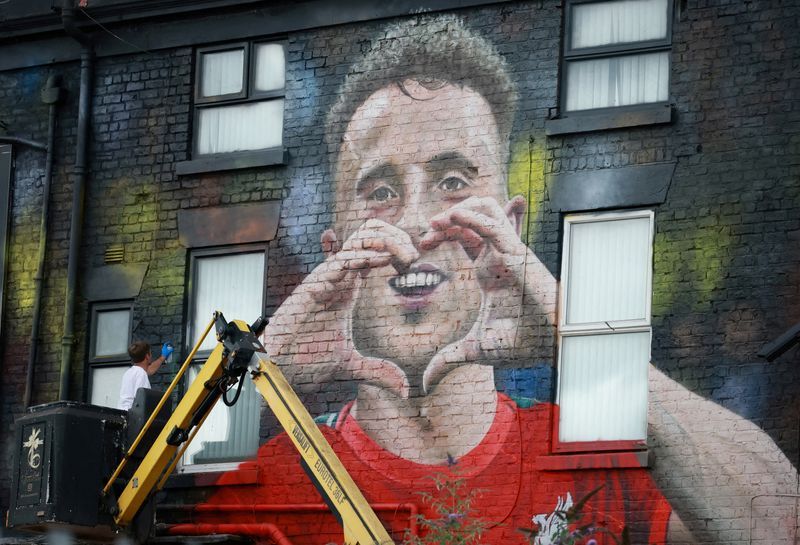
When Portugal's squad takes to the pitch for their World Cup round of 32 match against Croatia in Toronto on Thursday, a poignant milestone will pass unnoticed by Canadian spectators. As the match unfolds under North American time, the clock will simultaneously advance past midnight in Portugal, ushering in July 3—a date forever marked by tragedy that will weigh heavily on the minds of players, staff, and supporters connected to the national team.
Exactly twelve months earlier, the Portuguese football community was shaken by the sudden death of Diogo Jota, the 28-year-old Liverpool forward whose combination of technical brilliance, goal-scoring prowess, and unwavering commitment to the national cause had established him as one of the country's most cherished athletes. Jota and his brother André Silva perished when their Lamborghini crashed and caught fire in northwestern Spain, a tragedy that sent shockwaves through Portuguese society and the global football world. The loss resonated particularly deeply at Anfield, where Jota had become an integral part of Liverpool's attacking arsenal, and across the Portuguese national team setup, where his presence in the dressing room extended far beyond his statistical contributions.
Manager Roberto Martinez has deliberately ensured that Jota's absence becomes a tangible presence within the squad's World Cup campaign. By naming the late forward as an honorary member of the tournament roster, Martinez has created space for the player's memory to remain embedded in team discussions, tactical preparation, and the emotional framework guiding the nation's pursuit of continental glory. This decision reflects a recognition that some legacies transcend the pitch, fundamentally shaping the character and motivation of those who continue the collective journey.
The visible expressions of remembrance have proliferated throughout Portugal's World Cup preparation. Midfielder Ruben Neves, a close confidant of Jota throughout their careers together, has adopted the number 21 shirt as a personal tribute. Prime Minister Luís Montenegro contributed to these commemorations by presenting the squad with wristbands engraved with Jota's name, transforming a simple accessory into a symbol of national grief and solidarity. When Portugal contested their opening match against DR Congo in Houston, Jota's parents Isabel and Joaquim Silva attended the fixture, their presence in the stands serving as a solemn reminder of their son's continued significance to the team.
The emotional resonance extended across Celtic borders when Scotland's squad learned of Portugal's World Cup qualification. Captain Andy Robertson, who shared a dressing room with Jota at Liverpool and cultivated a genuine friendship beyond professional obligation, found his thoughts immediately turning to his late teammate upon witnessing his country's successful qualification campaign. The connection between the two players transcended nationality; Robertson's grief at losing a friend and colleague proved indistinguishable from the pain felt by Jota's Portuguese teammates. In a correspondence that encapsulates the human dimensions of sport, Jota's widow Rute Cardoso reached out to Robertson, acknowledging how he might channel collective sorrow into sporting performance. Her message conveyed gratitude for his refusal to consign Jota to the past, encouraging him to transmute personal loss into collective strength.
For the Portuguese players navigating this tournament, Jota represented far more than a colleague occupying a forward berth. He embodied the generation that had elevated Portugal's standing within international football, delivering crucial moments of excellence when the stakes ran highest. Across 49 appearances for the national team, Jota accumulated 14 goals—a record that undersells his broader value as a creative force and clutch performer. Had circumstances permitted, the 2022 squad would almost certainly have featured him prominently, particularly given his unfortunate absence from the 2018 World Cup due to a calf injury that limited his availability.
Defender Vitinha articulated the psychological complexity surrounding Thursday's match during a pre-game interview, observing that Portugal possessed multiple layers of motivation extending well beyond conventional competitive desire. Beyond representing their nation before a global audience, the players carry the responsibility of honouring a lost teammate whose contributions to Portuguese football history demanded recognition. The intersection of sporting ambition and commemoration has created an unusual emotional intensity surrounding Portugal's tournament participation.
The match's timing amplifies these currents further. As the opening whistle sounds in Toronto, Portuguese time will have already crossed into July 3, the precise moment when collective attention turns inward toward remembrance and reflection. The threshold moment—when one day yields to the next—will occur with thousands of Portuguese eyes fixed upon their national team's efforts. This synchronicity between sporting performance and temporal milestone has inadvertently created conditions where athletic success becomes intertwined with honouring memory.
Within Toronto's Portuguese diaspora community, the match carries additional significance as a space where transplanted nationals can simultaneously celebrate their cultural identity and process collective grief. Miguel De Silva, proprietor of Amigos da Dundas Sports Bar in the city's Little Portugal neighbourhood, has observed how Jota's memory transcends geographical boundaries. For Portuguese-Canadians gathering to witness their team's efforts, the match represents more than entertainment; it becomes an opportunity to affirm connection with the homeland while acknowledging a loss that touched the global Portuguese community. De Silva recognizes that the emotional weight accompanying Thursday's fixture—the confluence of World Cup stakes and personal tragedy—may well provide Portuguese players with supplementary motivation beyond typical competitive desire.
The passage of twelve months has done little to diminish the acuity of loss, yet football's imperative to progress forward remains inexorable. Teams must continue competing, players must channel emotion into performance, and nations must persist in their tournaments despite the voids created by untimely departures. Portugal's approach to threading this needle—maintaining visible commemoration while delivering focused sporting performance—may ultimately transcend the immediate outcome of their match against Croatia. Should the team progress deeper into the tournament, each subsequent fixture will occur against the backdrop of ongoing remembrance, transforming the pursuit of the trophy into something approaching a collective memorial.

