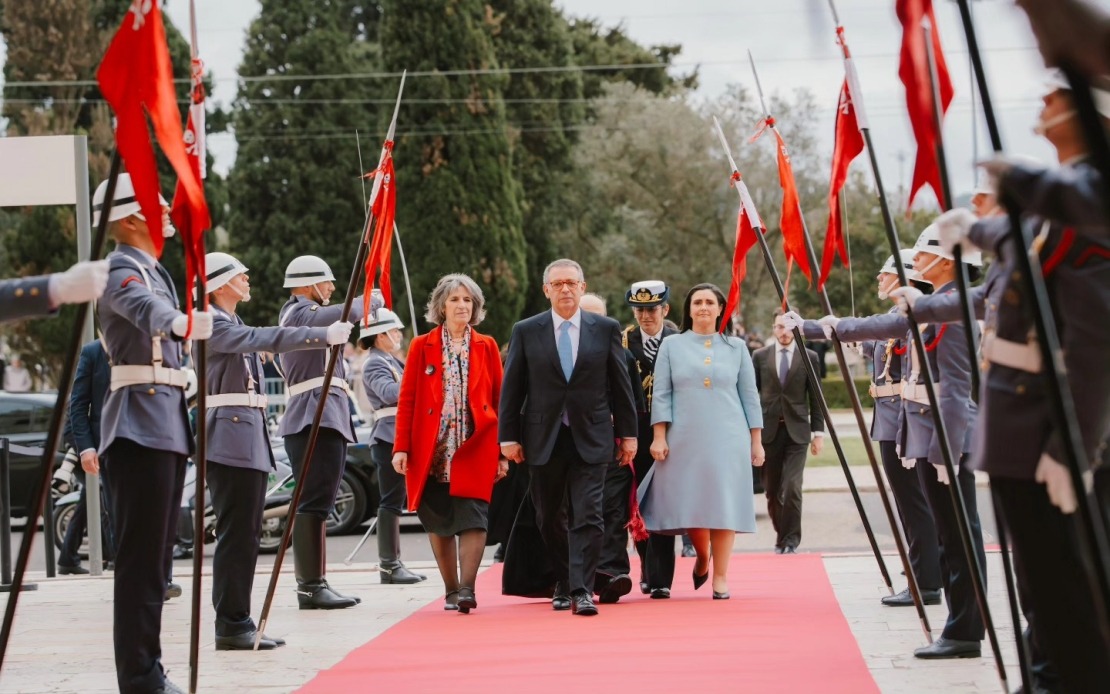
Portugal has joined a growing list of European democracies implementing restrictions on face coverings in public areas, following President Antonio Jose Seguro's approval of the controversial legislation on Tuesday. The law, which originated from proposals made by the right-wing Chega party, represents a significant policy shift in the country and reflects broader tensions across Europe regarding religious freedom, cultural identity, and public security.
Seguro's decision to sign the measure came after parliamentary amendments were introduced during the legislative process. In a statement from the Belem Palace, Portugal's presidential residence in Lisbon, the president articulated a rationale grounded in what he characterised as issues of profound social and cultural importance. He emphasised that the legislation addresses fundamental concerns about social cohesion while maintaining compliance with European legal frameworks, particularly referencing precedents established by the European Court of Human Rights in similar cases.
The president's justification centres on the notion that facial recognition forms an essential foundation for social trust and interpersonal relationships within Portuguese society. According to the official position, the ability to see and recognise faces directly contributes to mutual understanding and establishes the basis for genuine human connection in daily interactions. This philosophical argument underpins the government's claim that the ban serves to strengthen rather than weaken social fabric by ensuring shared visual communication norms across the population.
Seguro specifically highlighted concerns about gender equality when defending the legislation. The presidential statement directly addresses what officials view as an asymmetry inherent in face-covering practices, arguing that requiring solely women to conceal their faces contradicts principles of equal dignity and parity between genders that form cornerstones of contemporary European democratic values. This framing attempts to position the ban not as targeting religious expression but rather as safeguarding fundamental gender equality principles.
Public security considerations also featured prominently in the government's stated reasoning. The administration argues that unrestricted face coverings in public spaces create difficulties for law enforcement and public safety agencies in identifying individuals, managing security threats, and investigating crimes. This security dimension reflects broader European anxieties about terrorism prevention and criminal investigation, though the specific security threats cited in Portugal's case remain somewhat generalised in public statements.
The Portuguese government further grounded its position in European Court of Human Rights jurisprudence, suggesting that international human rights bodies have already validated restrictions on face coverings as consistent with fundamental rights protections. By invoking this legal precedent, officials attempted to preempt international criticism by presenting the ban as conforming to established European legal standards rather than representing a departure from human rights norms.
However, Amnesty International Portugal has mounted a forceful critique of the law, characterising it as inherently discriminatory and a threat to the rights of Muslim women who voluntarily choose to cover their faces for religious or cultural reasons. The human rights organisation's objections highlight the tension between the government's framing of equality and protections for religious and cultural minorities, arguing that the ban effectively denies women agency in making personal decisions about religious observance and bodily autonomy.
Portugal now takes its place alongside France, Belgium, Austria, Denmark, and the Netherlands in maintaining comprehensive or partial restrictions on face coverings in public settings. This European trend reflects shared anxieties about immigration, religious pluralism, and national identity that have gained political prominence across the continent over the past two decades. The consistency of these policies across different political systems and constitutional frameworks suggests deeper currents reshaping European approaches to religious and cultural expression in public spaces.
For Malaysian readers, the Portuguese ban illustrates ongoing European tensions over religious and cultural pluralism in increasingly diverse societies. While Malaysia's secular legal framework differs substantially from European models, the debate in Portugal demonstrates how democracies navigate competing values—security, equality, religious freedom, and social cohesion—when fundamental assumptions about public life encounter cultural diversity. The Amnesty International critique particularly resonates across Southeast Asia, where questions about women's autonomy, religious rights, and state authority remain contentious and evolving.
The decision also reflects broader anxieties within Europe about integration and social order at a moment when immigration and religious diversity have become defining political issues. In this context, face-covering bans function symbolically as well as practically, signalling official positions on what integration requires and which cultural practices the state views as incompatible with national values. Whether such legislation meaningfully addresses the stated policy concerns or primarily serves symbolic political purposes remains contested among policy analysts and legal scholars.
The Portuguese law's international implications remain uncertain. While human rights organisations will likely challenge the legislation through European courts, the government appears confident that existing jurisprudence provides sufficient legal cover. The case will undoubtedly attract scrutiny from civil liberties groups across Europe and may influence ongoing debates about similar restrictions in other nations considering comparable measures.

