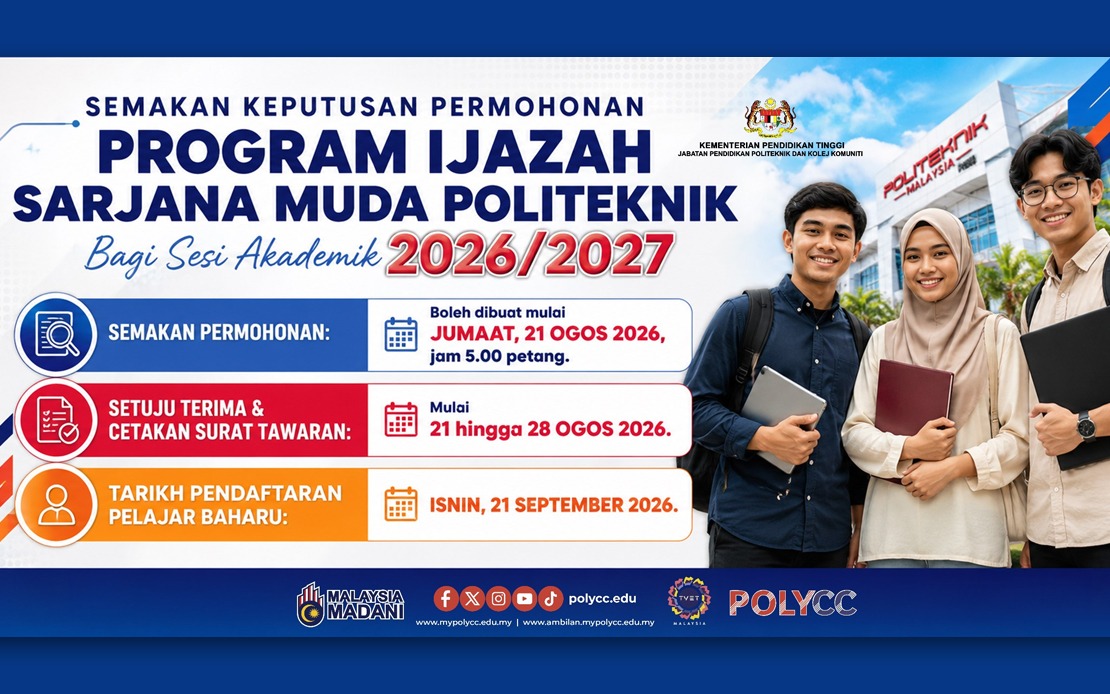
Prospective students can now access their application outcomes for polytechnic bachelor's degree programmes, marking a significant milestone in Malaysia's vocational and technical education pathway. The results, released today, represent opportunities for candidates seeking to pursue higher qualifications through Malaysia's expanding polytechnic network, which has progressively elevated its offerings to include degree-level credentials alongside traditional diploma programmes.
Students who have received offers must move quickly to secure their places. The acceptance window runs from today through August 28, giving candidates just over a week to formally confirm their intentions. This compressed timeline reflects standard administrative procedures designed to enable institutions to finalise cohort numbers and complete necessary enrolment preparations. Those who miss this deadline may forfeit their offers, underscoring the importance of timely action for successful applicants.
The polytechnic system is distributing a total of 534 places across diverse academic disciplines this intake cycle. The breadth of available programmes demonstrates the sector's response to Malaysia's evolving skills demands, particularly in technical and professional fields. Mechanical Engineering Technology, Civil Engineering Technology, and Built Environment studies represent the engineering strand, appealing to students interested in infrastructure, construction, and manufacturing sectors. Electrical and Electronic Engineering Technology similarly addresses the nation's need for skilled professionals in energy management and emerging technologies.
Beyond engineering, the intake encompasses Visual Communication and Design, attracting creative-oriented students in an era where digital content and design expertise commands growing economic value. Tourism and Hospitality programmes reflect Malaysia's investment in its services sector, particularly given the country's strategic position as a regional tourism hub and its aspirations to develop world-class hospitality standards. This diversified portfolio ensures that polytechnic bachelor's degrees cater to multiple labour market segments.
Four polytechnic institutions are participating in this intake cycle, geographically distributed across Peninsular Malaysia to improve accessibility. Politeknik Ungku Omar operates in Ipoh, Perak, serving the northern corridor. Politeknik Sultan Salahuddin Abdul Aziz Shah in Shah Alam, Selangor, positions itself within Malaysia's industrial heartland and proximity to the capital region. Politeknik Ibrahim Sultan in Pasir Gudang, Johor, extends opportunities to the southern manufacturing and petrochemical hub. Politeknik Sultan Azlan Shah in Behrang, Perak, adds capacity in the east-coast peninsular region. This geographic distribution reflects deliberate planning to ensure equitable access across different states.
The polytechnic bachelor's degree initiative represents a strategic pivot for Malaysia's technical education landscape. Historically, polytechnics predominantly offered diploma qualifications; the introduction of bachelor's programmes signals enhanced credential recognition and expanded career pathways for graduates. This elevation strengthens the polytechnic sector's competitive positioning against conventional universities while maintaining its practical, industry-focused instructional philosophy. For students uncertain about traditional university routes or seeking more applied learning environments, these programmes offer legitimate alternatives with credible qualifications.
Candidates who did not receive offers retain recourse through an appeal mechanism. Unsuccessful applicants may submit online appeals from today until September 4, with results announced on September 8. This structured follow-up process acknowledges that initial placements may not capture all eligible candidates and that the system can accommodate additional qualified participants through subsequent rounds. The September 8 announcement provides sufficient lead time before student registration commences on September 21, allowing appellants who succeed in their second attempts to prepare for enrolment alongside primary intake participants.
The registration window beginning September 21 initiates the administrative and academic onboarding processes. New students will complete enrolment procedures, receive orientation on institutional policies and academic expectations, arrange accommodation where necessary, and commence their degree coursework. The three-week interval between final appeal outcomes and registration provides educational institutions adequate time for administrative coordination and allows successful appeal candidates to arrange necessary logistics, from documentation to relocation in some cases.
This polytechnic intake expansion carries implications for Malaysia's human capital development strategy. By providing accessible, affordable degree-level qualifications through polytechnic institutions, the nation broadens participation in higher education among students who might face financial or geographic constraints attending conventional universities. Polytechnic graduates equipped with practical skills and theoretical knowledge become valuable contributors to manufacturing, construction, hospitality, and creative industries, sectors requiring technicians and professionals with hands-on capabilities alongside academic credentials.
The timing of this announcement reflects Malaysia's academic calendar and administrative coordination across the polytechnic system. Prospective students and their families should note the critical August 28 acceptance deadline. Those uncertain about their results or facing appeals should monitor official communications from their respective polytechnic institutions and mark September 8 for second-round outcome announcements. Enquiries regarding the application process can be directed to the Student Intake and Development Division under the Department of Polytechnic Education and Community Colleges, ensuring candidates receive authoritative guidance throughout this transition period.

