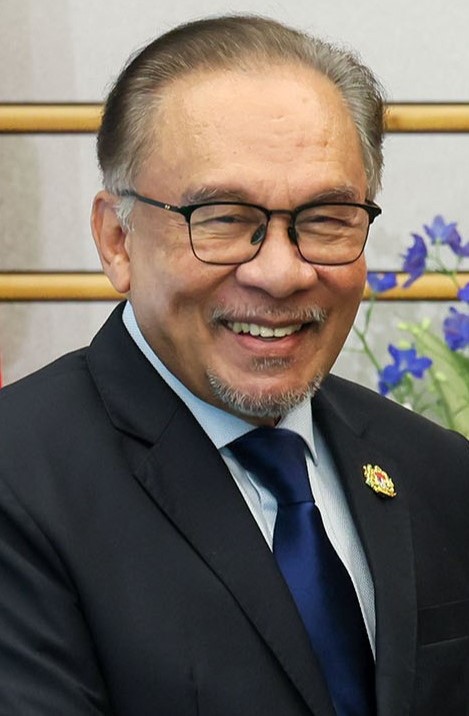
Captain (Rtd) Najib Lep, a familiar face in Johor politics, is stepping back into the electoral arena with fresh momentum. The former Bukit Pasir assemblyman has secured a nomination to contest the upcoming Johor state election, this time carrying the banner of Pakatan Harapan—a dramatic departure from his political trajectory over the past two decades. His candidacy underscores the fluidity of Malaysia's political landscape and the way voters in swing constituencies can reshape parliamentary dynamics through calculated realignments.
Najib Lep's political journey reflects the broader transformations that have reshaped Malaysian politics since the early 2000s. He first entered electoral politics under the PAS banner, building a grassroots presence in the Bukit Pasir constituency, where he represented constituents as a state assemblyman. His initial alignment with the Islamist party positioned him within a specific ideological and political framework that resonated with certain voter blocs in his district. However, like many politicians in Malaysia's competitive landscape, he subsequently shifted his political home, joining UMNO as the party sought to consolidate support in Johor during a period of significant coalition realignment.
The transition from PAS to UMNO marked a critical juncture in Najib Lep's career, reflecting both personal political calculations and the broader consolidation of non-Islamist and Islamist political forces during that era. UMNO's traditional dominance in Johor made it an attractive platform for politicians seeking greater resources and access to state machinery. However, his tenure with UMNO would prove transitional rather than terminal, setting the stage for his most recent political pivot toward Pakatan Harapan.
This latest move to Pakatan Harapan carries particular significance given the coalition's restructured position in Malaysian politics. Since the 2022 general election and the formation of the current federal government, PH has undergone substantial repositioning. The coalition now functions as a broad-based reformist alliance competing directly with both traditional UMNO-led formations and PAS-anchored blocs for state-level influence. Johor, Malaysia's second-most populous state and an economic powerhouse, has become a battleground where different national political trajectories intersect with local governance priorities.
Najib Lep's background as a retired military officer adds another dimension to his political profile. The Malaysian Armed Forces have long produced politicians who transition into electoral contests, often bringing institutional credibility and organisational discipline to their campaigns. His military service likely provides him with networks and respect within constituencies that value national security and institutional stability. In a state like Johor, where military installations and personnel form a significant demographic segment, such background credentials can prove decisive in competitive multi-cornered contests.
The Bukit Pasir constituency, where Najib Lep previously represented voters, embodies the kind of swing territory that determines statewide electoral outcomes. These constituencies typically contain diverse demographic profiles—combinations of urban professionals, manufacturing workers, agricultural communities, and middle-income residential areas. Success in such areas often depends less on ideological purity than on demonstrated ability to deliver constituency services, maintain visible presence, and build personal voter relationships. Najib Lep's prior tenure suggests familiarity with these dynamics.
Packatan Harapan's decision to field Najib Lep reflects strategic calculations about seat allocation and candidate strength. The coalition must balance several imperatives: finding candidates with demonstrated electoral appeal, integrating newcomers or returnees who might broaden coalition reach, and managing the complex interplay between its component parties—PKR, DAP, Amanah, and potentially other formations depending on specific state arrangements. Selecting a candidate with previous state-level legislative experience and cross-party recognition indicates PH's confidence in competing effectively across diverse Johor constituencies.
Johor's political trajectory over the past decade has witnessed significant volatility. The state served as UMNO's traditional stronghold but experienced notable erosion of that dominance during the post-2018 period. PH's performance in Johor during the 2020 state election and subsequent 2022 general election demonstrated that the coalition could accumulate substantial support, even if it fell short of achieving majority control. Understanding this context helps explain why both established and returning candidates seek PH nominations—the coalition represents a credible pathway to power in states where demographic and economic changes have created more competitive electoral environments.
The implications of Najib Lep's candidacy extend beyond his individual contest. His decision to contest under PH, coupled with other candidate selections, suggests the coalition's strategic prioritisation of Johor in upcoming electoral cycles. Given the state's 56 state assembly seats and economic significance, PH's performance there will substantially influence its overall competitive position in Malaysia. Multi-term politicians like Najib Lep, who have previously represented constituencies and understand local political ecology, bring practical advantages compared to first-time candidates, particularly in constituencies where incumbency factors and voter familiarity carry weight.
Voter reception to political figures who have previously affiliated with multiple parties varies considerably depending on local context and performance evaluations. In constituencies where politicians successfully delivered developmental projects, maintained visible presence, and addressed constituent grievances, voters often prove willing to support candidates across party transitions. Conversely, where such track records are weak or where voters perceive opportunism, previous party-switching can generate electoral penalties. Najib Lep's actual experience in Bukit Pasir will likely prove more consequential than the technical fact of his party migrations.
The Johor state election, whenever held, will unfold against a backdrop of complex national political dynamics. The current federal government's stability, economic performance, and policy directions will shape voter sentiment at state level. Additionally, Johor's specific concerns—ranging from economic competitiveness amid regional challenges, educational provision, healthcare delivery, to infrastructure development—will feature prominently in campaign messaging. Candidates like Najib Lep must convincingly articulate how their respective parties and coalitions address these concrete governance questions.
Ultimately, Najib Lep's return to electoral politics under the Pakatan Harapan banner exemplifies the ongoing realignment characterising Malaysian politics. The state election in Johor will test whether voters reward experienced legislators regardless of party affiliation, or whether other factors—coalition performance nationally, local governance records, demographic shifts—predominate in determining electoral outcomes.