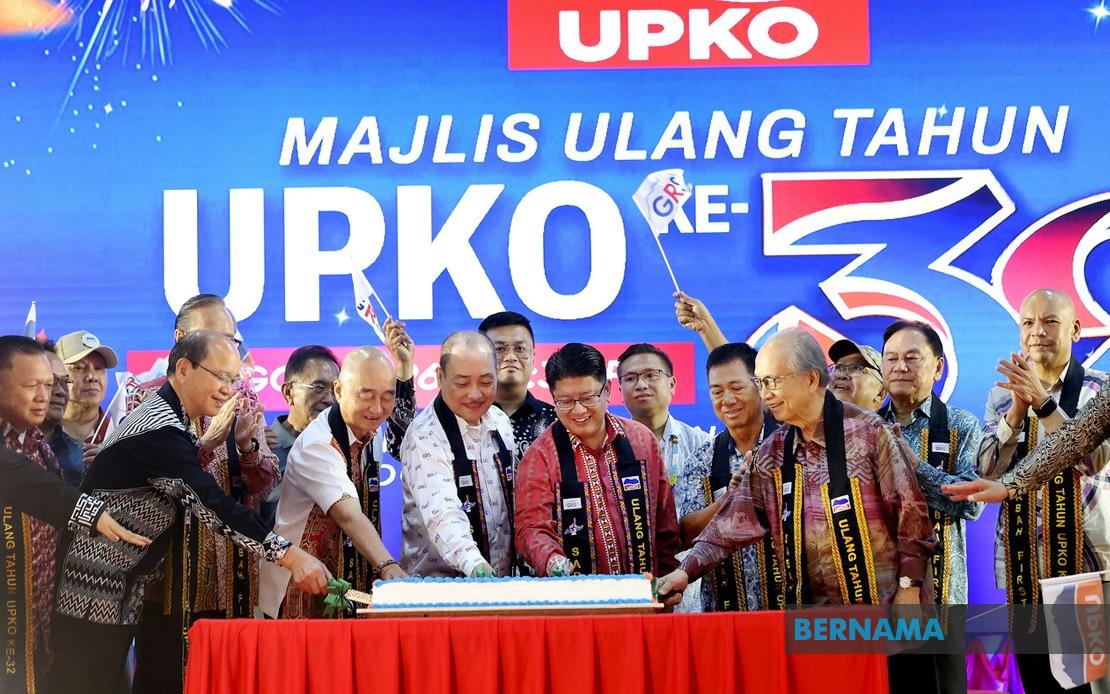
Sabah's path to sustained development and prosperity depends fundamentally on the state government maintaining political stability, according to Chief Minister Datuk Seri Hajiji Noor. Speaking at the 32nd United Progressive Kinabalu Organisation anniversary celebration and the opening of UPKO's 17th Triennial Delegates Conference in Kota Kinabalu, Hajiji underscored how a cohesive political environment allows the administration to direct its full attention toward economic advancement and critical infrastructure expansion across the state.
Hajiji's remarks came as the Gabungan Rakyat Sabah coalition expanded its membership with UPKO's formal acceptance into the alliance on June 18. The inclusion of UPKO represents a strategic consolidation of political forces within Sabah's regional politics, bringing the GRS coalition structure to six component parties. This expansion signals an attempt to broaden the coalition's political base and deepen cooperation among Sabah-based political organisations, strengthening the coalition's command of the state legislature.
The GRS coalition now comprises Parti Gagasan Rakyat Sabah, Parti Bersatu Sabah, Liberal Democratic Party, Parti Harapan Rakyat Sabah, and Parti Cinta Sabah alongside UPKO. For Malaysian observers, this multi-party arrangement reflects the distinctive political dynamics of Sabah, where regional parties play substantially stronger roles than in Peninsular Malaysia. The coalition structure demonstrates how local political interests can coexist under a broader umbrella, provided clear governance frameworks and shared objectives are established.
A crucial theme in Hajiji's address involved reconciling the inherent tensions within any multi-party coalition. He acknowledged that GRS member parties emerge from different political traditions and ideological foundations, yet insisted these differences need not undermine collective purpose. His assertion that coalition members "may have different backgrounds and political foundations, but as components of GRS, we stand under the same roof, share the same sky" reflects the pragmatic politics necessary to maintain stability in Sabah's complex political landscape.
The stability argument carries particular weight for Sabah's development agenda. Infrastructure projects, economic planning initiatives, and long-term development strategies require sustained political focus and consistent policy direction. When governments face frequent coalition instability or internal political upheaval, resources and political energy become diverted toward managing internal disputes rather than pursuing substantive development objectives. Hajiji's emphasis on this connection reflects lessons learned from previous periods of political turbulence in Sabah that disrupted governance continuity.
Hajiji articulated a clear vision statement for GRS's governing agenda: "Sabah First, Sabah United, Sabah Forward and Sabah Prosper." This framing prioritises state interests above factional concerns and positions development outcomes as the primary measure of coalition success. For Sabah's electorate, such articulated priorities offer a benchmark against which to evaluate coalition performance over the coming months and years.
UPKO president Datuk Ewon Benedick, who simultaneously holds the position of Sabah Deputy Chief Minister III and Minister of Industrial Development, Entrepreneurship and Transportation, was present at the event. Benedick's dual responsibilities underscore how UPKO's participation in GRS extends beyond symbolic coalition membership into substantive ministerial representation. His portfolio covering industrial development and entrepreneurship positions UPKO to influence Sabah's economic diversification efforts, particularly important given the state's historical reliance on resource-based industries.
The timing of UPKO's admission into GRS and the subsequent emphasis on political stability suggests the coalition recognises the interconnection between governance coherence and development delivery. Sabah faces considerable challenges in infrastructure modernisation, economic diversification beyond traditional sectors, and human capital development. These complex objectives demand sustained political commitment rather than the abbreviated attention spans characteristic of unstable administrations.
For Malaysia's federal political observers, Sabah's coalition dynamics offer insights into regional governance outside the Peninsular-dominated political structure. The successful incorporation of UPKO into GRS demonstrates that Sabah's political parties retain genuine negotiating power and can shape coalition configurations based on state-specific interests. This regional autonomy distinguishes Sabah politics from the more centralised dynamics visible in Peninsular politics.
The invocation of shared purpose despite differing backgrounds also carries implications for Malaysia's broader political culture. At a time when national politics has become increasingly polarised along ideological and tribal lines, Sabah's willingness to accommodate multiple parties within a functioning coalition suggests that pragmatic, development-focused governance remains possible even across political differences. Whether GRS can sustain this unity while delivering tangible development results will significantly influence how voters assess the coalition's viability and whether other state governments might adopt similar multi-party governance models.
Looking forward, the stability that GRS leadership claims to have established will face practical tests. Economic pressures, infrastructure disputes between coalition partners, and the inevitable tensions arising from ministerial position allocation could strain unity. The coalition's ability to navigate these challenges while maintaining focus on development objectives will determine whether Hajiji's stability argument translates into genuine progress for Sabah or becomes merely aspirational rhetoric.

