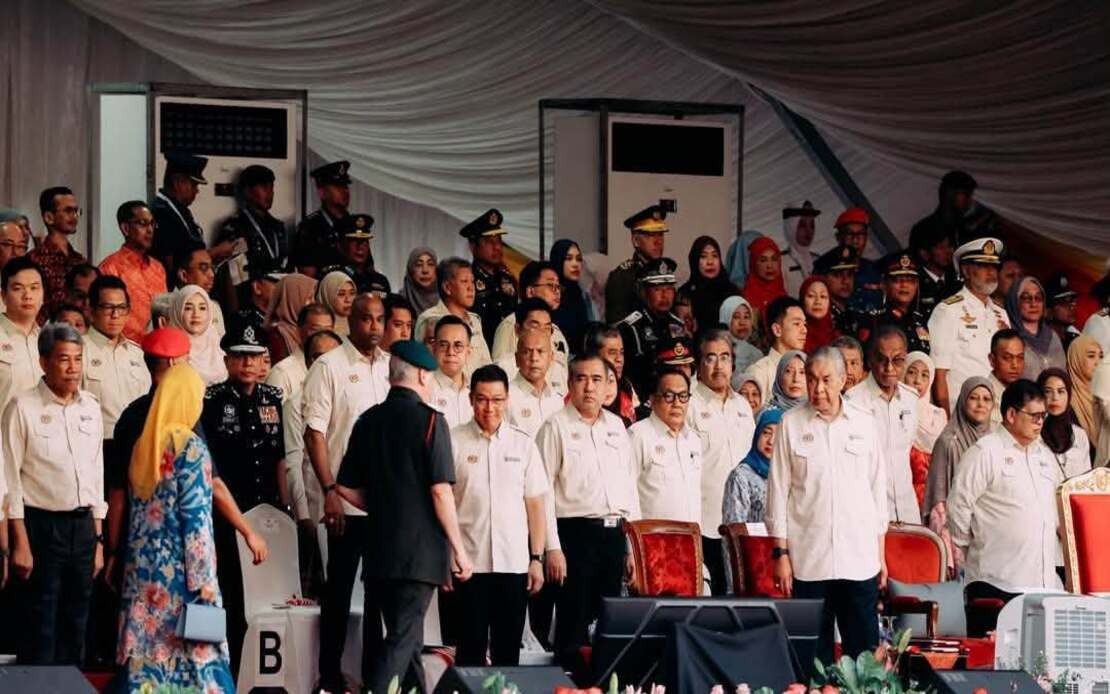
The stability of Malaysia's Unity Government depends fundamentally on the political maturity of its leaders and their willingness to place nation-building above narrow party interests, according to Domestic Trade and Cost of Living Minister Datuk Armizan Mohd Ali. Speaking on National Day on August 31, Armizan underscored that the country's altered political terrain following the 15th General Election requires a calibrated approach where leaders recognise that governmental stability directly influences Malaysia's developmental trajectory and the welfare of its citizens. His remarks reflect growing concerns within the coalition about sustaining the delicate balance that has held together the multi-party government since late 2022.
The current political dispensation represents a significant departure from Malaysia's historical governance model. For decades, single-party dominance shaped the nation's administrative culture and decision-making processes. The transition to a coalition-based system demands what Armizan termed a recalibration of political thinking—one where stakeholders accept that the old configuration has fundamentally changed and that nostalgic comparisons are counterproductive. Accepting this new reality, he suggested, is the precondition for building consensus and cohesion among partners with competing ideological viewpoints and electoral ambitions.
Armizan highlighted a striking observation about Cabinet dynamics that contrasts sharply with public perception. While party activists at grassroots levels have engaged in intense rhetorical combat over recent months, interactions among senior leaders during Cabinet meetings have maintained a professional and constructive tone. This compartmentalisation of political conflict—containing intra-coalition tensions within institutional frameworks rather than allowing them to fester—suggests a conscious strategy by leadership to preserve governmental functionality. The minister's acknowledgment of this apparent contradiction reveals the tension inherent in coalition governance, where different organisational levels operate according to different norms.
Crucially, Armizan invoked Malaysia's recent political history as a cautionary tale. Between 2018 and 2022, the country experienced three changes in prime minister and corresponding reshuffles of Cabinet composition within a single term. This period of instability coincided with economic uncertainty, policy inconsistency, and a erosion of investor confidence. Armizan's implicit argument is that such volatility undermines long-term planning and disrupts implementation of strategic initiatives. The rapid turnover of leadership prevented the development of coherent policy frameworks and created an environment of constant political manoeuvre rather than substantive governance. The lesson, for Armizan, is unmistakable: institutional continuity and predictability are prerequisites for prosperity.
The minister's definition of political maturity extends beyond mere civility or professional courtesy. Rather, he conceptualised it as a balanced calibration of competing imperatives. Individual politicians and their parties possess legitimate political rights—the prerogative to advocate positions, contest elections, and pursue constituent interests. Simultaneously, those holding office bear responsibility for stewarding national interests and ensuring the machinery of government functions effectively. Mature leadership, in Armizan's formulation, recognises these dual obligations and resists the temptation to prioritise factional advantage over institutional stability. This framework attempts to establish criteria by which to evaluate leader conduct within the coalition.
The implications for Southeast Asian observers are noteworthy. Malaysia's experiment with coalition governance emerges from electoral dynamics that fragmented traditional power blocs. Similar patterns of political fragmentation are emerging across the region, from Thailand to Indonesia. How Malaysia manages its coalition could offer lessons—positive or negative—for other nations navigating multi-party governance. The region's experience suggests that coalition stability is precarious and demands sustained effort from participating elites. Armizan's emphasis on political maturity reflects an understanding that institutional design alone cannot sustain such arrangements; the commitment and behaviour of leaders prove equally vital.
Armizan also contextualised the challenge within Malaysia's broader national narrative. National Day, he noted, serves as an occasion for citizens to collectively appreciate independence and peace—achievements that required sacrifices and collective effort. Translating this retrospective appreciation into forward commitment means recognising that contemporary political differences, while real, must not undermine the foundational national project. This rhetorical move positions coalition stability not as narrow elite interest but as consonant with foundational national values. It appeals to a patriotic register that transcends party affiliation and positions political compromise as an expression of national duty rather than political weakness.
The minister's vision of inclusive governance extends across societal sectors. Civil servants, business leaders, civil society activists, and ordinary citizens each occupy roles within governance systems. Regardless of whether they occupy positions of agreement or disagreement, all participate in the shared national project. This inclusive framing sidesteps the tendency in coalition politics to reduce governance to a zero-sum competition among constituent parties. Instead, Armizan advanced a conception of governance as a complex ecosystem where multiple actors, motivated by different considerations, contribute to collective outcomes. Such framings matter because they establish normative expectations about appropriate behaviour and the boundaries of acceptable political contestation.
For Malaysian observers, Armizan's statements carry particular resonance given the coalition's track record since its formation. The Unity Government has navigated several potential rupture points—disputes over policy direction, disagreements over Cabinet representation, tensions over electoral positioning ahead of state elections. That it has survived these strains thus far owes partly to the restraint he identifies. However, the underlying fragilities remain. General elections will eventually arrive, and campaign logic often privileges competitive positioning over institutional continuity. Whether the political maturity Armizan advocates will withstand electoral pressures remains an open question.
The minister's emphasis on institutional stability and leadership maturity reflects a technocratic perspective that valorises governmental functionality and policy coherence. This viewpoint prioritises outputs—economic growth, infrastructure development, social welfare provision—over the process-oriented concerns of democratic participation that some citizens emphasise. The coalition's challenge involves satisfying both imperatives: delivering material improvements while maintaining internal democracy and responsiveness to constituent preferences. Balancing these demands requires precisely the political maturity Armizan champions, yet that maturity cannot be legislated or imposed; it depends on choices leaders make repeatedly under pressure.
Looking forward, the stability of Malaysia's Unity Government will hinge on whether the political maturity Armizan described constitutes a durable norm or remains contingent on particular circumstances and individuals. If it becomes embedded in institutional culture and widely accepted across party lines, it could provide a template for stable coalition governance. If it proves fragile and subject to erosion when immediate interests conflict with long-term stability, Malaysia may face renewed political turbulence. The minister's National Day message thus functions partly as an exhortation: a call for elites to internalise the values of restraint and responsibility he articulates. Whether that exhortation proves sufficient will ultimately determine whether Malaysia's coalition experiment succeeds or gives way to renewed instability.

