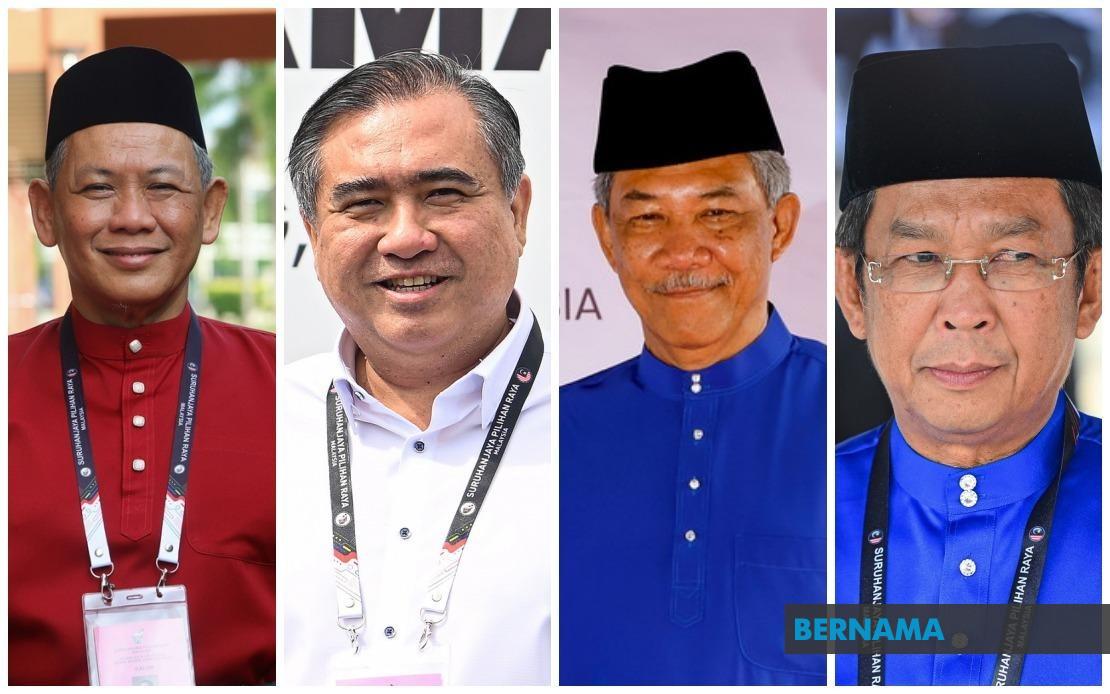
The 16th Negeri Sembilan state election is shaping up as a notably competitive affair, with several of the country's most prominent political figures discovering that seniority and incumbency offer limited protection against determined challengers. As nominations closed on July 18, it became apparent that party leadership and ministerial rank will count for little if candidates fail to mobilise grassroots support effectively across the state's diverse constituencies.
Datuk Seri Aminuddin Harun, who leads Pakatan Harapan in Negeri Sembilan and currently serves as caretaker Menteri Besar, finds himself battling on multiple fronts. In the Linggi seat, the PKR vice-president faces a three-way contest against incumbent Datuk Mohd Faizal Ramli of Barisan Nasional and Bersatu's Datuk Zamri Md Said. Aminuddin's position is complicated by the fragmentation of the opposition vote, which could theoretically benefit a well-organised BN challenger. The Linggi constituency has traditionally been competitive, and the presence of a third candidate introduces unpredictability into what might otherwise have been a straightforward contest between two established forces.
DAP's Anthony Loke, the Transport Minister and party secretary-general, faces an unexpected challenge in Chennah, a seat the party has controlled continuously since 2013. His opponent is Siow Kong Choon, the Negeri Sembilan MCA Youth chief fielded by Barisan Nasional. What makes this contest significant is that DAP's strongholds in smaller urban constituencies occasionally slip away when the ruling coalition deploys its organisational machinery effectively. Loke's national profile and ministerial responsibilities may work against him if constituents feel insufficiently represented at the state level, a perennial risk for politicians juggling multiple responsibilities.
The contest in Rantau captures perhaps the most dramatic generational divide. Datuk Seri Mohamad Hasan, BN's deputy chairman and Foreign Minister, has represented this constituency since 2004 and is deeply embedded in its political culture. At 70 years old, he confronts Dr Azizul Hakim Mahdi from Pakatan Harapan, roughly half his age. The straight fight dynamics in Rantau offer voters a direct choice between continuity and change. Mohamad's three decades of cumulative political experience and established constituency infrastructure stand against voter appetite for fresh perspectives. Whether the electorate prioritises continuity or renewal will significantly influence this constituency's outcome and send broader signals about age and leadership transitions within Negeri Sembilan's political landscape.
Pertang presents another substantial threat to BN's incumbency. Datuk Seri Jalaluddin Alias, who has held the seat since 2013 and serves as Negeri Sembilan UMNO chief, must navigate a three-cornered contest against PH's Mohd Umry Abdul Khois and Bersatu's Mohd Faizal Fadli Mohd Idrus. Split opposition votes in such contests can sometimes benefit incumbents, but they equally create opportunities if one challenger consolidates sufficient support. The durability of Jalaluddin's political base will be tested against rivals presenting alternative visions for state representation.
The Nilai constituency demonstrates the increasing fragmentation of Malaysia's electoral landscape. DAP national deputy chairman J. Arul Kumar, the incumbent and PH candidate, faces a five-cornered battle against Datuk Lai Chien Kong from BN, Datuk V. Saravana Kumar representing Bersatu, independent candidates Omar Mohd Isa and Zamani Ibrahim from Berjasa. Such fragmentation substantially complicates forecasting, as vote distribution across five competitors depends on nuanced local dynamics, candidate profiles, and ground mobilisation effectiveness. Kumar's established presence must contend with the unpredictability inherent in five-way contests.
Similarly complex is the Sri Tanjung five-cornered clash, where PH incumbent Dr G. Rajassekaran faces Bersatu's 23-year-old Leevineshwaraan Murugan, who represents the election's youngest candidate cohort. Bersatu's decision to field such a youthful challenger suggests calculated deployment of generational contrast messaging. The inclusion of independent candidates A. Achutan from BN, Saravanan Arumugam and Islah Wahyudi Zainudin as independent contestants further fragments what might otherwise be a more predictable two-party contest. Dr Rajassekaran's experience and established networks face a particularly complex electoral environment where vote splitting dynamics become paramount.
The overall election features 103 candidates contesting 36 state seats. Pakatan Harapan has fielded the maximum possible 36 candidates, Barisan Nasional is fielding 25, Bersatu 24, and Perikatan Nasional 11. Additionally, Barisan Jemaah Islamiah Se-Malaysia (Berjasa), Parti Orang Asli Malaysia (ASLI), and Parti Sosialis Malaysia (PSM) have each nominated single candidates, while four independent candidates are also competing. This unprecedented fragmentation reflects both the fractured state of Malaysian politics and the continued fluidity of voter allegiances across the country.
The 14-day campaign period commenced following nomination closure and will conclude at 11.59 pm on July 31, with early voting scheduled for July 28 and polling day set for August 1. This compressed campaign timeline requires candidates to mobilise efficiently and deliver concentrated messaging. For political figures accustomed to cruising to victory on party machinery and accumulated electoral credits, the intense campaign schedule and competitive landscapes demand heightened personal engagement.
For Malaysian and Southeast Asian observers, the Negeri Sembilan election provides an important data point on whether incumbent political elites maintain electoral dominance or whether voter frustration, demographic shifts, and political fragmentation are genuinely reshaping Malaysia's electoral dynamics. The contests involving senior figures like Aminuddin, Loke, and Mohamad Hasan will offer valuable insight into whether ministerial position and party seniority translate into electoral resilience or whether constituencies increasingly prioritise local representation over national prominence. The result will partially determine the trajectory of Malaysian politics heading toward subsequent federal considerations and illuminate whether opposition parties can effectively exploit BN's vulnerabilities through coordinated or strategic candidacy approaches.

