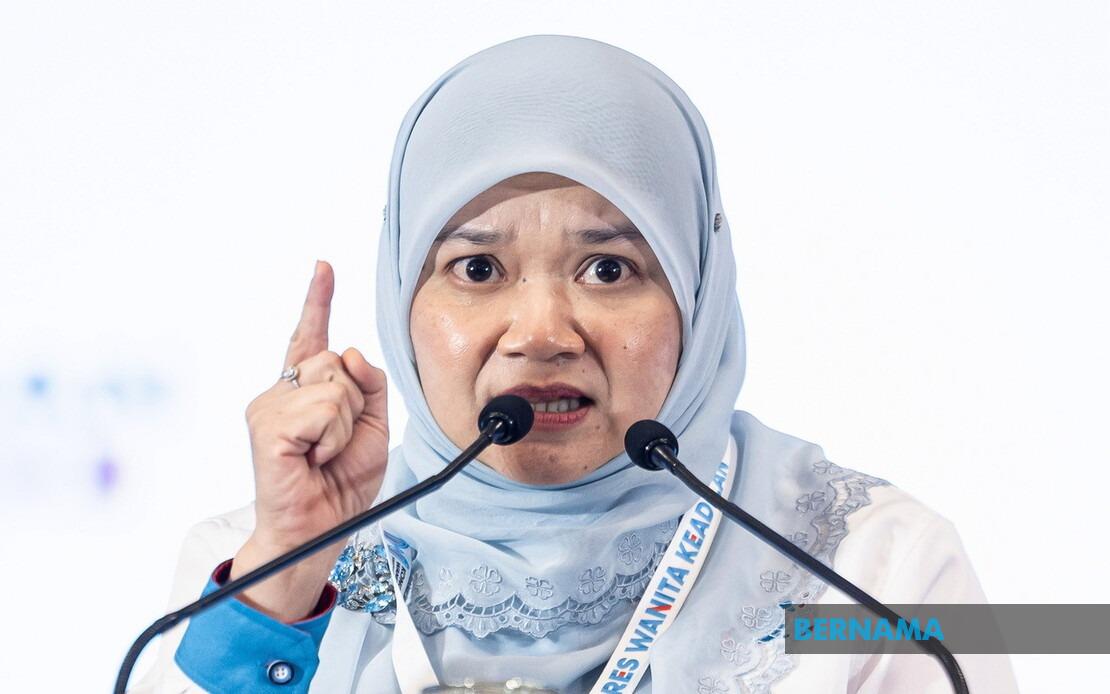
The politicisation of religious matters represents a growing threat to healthy democratic discourse in Malaysia, according to Wanita PKR chief Fadhlina Sidek, who used her address at the 2026 Wanita PKR National Congress in Melaka to challenge the prevailing trend of faith-based political campaigning. Speaking at the Melaka International Trade Centre in Ayer Keroh, Fadhlina argued that electoral competition should be measured by the calibre of ideas and policy proposals each party can present to voters, rather than by attempts to mobilise religious sentiment for partisan advantage. Her remarks carry particular resonance in Malaysia's fractious political landscape, where religious issues have become increasingly weaponised across the political spectrum, often overshadowing substantive debate about economic management, public services, and social welfare.
Fadhlina's call for restraint on religious matters reflects a broader concern among moderate political figures that the instrumentalisation of faith diminishes the quality of public discourse and divides communities along sectarian lines. She emphasised that religion itself deserves respect and protection from the rough-and-tumble world of electoral politics, and that exploiting spiritual convictions to win votes fundamentally cheapens both the political process and the faith traditions themselves. This framing positions PKR as a party willing to compete on substantive grounds, potentially differentiating it from rivals accused of relying on religious grievance narratives to mobilise support. For Malaysian voters increasingly frustrated by superficial campaign messaging, her emphasis on ideas-based competition offers a refreshing counterpoint to the divisive rhetoric that has characterised recent electoral cycles.
The Wanita PKR leader outlined a vision of political competition that pivots away from character assassination and denigration towards genuine policy debate about which coalition can deliver superior solutions to pressing national challenges. She urged party members to recognise that the political space available offers an opportunity to distinguish themselves through the coherence, viability, and ambition of their proposed solutions to structural problems facing Malaysian society. This approach suggests that PKR intends to campaign by presenting voters with concrete alternatives rather than by attacking opponents' integrity or exploiting cultural anxieties. Such a strategy requires discipline throughout the party machinery and a shared commitment to elevating discourse, particularly challenging in an environment where competing factions routinely resort to inflammatory rhetoric.
Beyond her critique of religious politicisation, Fadhlina identified reconnection with grassroots communities as essential to PKR's organisational health and electoral prospects. She instructed party leaders and members at all levels to deepen their understanding of local conditions by establishing direct contact with neighbourhoods they represent, moving beyond ceremonial engagements to develop genuine awareness of community needs and circumstances. This directive reflects recognition that top-down political messaging increasingly fails to persuade voters who have become cynical about disconnected elites making promises they do not follow through on. By emphasising ground-level engagement and responsiveness, Fadhlina is essentially arguing that PKR's competitive advantage lies not in rhetorical flourish or divisive appeals but in demonstrable commitment to understanding and addressing the material concerns of ordinary Malaysians.
The emphasis on sensitivity to local contexts carries significant implications for how PKR positioning itself in Southeast Asia's broader political economy. Malaysian politics occurs within a regional environment where rising inequality, urban-rural divides, and generational frustrations with political establishments are reshaping voter behaviour across Thailand, Indonesia, and the Philippines. A PKR that grounds itself in grassroots realities rather than abstract ideological claims may prove more resilient against populist challengers and better positioned to retain urban and suburban support where educated voters increasingly demand accountability and policy sophistication. Fadhlina's exhortation that leaders examine neighbours' circumstances and provide tangible assistance suggests a model of political engagement built on service delivery and community problem-solving rather than symbolic gestures or slogans.
Fadhlina also reinforced the importance of organisational loyalty and perseverance as PKR navigates ongoing political turbulence and internal challenges. She acknowledged that the party faces various trials while simultaneously calling on members to maintain steadfast commitment to PKR's broader mission and values. This balance between recognising difficulties and demanding resilience reflects the reality that Malaysian political parties operate in an environment where defections, factional conflicts, and opportunistic coalition-building regularly threaten institutional cohesion. PKR's particular vulnerability stems from its history of internal divisions and the tendency of prominent figures to pursue personal advancement at the expense of party unity. By framing loyalty as essential to the party's ability to deliver on its promises to supporters, Fadhlina sought to reinforce collective identity and purpose beyond individual ambition.
The construction and maintenance of party strength through disciplined organisational work represents a fundamental challenge for PKR as it competes against better-resourced rivals with deeper institutional roots. Fadhlina's insistence that party machinery at all levels must be ready and capable of sustained engagement with voters acknowledges that electoral victory requires more than policy proposals or charismatic leadership. Rather, it demands systematic infrastructure capable of identifying supporter preferences, mobilising participation, and maintaining relationships between elections. For a party often perceived as less professionally organised than Barisan Nasional or Perikatan Nasional, this emphasis on institutional strengthening carries practical significance beyond rhetorical appeal. The question of whether PKR can genuinely improve its operational competence across federal, state, and local structures will substantially influence its viability in future electoral contests.
Fadhlina's remarks also implicitly critique the current political environment in which major competing coalitions have shown little restraint in exploiting religious sensitivities or engaging in personal attacks. By positioning PKR as willing to elevate discourse and focus on substantive competition, she was attempting to claim the political centre ground and appeal to voters fatigued by polarisation and divisiveness. However, the gap between rhetorical commitment to ideas-based politics and actual campaign behaviour remains substantial in Malaysian politics. Whether PKR can successfully distinguish itself through sustained adherence to these principles, particularly under pressure from competitors deploying divisive tactics that prove electorally effective, remains uncertain. The test will come during the campaign period leading up to the next general election, when political pressures intensify and the temptation to match opponents' inflammatory rhetoric increases.
Ultimately, Fadhlina's address to the Wanita PKR congress articulated a vision of democratic politics that prioritises substantive policy debate, direct community engagement, and organisational integrity over religious mobilisation and personality-based competition. This framing resonates with broader conversations occurring throughout Southeast Asia about the quality of democratic institutions and the possibility of restoring public faith in political processes. For Malaysia specifically, where religious tensions remain potent and social fragmentation has accelerated, the challenge of building political competition around ideas rather than identity markers represents both an ethical imperative and a strategic necessity. Whether PKR and other moderate political forces can successfully reorient Malaysian politics in this direction, or whether more divisive forces will continue to dominate the electoral landscape, will significantly influence the country's democratic trajectory in coming years.

