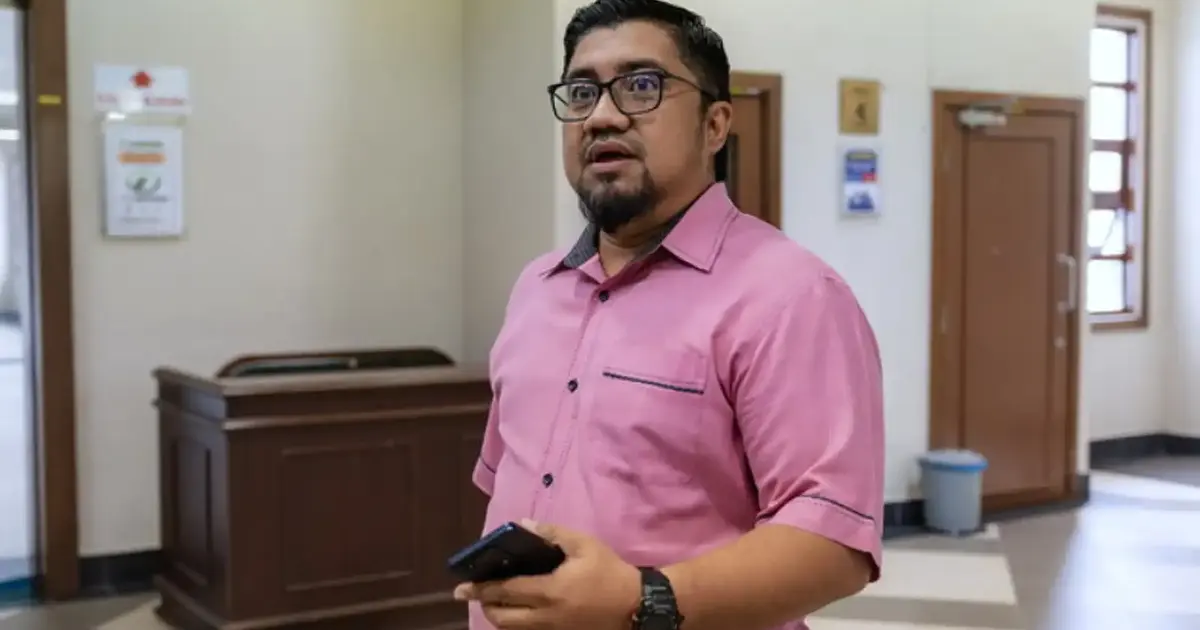
A political activist has been charged with publishing seditious material linked to Negeri Sembilan's royal family, marking another flashpoint in the ongoing tension between civil liberties advocates and authorities enforcing Malaysia's strict laws governing commentary on the monarchy. The allegations centre on content released on May 26, which prosecutors claim violated provisions protecting the dignity and reputation of the state's ruling family.
The case underscores the precarious position of activists operating within Malaysia's legal framework, particularly when their work intersects with matters involving royal institutions. Sedition charges remain among the most potent legal weapons deployed against dissenting voices in the country, carrying potential prison sentences and fines that can effectively silence or financially devastate those accused. The specifics of the contested material have not been fully disclosed, but the linking of charges to Negeri Sembilan's royalty suggests the activist's statements or publications were deemed to cross the threshold from political criticism into territory considered insulting or contemptuous toward the monarchy.
Negeri Sembilan, one of Malaysia's constituent states with a unique elective monarchy system where rulers are chosen by chiefs rather than hereditary succession, has occasionally featured in national political discourse and court proceedings. The state's royal institution, like those in other Malaysian states, enjoys constitutional protections that extend beyond those afforded to ordinary citizens and elected officials. This legal asymmetry means that criticism of royal conduct or statements, even when framed as legitimate political commentary, can rapidly become prosecutable under sedition or defamation statutes.
The timing of the May 26 publication remains significant, as it may align with particular political developments or statements from either the activist or members of the royal household. Without access to the actual content, observers and civil society groups have already begun raising concerns about whether legitimate political expression is being conflated with sedition. This distinction has long troubled Malaysian legal analysts, who argue that the broad interpretation of seditious intent has chilled public discourse on matters of genuine national concern.
For Malaysian readers and Southeast Asian observers, this case reflects deeper structural questions about the balance between protecting institutional dignity and preserving democratic space for critical voices. In a region where stability and deference to established hierarchies are highly valued, Malaysia has chosen to place particularly robust legal shields around its monarchy. Yet this approach creates friction with international standards on free expression and with domestic demands from younger, more globally-connected citizens who question whether such protections serve the public interest.
The activist's case will likely draw scrutiny from human rights organisations and press freedom advocates both within Malaysia and internationally. Such organisations have increasingly documented what they characterise as the weaponisation of sedition laws against political opponents and activists, a pattern that extends beyond royal-related speech to encompass criticism of government policy, corruption allegations, and demands for institutional accountability. Whether this particular charge represents a justified protection of institutional honour or an overreach into suppressing legitimate dissent remains contested.
Negeri Sembilan itself has experienced significant political volatility in recent years, with state-level transitions affecting both the government and the royal establishment's relationship with elected officials. Any tensions between royalty and political figures within the state could potentially colour how sedition charges are perceived by observers seeking to understand the deeper motivations behind the prosecution. The activist's background, affiliations, and previous statements will likely become material in the court proceedings and in public interpretation of the case's significance.
The legal implications for the activist are serious, as sedition convictions carry sentences of up to seven years imprisonment, fine, or both under Malaysia's Sedition Act 1948. Even an acquittal leaves the accused burdened by the costs of lengthy legal proceedings and reputational damage that can extend far beyond the courtroom. This structural reality means that the act of charging itself functions as a deterrent, potentially silencing others who might otherwise engage in similar political expression for fear of triggering similar prosecution.
For Malaysia's broader political environment, the case arrives at a moment when the country is attempting to navigate between maintaining social harmony through respect for institutions and opening space for the democratic contestation and accountability mechanisms that contemporary governance increasingly demands. The government has occasionally signalled willingness to reconsider sedition laws, yet prosecutions continue at a steady pace, suggesting that enforcement policy at the enforcement level often outpaces legislative reform at the parliamentary level.
International perspectives on the case will likely align broadly along familiar lines, with Western democracies and human rights bodies viewing it skeptically, while authoritarian governments may regard it as a reasonable exercise of state prerogative. For ASEAN nations, the case provides another data point in ongoing regional debates about how governments can protect stability and institutional integrity without descending into authoritarian suppression of political speech. Malaysia's approach, sitting somewhere between the strictly enforced restrictions of more authoritarian systems and the permissiveness of liberal democracies, remains a subject of considerable scrutiny and disagreement.
The court proceedings ahead will reveal not only details of the specific allegations but also how Malaysian judges interpret the boundaries between protection of institutions and space for critical expression. The outcome may influence subsequent prosecutions and will certainly shape how activists and media organisations calibrate their coverage of royal-related matters going forward.

