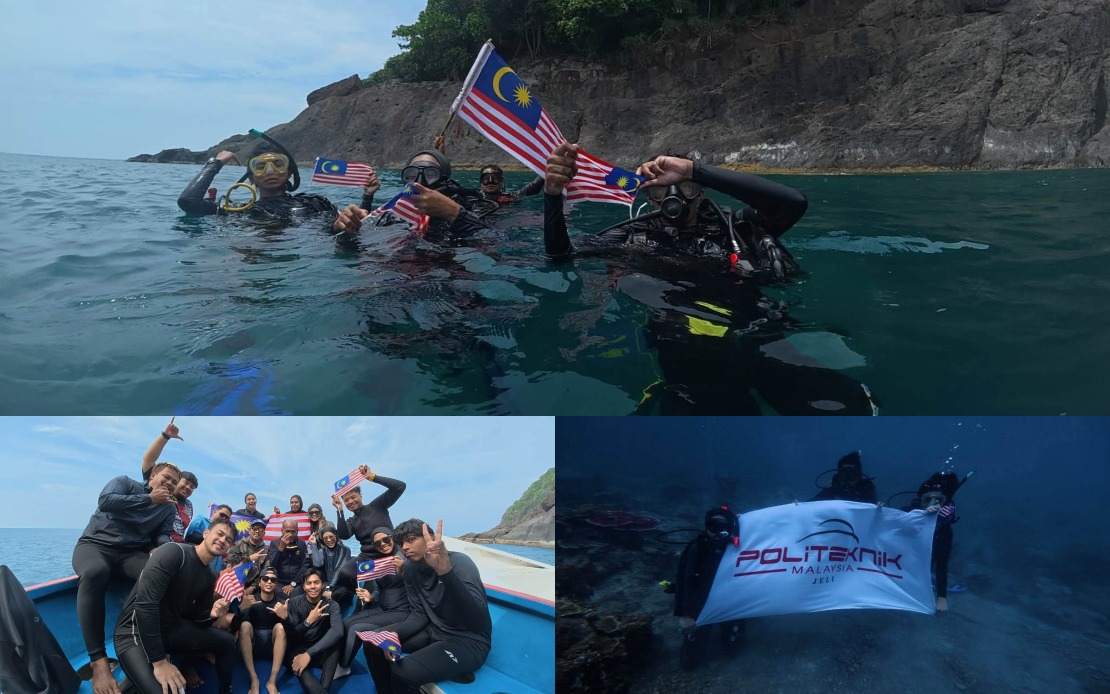
Politeknik Jeli Kelantan (PJK) commemorated Malaysia's 69th National Day in August with an unconventional ceremony that merged institutional pride with professional maritime skill-building. Rather than traditional ground-level festivities, the polytechnic's aquaculture division orchestrated the deployment of the Jalur Gemilang at a depth of 18 metres off the coast of Pulau Tenggol in Terengganu waters. The initiative represented far more than a patriotic gesture; it exemplified how vocational education institutions in Malaysia are innovating to embed real-world competencies within celebratory frameworks, ensuring students graduate not merely with theoretical knowledge but with internationally recognised certifications and hands-on experience.
Mohd Adam Nashriq Bani Yamin, an aquaculture lecturer at PJK, explained that the underwater flag display formed the centrepiece of a structured scuba diving training and certification programme conducted between 27 and 30 August at Dive Buddy Dungun. The initiative involved the PJK Aquaculture Technology Unit and the Department of Agrotechnology and Bio-Industry, drawing participation from two lecturers and two fifth-semester diploma students. Beyond the symbolic raising of the flag at depth, the programme delivered PADI (Professional Association of Diving Instructors) Open Water Diver certification to participants, a credential recognised globally and increasingly essential for professionals entering Malaysia's expanding marine sectors.
The decision to conduct water safety and scuba certification during National Day celebrations underscores a broader pedagogical philosophy gaining traction across Malaysian polytechnics. Rather than segregating patriotic observance from curriculum delivery, institutions are recognising opportunities to contextualise practical training within moments of national significance. This approach serves multiple objectives simultaneously: students fulfil patriotic duties, develop crisis-management competencies, and acquire industry-standard qualifications. For aquaculture students particularly, exposure to underwater environments and emergency protocols proves directly relevant to their future career paths, which frequently demand work in challenging marine conditions or on the seabed itself.
The water safety component integrated into the diving programme carries particular weight for a nation with extensive maritime boundaries and a growing blue economy. Students undertaking the course received instruction not only in diving techniques but in recognising and responding to potential emergencies beneath the surface. These capabilities extend well beyond tourism or recreational diving; they form foundational safety knowledge for anyone pursuing careers in marine aquaculture operations, fish farming management, or marine biotechnology research. When PJK graduates enter the workforce in these sectors, their ability to respond calmly to underwater incidents could prove life-saving, both for themselves and their colleagues.
Dr Nabila Talib, an instructor from Dive Buddy Malaysia, facilitated the PADI Divemaster and Open Water Diver courses that formed the technical backbone of the initiative. The involvement of a certified external instructor ensured that training adhered to international standards, lending credibility to the certifications awarded and signalling to employers that PJK graduates possess verifiable, globally-benchmarked competencies. This partnership between the polytechnic and private diving operators reflects a constructive collaboration model increasingly common in Malaysian vocational education, where institutions leverage specialist expertise from industry partners to enrich student learning outcomes.
The dual symbolism of planting both the Jalur Gemilang and the PJK institutional flag at 18 metres depth carried deliberate meaning. By displaying the national flag alongside the polytechnic's own colours, organisers communicated that institutional patriotism and national pride coexist and reinforce one another. For the students witnessing this ceremony from the seabed, the image of Malaysia's flag in an extreme environment—one they had trained rigorously to access safely—would have created a memorable association between personal achievement, professional capability, and national identity. Such experiential learning often proves more indelible than classroom instruction alone.
The relevance of this initiative extends beyond Kelantan's borders and speaks to Malaysia's strategic priorities in developing its marine resources. The government has identified aquaculture, marine biotechnology, and blue economy sectors as growth areas requiring a skilled workforce. Polytechnic graduates equipped with both theoretical knowledge and practical, internationally-recognised diving certifications become more immediately employable and capable of contributing to these sectors. The PJK programme thus addresses a real gap in Malaysian vocational education: the integration of safety-critical skills with industry-standard certification, rather than treating these as separate or supplementary elements.
For students in the Diploma in Aquaculture Technology programme, the diving skills acquired during the August event offered compounded value. Beyond their immediate application to marine aquaculture operations and farm management, these competencies enable graduates to participate in marine research expeditions, conduct underwater environmental assessments, and engage in marine ecosystem conservation projects. As Malaysia increasingly emphasises sustainable development and environmental stewardship—particularly concerning coastal and marine resources—graduates capable of working effectively in underwater environments become invaluable to both government agencies and private enterprises.
The broader implication of PJK's National Day initiative lies in its potential as a model for other polytechnics across Malaysia. When vocational institutions successfully integrate patriotic observance with practical skill development, they demonstrate that these objectives need not compete for institutional resources or student time. Instead, they can be synergistic. A logistics polytechnic might commemorate National Day through a supply chain management simulation benefiting local communities; an engineering polytechnic might deploy National Day as an occasion for students to service equipment used by government agencies. By reframing national celebrations as opportunities for applied learning, Malaysian polytechnics can deepen student engagement while simultaneously advancing the nation's human capital development.
Looking forward, the success of PJK's underwater flag deployment and diving certification programme may inspire similar initiatives at other polytechnics in coastal regions. Terengganu, Sabah, Sarawak, and other maritime states possess abundant opportunities for polytechnics to embed marine skills training within patriotic frameworks. As Malaysia's blue economy expands and the demand for marine professionals intensifies, programmes like PJK's demonstrate how vocational education can responsibly and creatively respond to both national pride and labour market needs. The image of the Jalur Gemilang floating 18 metres beneath Terengganu's waters ultimately represents not merely a symbolic gesture, but a tangible commitment to producing graduates capable of serving their country in increasingly specialised and globally-competitive marine industries.

