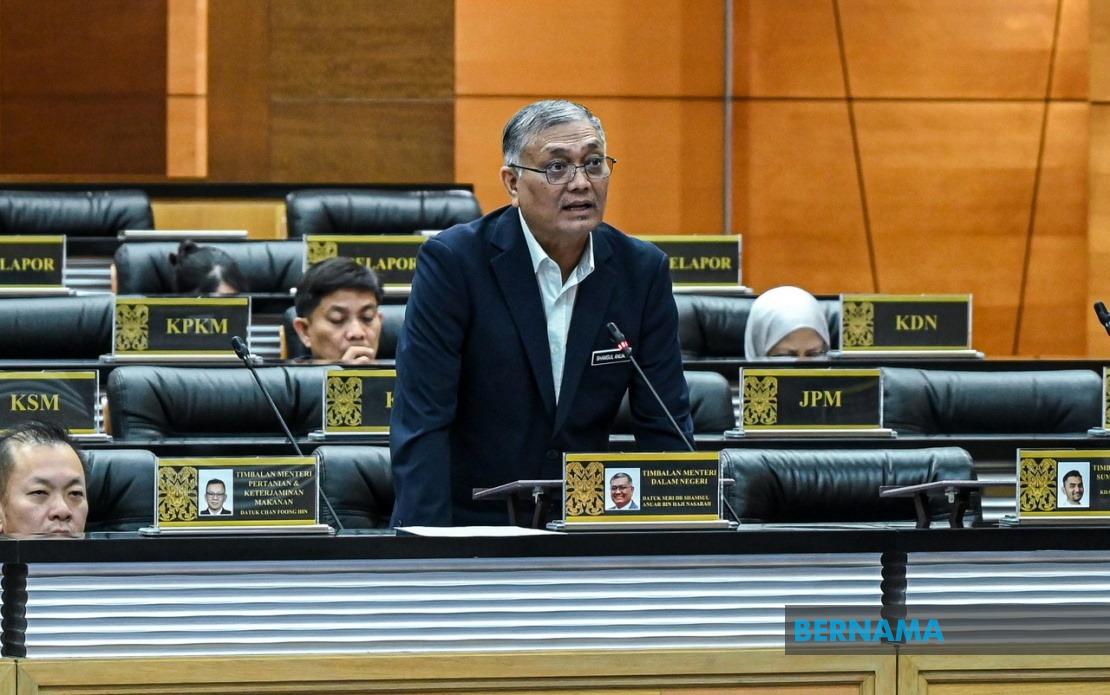
Malaysia's Deputy Home Minister, Datuk Seri Dr Shamsul Anuar Nasarah, has moved to dispel perceptions that the police force offers special treatment to the politically connected, declaring that the Royal Malaysian Police (PDRM) applies uniform standards in investigating high-profile cases regardless of a suspect's position or party affiliation. Speaking during a parliamentary session in Kuala Lumpur on July 15, Shamsul Anuar sought to underscore the professionalism and neutrality of law enforcement operations, a reassurance that carries particular weight given Malaysia's history of concerns about political influence in criminal investigations.
The remarks came in response to parliamentary questions about the status of several sensitive ongoing investigations, most notably the 2019 viral intimate video recording that implicated a former Cabinet member. The case has remained in the public consciousness for years, with widespread speculation about the identity of the individual involved and the pace of investigative progress. The Deputy Home Minister disclosed that police continue to pursue leads to locate the original recording and all devices or equipment that may have been used in its creation or distribution, signalling that the investigation remains active despite the passage of time since the video first circulated online.
Under Malaysian law, the investigation into the 2019 video case invokes multiple criminal statutes. Authorities are pursuing charges potentially under Section 292 of the Penal Code, which addresses obscene materials, alongside Section 377B concerning consensual sexual conduct, and Section 504 which covers intentional insult with intent to provoke a breach of peace. Additionally, the Communications and Multimedia Act 1998 Section 233 has been engaged, addressing the unlawful transmission of offensive content. This multi-pronged legal approach reflects the complexity of prosecuting offences in the digital age, where content production, distribution, and circulation often traverse different jurisdictional and technical dimensions.
Shamsul Anuar's emphasis on professional, transparent, and equitable investigation procedures carries significance for Malaysian citizens and the international community watching Malaysia's governance standards. The assertion that neither political position nor party membership influences the rigour or fairness of police investigations attempts to address a longstanding concern in Southeast Asian democracies regarding the potential weaponisation of law enforcement against political opponents. In Malaysia's context, where coalition politics frequently creates shifting allegiances, such assurances matter considerably to public confidence in the neutrality of state institutions.
Separately, the Deputy Home Minister addressed a parallel high-profile case involving the son-in-law of former Prime Minister Tan Sri Muhyiddin Yassin. In this matter, investigative authority rests with the Malaysian Anti-Corruption Commission (MACC), which has taken the significant step of issuing an arrest warrant. Shamsul Anuar declined to elaborate further, citing the ongoing nature of MACC's investigation and the protocols governing public commentary on active cases. The involvement of the anti-corruption body signals that allegations centre on financial irregularities or abuse of power rather than other criminal categories.
The distinction between police and MACC investigations highlights Malaysia's institutional division of investigative labour. While the PDRM addresses conventional criminal matters, the MACC operates with specific remit over corruption-related offences, a separation intended to create independent oversight mechanisms. The issuance of an arrest warrant represents a formal judicial step, indicating that MACC has presented evidence to court sufficient to establish probable cause that an individual has committed a corruption-related offence and poses a flight risk or danger to evidence.
Beyond domestic criminal matters, Shamsul Anuar also addressed international law enforcement cooperation, specifically concerning extradition procedures. Malaysia operates within the framework of the Extradition Act 1992 and maintains formal extradition treaties with 11 countries, providing legal mechanisms for the surrender of individuals sought for prosecution or enforcement of sentences in foreign jurisdictions. The country has also endorsed the ASEAN Extradition Treaty, binding it alongside its Southeast Asian neighbours in commitments to mutual legal assistance.
The Deputy Home Minister signalled Malaysia's openness to expanding this network, indicating willingness to negotiate additional bilateral and multilateral extradition agreements. Such diplomatic efforts reflect recognition that modern crime increasingly transcends borders, requiring coordinated international response. For Malaysian policymakers, strengthening extradition arrangements serves both to ensure Malaysian fugitives face accountability abroad and to facilitate prosecution of foreign nationals suspected of crimes committed within Malaysian territory.
The parliamentary exchange underscores ongoing tension in Malaysian public discourse between demands for accountability and concerns about politicised prosecution. High-profile cases involving former government figures inevitably attract scrutiny about whether investigations target political rivals or whether sympathetic handling protects allies. Shamsul Anuar's restatement of professional police conduct, while rhetorically reassuring, cannot definitively resolve such concerns—public confidence ultimately depends on demonstrated outcomes, transparent procedures, and consistent application of legal standards across cases regardless of the political identity of accused parties.
For Malaysian readers and regional observers, these statements confirm that sensitive investigations remain ongoing but provide limited new substantive detail. The cases referenced—the 2019 intimate video matter and the MACC investigation involving the former Prime Minister's son-in-law—will likely continue generating public interest and political commentary as proceedings advance. The Deputy Home Minister's emphasis on institutional impartiality, while essential, requires corroboration through visible investigative progress and eventual judicial outcomes that demonstrate even-handed application of justice across Malaysia's fractious political landscape.

