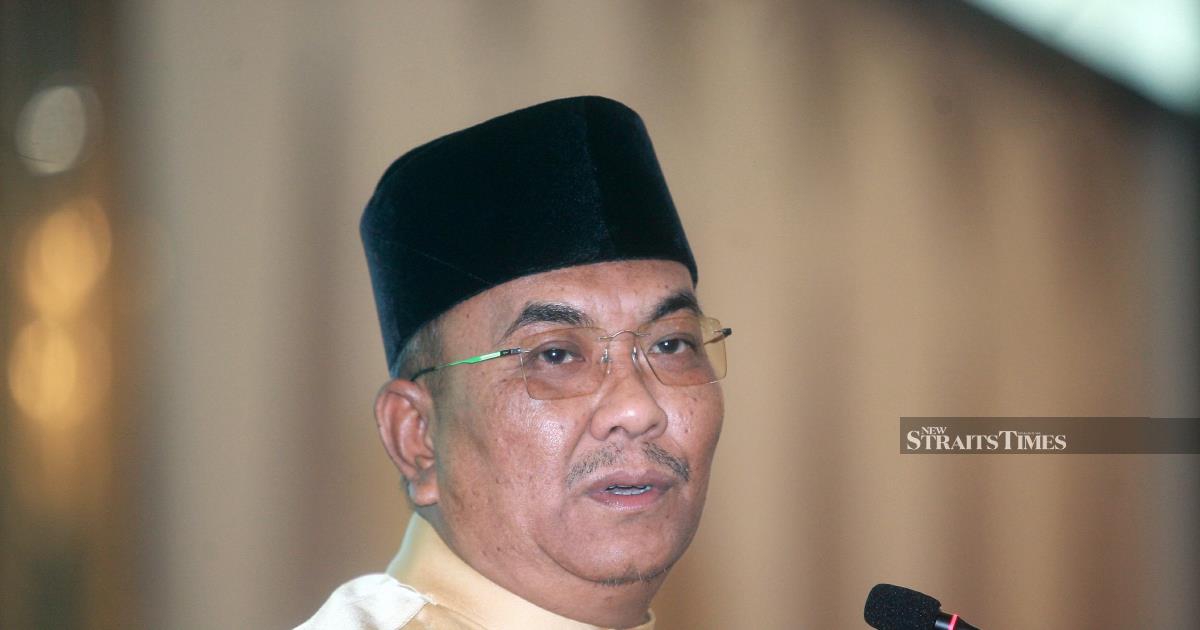
Law enforcement authorities have signalled their intention to call in Kedah Menteri Besar Datuk Seri Muhammad Sanusi Md Nor and a prominent Umno figure from Rembau for questioning relating to remarks they delivered while campaigning in the Negri Sembilan state election.
The development underscores the heightened scrutiny placed on political discourse during electoral campaigns across Malaysia, where state-level contests have increasingly drawn oversight from law enforcement agencies. The decision to summon both figures reflects police concerns about statements that apparently strayed beyond accepted campaign norms, though specific details regarding the nature of their remarks were not immediately disclosed to media representatives at the announcement point in Nilai.
Muhammad Sanusi, who leads the Kedah state government as Menteri Besar, has maintained a visible profile in national politics beyond his state responsibilities. His involvement in campaigning for Negri Sembilan, a state outside his administrative purview, reflects the cross-state coordination common among ruling coalition parties during major electoral contests. Police interest in his specific campaign contributions marks a notable instance of law enforcement scrutiny directed toward a sitting menteri besar, highlighting the sensitivity surrounding certain categories of campaign messaging.
The Rembau Umno official similarly faces separate police questioning, indicating that the authorities view the two cases as distinct matters warranting individual investigation. Rembau's involvement is particularly significant given its established importance as a parliamentary constituency and its role within the Negri Sembilan political landscape. The engagement of a Rembau Umno representative in campaign activities reflects the organisational depth brought to electoral efforts by the coalition parties.
Campaign statements and remarks have increasingly become subjects of police investigation in recent Malaysian electoral cycles, reflecting broader conversations about the boundaries of acceptable political discourse. The threshold for triggering law enforcement involvement has proven somewhat variable, creating uncertainty among political actors about which statements may attract official attention. This ambiguity can influence campaign strategies, as politicians weigh the risks associated with particular messaging approaches.
The timing of the police announcement, occurring in the aftermath of the Negri Sembilan election campaign phase, reflects standard investigative procedures whereby authorities assess campaign conduct once voting has concluded. This retrospective approach allows time for complaints to be registered and assessed before summonses are issued. The decision to pursue questioning simultaneously for multiple individuals suggests coordinated decision-making within the police hierarchy regarding campaign-related matters.
For Kedah's political administration, any police involvement with its Menteri Besar carries potential implications for the state government's standing and operational focus. Muhammad Sanusi's position as a key figure in Kedah governance means that extended police engagement could create administrative distractions, though such questioning is typically brief in nature. The incident also affects perceptions of the Kedah leadership's compliance with electoral regulations and norms.
The Negri Sembilan election itself has attracted considerable attention within Malaysia's political ecosystem, as the state represents an important test ground for coalition performance. Electoral contests in Negri Sembilan carry symbolic weight given the state's historical significance within Malaysian federalism and its role as part of the Klang Valley economic corridor. Campaign conduct during such contests thus receives amplified scrutiny from both political opponents and law enforcement agencies monitoring electoral integrity.
Police engagement in campaign-related investigations reflects broader institutional responsibilities for maintaining electoral standards and preventing breaches of election law. Malaysian electoral law contains provisions governing campaign conduct, and police hold primary responsibility for investigating alleged violations. The specificity with which authorities can apply these provisions remains subject to interpretation, creating ongoing debate about consistency in enforcement.
The summonses represent part of a wider pattern of law enforcement involvement in Malaysian electoral processes, particularly during state-level contests where coordination between federal and state authorities shapes investigative priorities. Such involvement can influence political strategising, as campaign teams calculate risks associated with particular rhetorical approaches or messaging strategies.
Looking forward, the outcomes of police questioning in both cases may establish precedents for future campaign conduct oversight. How authorities characterise the remarks and what conclusions emerge from their investigations could shape subsequent electoral campaigns across Malaysian states. Political parties and individual politicians will likely analyse the findings to understand which categories of campaign statement attract law enforcement attention.
The incident also highlights the intersection between electoral processes and law enforcement priorities in Malaysia's political system. As state elections continue to occur across the federation, balancing freedom of political expression with maintenance of electoral standards remains an ongoing challenge for Malaysian institutions. The willingness of authorities to investigate campaign remarks reflects institutional commitment to electoral integrity, though consistency in application continues to generate discussion within political and civil society circles.

