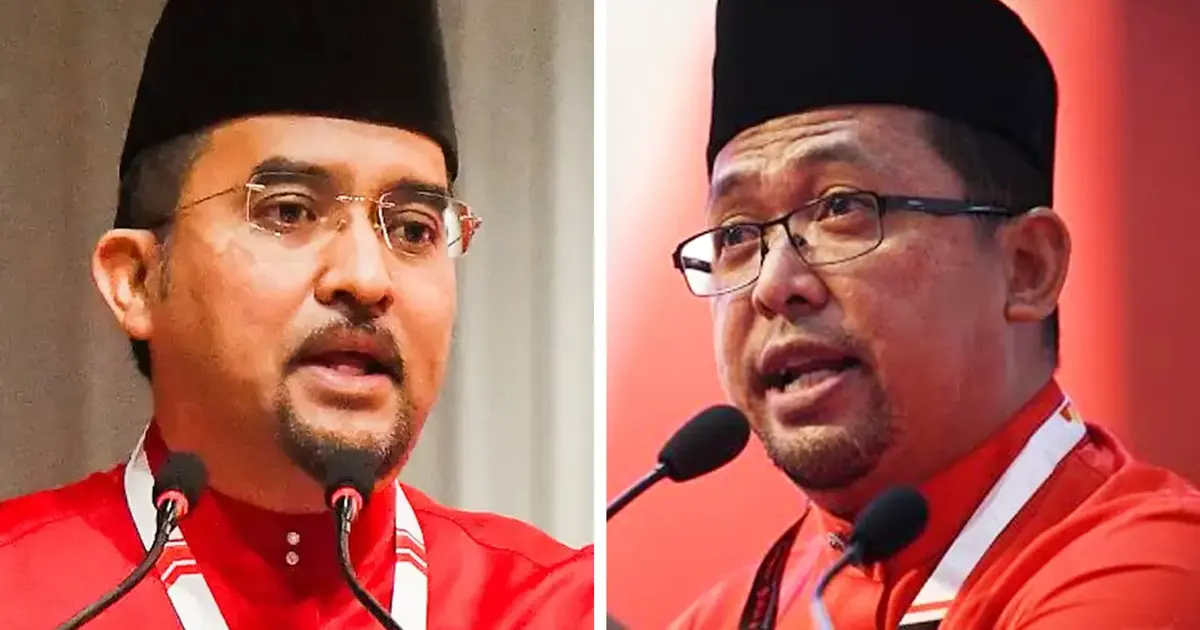
Pakatan Harapan's legal team has initiated police reports against two senior Umno figures over inflammatory campaign statements made during recent political activities in Negeri Sembilan. The complaints centre on remarks allegedly made regarding the appointment of the state's Menteri Besar and claims that the Democratic Action Party exerts improper influence over state palace decision-making processes.
The move represents an escalation in the rhetorical tensions that have characterised political competition in Negeri Sembilan in recent months. Coalition representatives assert that the statements in question crossed the line from legitimate political discourse into territory that undermines institutional integrity and spreads misleading information about constitutional processes. The decision to pursue formal police complaints signals Pakatan Harapan's determination to establish clearer boundaries around acceptable campaign conduct during this politically sensitive period.
According to Pakatan Harapan's account, the Umno leaders made assertions that the DAP wields controlling influence over Negeri Sembilan's palace institutions—a claim that legal representatives regard as baseless and potentially damaging to public confidence in the state's governance structures. Such allegations touch on fundamental questions about institutional independence and the proper separation between political parties and constitutional monarchical functions, matters that carry particular significance in Malaysia's constitutional framework.
The statements regarding the Menteri Besar's appointment process have similarly drawn criticism from Pakatan Harapan officials, who argue that the remarks misrepresent established constitutional procedures for executive leadership selection at state level. These procedures, while subject to palace discretion within constitutional bounds, follow protocols that should not be subject to partisan reinterpretation designed to sow public confusion about their legitimacy.
Police involvement in investigating these complaints will require authorities to examine whether the statements contravene relevant legislation governing political expression and public order. This procedural step introduces an institutional check that may deter similar allegations in future campaign cycles, though such police investigations also raise questions about the appropriate boundary between law enforcement and political competition.
The complaint filing carries broader implications for Malaysian political culture. As electoral competition intensifies across states, the willingness of coalitions to pursue formal complaints against opposition figures suggests that parties increasingly view institutional mechanisms—including police investigations and potential legal proceedings—as legitimate extensions of electoral strategy. This development warrants careful monitoring, as it could establish precedents that reshape how Malaysia's political actors engage with governance institutions during contested periods.
Negeri Sembilan's political landscape has remained fluid and competitive since the last state elections, with power-sharing arrangements requiring careful management among coalition partners. Allegations about one partner allegedly controlling institutional decision-making processes strike at the heart of these delicate agreements and the trust necessary for multi-party governance to function effectively. The public airing of such accusations, and now their escalation into formal police complaints, underscores the fragility of current political arrangements in the state.
For Malaysian observers, the incident illustrates how constitutional questions about palace prerogatives, party influence, and executive appointment processes remain contested political terrain. Unlike nations with purely parliamentary systems, Malaysia's constitutional monarchy affords state palaces significant discretionary authority within defined parameters. This constitutional reality creates space for genuine disagreement about where proper palace discretion ends and party interference begins—disagreement that can be weaponised during electoral contests.
The police investigation process will unfold against a backdrop of heightened political attention to institutional independence. Questions about whether such investigations serve genuine law enforcement purposes or function primarily as political pressure tactics will inevitably arise, particularly if outcomes appear to reflect coalition political preferences rather than evidence-based prosecutorial judgment.
Pakatan Harapan's decision to pursue formal complaints rather than rely solely on public rebuttal signals confidence in the substantive weakness of the Umno statements, while simultaneously demonstrating resolve to confront what party representatives characterise as bad-faith campaign conduct. However, the strategy also carries risks, as formal legal processes can generate uncertainty and prolong political controversies rather than definitively resolving them.
The broader context matters here as well. Malaysian politics continues navigating the aftermath of the 2022 Ismail Sabri administration's governance period and subsequent coalition realignments. Trust between major political blocs remains variable, and episodes like this one can either reinforce perceptions of illegitimate institutional manipulation or, conversely, appear as proportionate responses to overstepping political rhetoric.
Moving forward, how police handle these investigations and what findings emerge will carry significance beyond Negeri Sembilan's immediate political dynamics. Precedents established through such cases shape how political actors calculate the costs and benefits of aggressive campaign rhetoric in subsequent elections. Malaysia's democratic maturation depends partly on developing norms around acceptable political discourse that political actors genuinely respect rather than treat as constraints readily overcome through institutional mechanisms.

