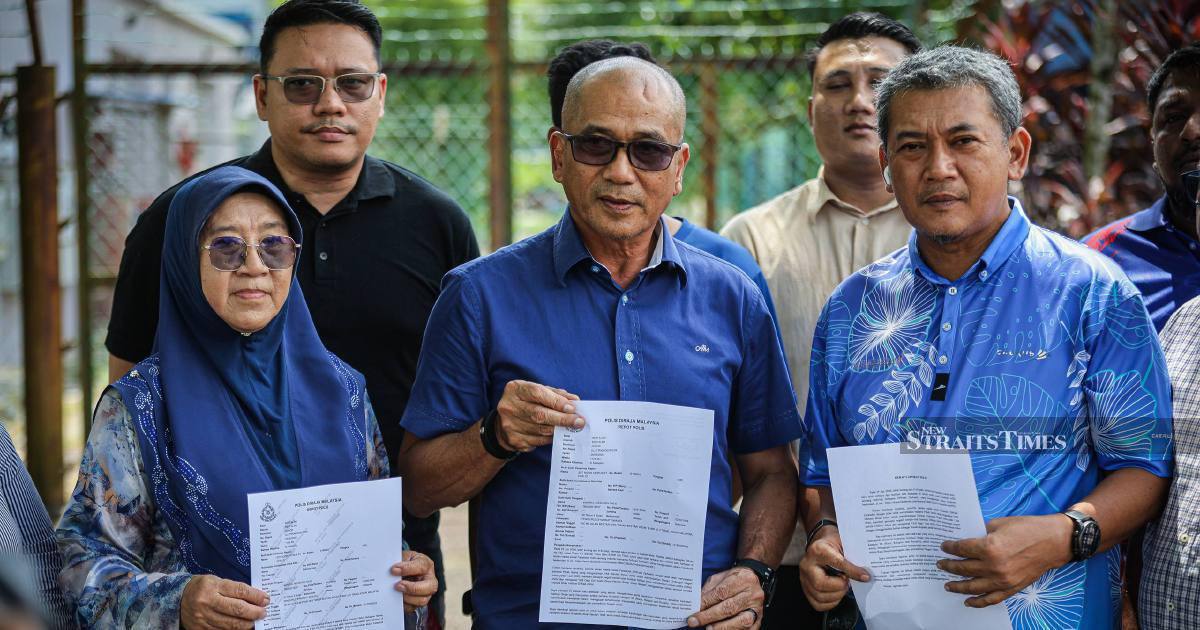
The Johor branch of Barisan Nasional has taken formal action against prominent Umno figure Datuk Dr Mohd Puad Zarkashi, with multiple party members submitting police reports in Johor Baru. The move reflects escalating tensions within the state's ruling coalition and underscores deepening rifts over governance and institutional roles in Johor's political landscape.
Puad, who previously held a position on Umno's supreme council, has made public allegations suggesting that the Johor palace exercises considerable influence over state-level political decisions and party affairs. These claims have proven inflammatory within Barisan Nasional circles, prompting swift and coordinated responses from party loyalists who view such statements as undermining both the coalition and the constitutional role of the palace.
The filing of police reports represents an escalation in what has been simmering discontent within Johor's political establishment. Rather than addressing Puad's allegations through internal party mechanisms, the decision to involve law enforcement signals that party leaders view his remarks as potentially crossing legal thresholds, whether through defamation, sedition, or other applicable statutes. This approach indicates a hardening of positions on all sides.
For Malaysian observers, the controversy highlights a persistent tension in the nation's constitutional framework: the relationship between constitutional monarchy and political party management, particularly at state level. Johor's royal institution carries substantial historical weight and institutional prestige, and any suggestion of improper interference in party politics touches on sensitive questions about the proper separation of roles. The palace traditionally maintains a position above partisan politics, and allegations to the contrary can be perceived as delegitimising.
The timing of these police reports gains significance within the broader context of Johor state politics, where questions of leadership succession, factional balance within Umno, and the distribution of political patronage have generated considerable friction. Puad's allegations, whether substantiated or not, tap into existing anxieties about power concentration and decision-making processes that operate outside formal democratic structures. This dynamic resonates particularly in a state where the palace holds considerable cultural and historical significance.
Within Umno itself, the incident exposes the party's vulnerability to internal criticism aired publicly rather than contained within closed-door discussions. The supreme council, to which Puad formerly belonged, is meant to represent the party's senior leadership consensus. When former members publicly challenge the governance narrative, it suggests fractures in party unity and raises questions about institutional discipline and communication protocols. Other party members may feel emboldened or obligated to respond defensively through formal channels.
The police reports themselves introduce a legal dimension that could complicate rather than resolve the underlying political grievances. Should investigations proceed, they may amplify Puad's allegations through media coverage of legal proceedings, extending the controversy's lifespan and public profile. Alternatively, swift dismissal of reports could appear to vindicate Puad's position and suggest collusion. Either outcome risks deepening polarisation within Johor's political elite.
For the broader Southeast Asian region, developments in Johor carry disproportionate weight. As Malaysia's second-most economically significant state and a major port and industrial hub, political instability in Johor creates ripple effects across regional trade and investment patterns. International observers and regional governments monitor succession planning and factional stability in Johor carefully, recognising that this state functions as a crucial economic gateway and logistics centre. Political dysfunction translates to operational uncertainty for businesses and investors.
The Barisan Nasional itself faces a credibility challenge in how it manages internal dissent and allegations of institutional misconduct. The coalition has positioned itself as a defender of constitutional order and institutional stability, yet responses like police reports may appear retaliatory rather than clarifying. Public confidence requires that parties address substantive allegations through transparent processes, whether within party structures or through legitimate external oversight, rather than relying solely on law enforcement mechanisms that can appear punitive.
Puad's background as a former supreme council member gives his allegations particular weight. He possesses insider knowledge of party operations and institutional dynamics that ordinary members lack. His willingness to make public statements despite potential legal consequences suggests conviction about the validity of his concerns, or alternatively, a calculation that he has sufficient political protection to withstand retaliation. Either interpretation raises questions about the confidence various factions place in institutional processes.
The response from Barisan Nasional members also deserves scrutiny regarding what constituencies they represent. Are police reports emerging from grassroots pressure, or do they reflect decisions by party leadership seeking to neutralise a critic? Understanding the genuine level of support for this punitive approach versus its instrumentalisation by particular factions would illuminate the state of party cohesion and democratic practice within Umno's Johor structure.
Moving forward, stakeholders in Johor politics face a choice between allowing this incident to fester through legal processes or seeking high-level reconciliation that addresses substantive concerns about governance. The palace itself maintains traditional silence on political controversies, placing burden on Umno and Barisan Nasional to manage internal relationships constructively. How the coalition responds will signal whether it prioritises institutional loyalty or substantive accountability—a distinction with implications extending well beyond state boundaries.

