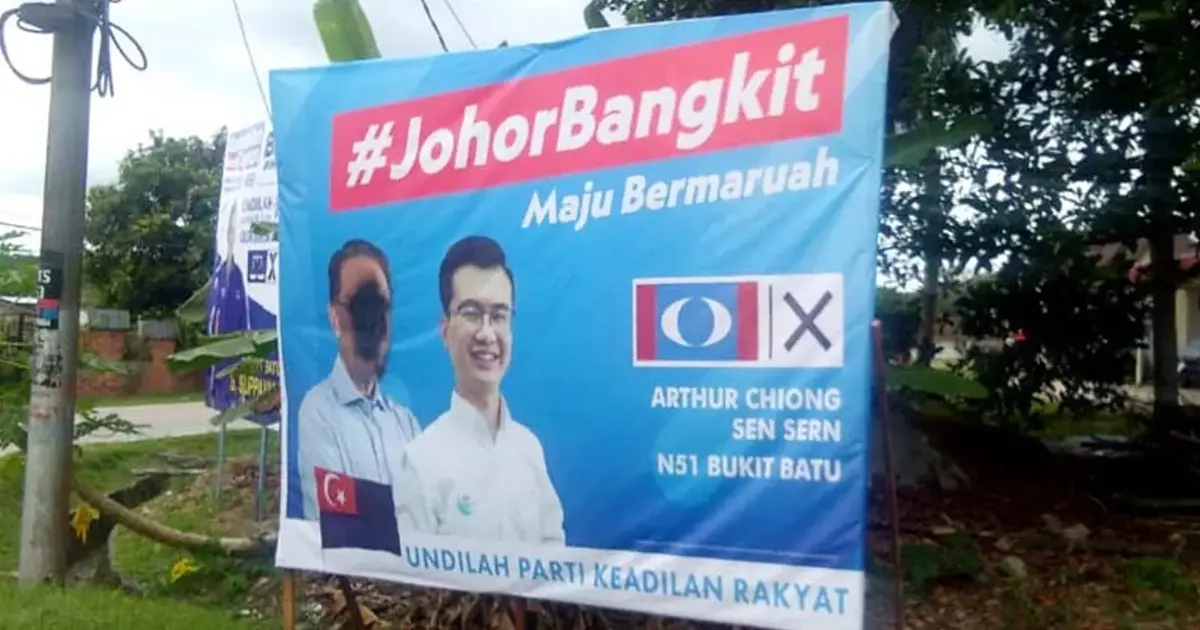
The Royal Malaysia Police received a total of 90 reports throughout the latest campaign period, with authorities subsequently opening 25 investigation papers to examine allegations, Inspector-General of Police Khalid Ismail disclosed. The decision to formalise investigations into roughly a quarter of all complaints reflects police discretion in determining which matters warrant deeper scrutiny, whilst the remainder were apparently addressed through other administrative channels or found lacking sufficient basis for formal action.
Khalid Ismail sought to downplay concerns about electoral misconduct by characterising the reported incidents as predominantly minor in nature. According to the Inspector-General, the matters attracting police attention involved issues such as vandalism rather than substantive breaches of campaign regulations or party-directed violations. This framing suggests that while the campaign period generated law enforcement activity, the underlying incidents did not constitute serious electoral offences that might compromise the integrity of the democratic process.
The distinction drawn between reports and investigations carries significance for understanding police enforcement patterns during electoral periods. Filing a police report represents a low threshold—any member of the public can lodge a complaint—whereas opening an investigation paper indicates police have determined there is sufficient information to warrant formal inquiry. The conversion rate of approximately 28 per cent suggests police applied filtering criteria to separate frivolous or unsubstantiated claims from allegations meriting systematic examination.
For Malaysian voters and observers monitoring electoral conduct, the characterisation of incidents as unrelated to parties or candidates represents an important clarification. Had a substantial portion of reports involved partisan activities or candidate misconduct, it would have signalled systemic problems with compliance and enforcement during the campaign. The Inspector-General's emphasis that these were standalone incidents rather than coordinated or party-affiliated activities suggests campaign management remained within acceptable boundaries, though the specific nature of the 65 reports that did not proceed to investigation remains unclear.
The handling of reports during campaign periods reflects broader questions about police impartiality and their role in electoral oversight. Whilst the Election Commission bears primary responsibility for enforcing campaign rules, police involvement in processing reports about vandalism and other offences intersects with electoral administration. The relatively modest number of investigations—25 cases—indicates that major campaign-period disruptions or infractions did not materialise, or alternatively, that police filtering mechanisms prevented numerous complaints from advancing further.
Regional context matters here, as Southeast Asian democracies face varying challenges with campaign conduct and electoral integrity. Malaysia's relatively structured approach, where reports are logged and selectively investigated, contrasts with less institutionalised systems. The transparency of Khalid Ismail in publicly releasing these figures and characterising their nature demonstrates a degree of openness about police involvement in electoral processes, though critics might argue that more detailed breakdown of offence categories and investigation outcomes would provide fuller transparency.
The timing of this disclosure, presumably after the campaign concluded, allows the Inspector-General to present a completed picture rather than reactive commentary during ongoing political competition. This timing also reflects standard police practice of releasing crime statistics and operational summaries after major events conclude. However, the absence of detail regarding whether investigations have concluded and what outcomes resulted from the 25 papers opened raises questions about accountability and follow-through in the electoral oversight system.
Vandalism specifically mentioned by Khalid Ismail—whether involving posters, campaign materials, or infrastructure—represents a common campaign-period offence across democracies. Such incidents, whilst disruptive and occasionally costly, fall outside the category of substantive electoral violations. Their prominence in the police complaint inventory might indicate heightened public sensitivity to perceived incivility during campaigns, or alternatively, reflect genuine increases in such behaviour. Without more granular data, this remains unclear.
The Inspector-General's reassurance that reports and investigations did not centre on party or candidate conduct may carry particular weight in the Malaysian context, where questions about fair enforcement and partisan bias in policing periodically surface. By emphasising that investigations focused on isolated incidents rather than systematic party conduct, Khalid Ismail implicitly addressed concerns that police might selectively target certain political actors. However, such assurances only strengthen public confidence if accompanied by documented evidence of even-handed enforcement across the political spectrum.
Looking forward, these figures provide a baseline for evaluating police engagement with campaign-period offences. Future campaign cycles will generate comparable data points that might reveal trends in complaint volumes and investigation patterns. If subsequent campaigns produce significantly higher or lower numbers, it would merit analysis into whether enforcement priorities have shifted, public behaviour has changed, or political actors have adjusted their conduct.
The disclosure also connects to broader discussions about maintaining democratic standards during high-stakes political competition. Campaign periods inherently generate tensions—heightened partisan activity, emotional public engagement, and occasional rule violations. Malaysia's approach of receiving complaints, filtering through investigation, and addressing incidents without apparent systemic bias represents a functioning, if imperfect, mechanism for managing these tensions. The 90 reports and 25 investigations suggest neither complete electoral disorder nor complete suppression of public complaints.
For Malaysian stakeholders monitoring democratic health, these statistics offer modest reassurance that campaign conduct remained broadly orderly. The fact that incidents were characterised as minor and unrelated to organised party activity suggests that substantive electoral violations—if any occurred—remained isolated rather than systematic. This distinction matters significantly for public confidence in electoral legitimacy and the perceived fairness of political competition across Malaysia's diverse states and constituencies.

