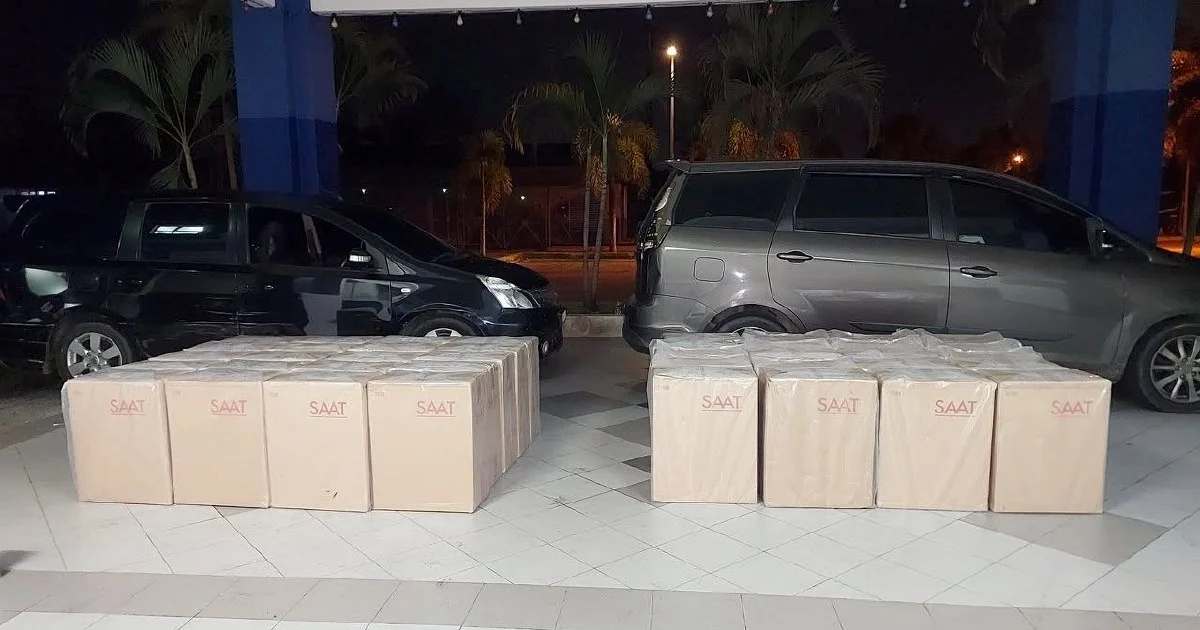
Authorities in Kelantan have arrested a 29-year-old man following an overnight pursuit that culminated in the discovery of a substantial cache of illicit cigarettes. The operation at Kampung Pulau Panjang in Kota Baru resulted in the seizure of approximately 400,000 cigarette sticks with an estimated street value of RM813,000, representing a significant blow to smuggling networks operating in the northern region.
The arrest highlights the ongoing challenge Malaysia faces in combating the illegal cigarette trade, which has become increasingly sophisticated and organised. Contraband tobacco products represent one of the highest-value illicit commodities flowing through regional borders, with syndicates employing coordinated logistics networks to move goods from neighbouring countries into domestic markets. The sheer volume of cigarettes recovered in this single operation underscores the scale at which these operations function.
Smuggling of duty-unpaid cigarettes remains a persistent problem across Southeast Asia, driven by significant price differentials between countries and the lucrative margins available to traffickers. Thailand and Myanmar remain primary source countries, with product reaching Malaysia through established corridors across the northern border regions. The retail price premium for smuggled cigarettes—often undercut by 30 to 50 percent compared to legal products—creates powerful demand among cost-conscious consumers while simultaneously depriving the Malaysian government of substantial excise revenues.
Kelantan has emerged as a particularly vulnerable transit point for such operations, given its geographical proximity to Thailand and the porous nature of cross-border movement in rural areas. The state's lengthy coastline and network of secondary roads provide multiple entry points that prove challenging for enforcement agencies to monitor comprehensively. This latest seizure reflects intensified enforcement efforts by customs and police units working to intercept shipments before they penetrate deeper into the peninsula's distribution networks.
The financial impact of cigarette smuggling extends beyond simple tax loss. The illegal trade undermines legitimate retailers and wholesalers who operate within the tax framework, creating competitive disadvantages that distort normal market dynamics. Furthermore, the proceeds from smuggling operations frequently finance other illicit activities, with organised crime syndicates diversifying into narcotics trafficking and human smuggling. By targeting major contraband shipments, law enforcement agencies aim to disrupt these broader criminal ecosystems.
Government revenue losses from illicit tobacco trade run into hundreds of millions of ringgit annually across Malaysia. These funds would otherwise support public healthcare, education, and infrastructure development. The World Health Organization has consistently highlighted how cigarette smuggling undermines tobacco control objectives, as cheaper illicit products encourage smoking initiation among price-sensitive populations, particularly youth in lower-income communities.
The chase component of this operation suggests the suspect attempted to evade apprehension, indicating awareness of the contraband's presence and value. Such pursuit operations carry inherent risks for both enforcement personnel and the public, making intelligence-led interdiction increasingly important. Police and customs agencies have progressively shifted toward intelligence gathering and surveillance operations targeting known smuggling networks rather than relying solely on reactive interception.
Malaysia's anti-smuggling strategy encompasses cooperation with regional counterparts through ASEAN frameworks and bilateral agreements. Coordinated border operations between Malaysian and Thai authorities, while challenging given resource limitations, have proven effective in disrupting supply chains. Information sharing and joint task forces represent evolving approaches to addressing transnational trafficking that no single agency can effectively combat alone.
The penalties for cigarette smuggling remain substantial, with offenders facing potential imprisonment and heavy fines under Malaysian customs and excise legislation. However, the persistent nature of the problem suggests that existing deterrents may be insufficient given the exceptional profit margins available to traffickers. Recidivism rates among convicted smugglers remain high, reflecting the economic desperation or criminal involvement driving participation in the trade.
Technological innovations in supply chain tracking and border surveillance continue improving authorities' capabilities. Advanced scanning equipment at entry points, coupled with intelligence databases tracking known smuggling networks, enable more targeted enforcement. However, resource constraints and the scale of cross-border commerce remain significant obstacles to comprehensive interdiction.
This seizure contributes to ongoing government efforts to protect revenue streams and public health objectives, though individual operations address only a fraction of the estimated illicit cigarette flow. Sustainable solutions require addressing underlying demand drivers through taxation policy refinement, supporting legitimate retailers, and strengthening border infrastructure. Regional cooperation initiatives must simultaneously evolve to match the sophistication of smuggling syndicates that exploit jurisdictional boundaries and regulatory gaps across Southeast Asia.

