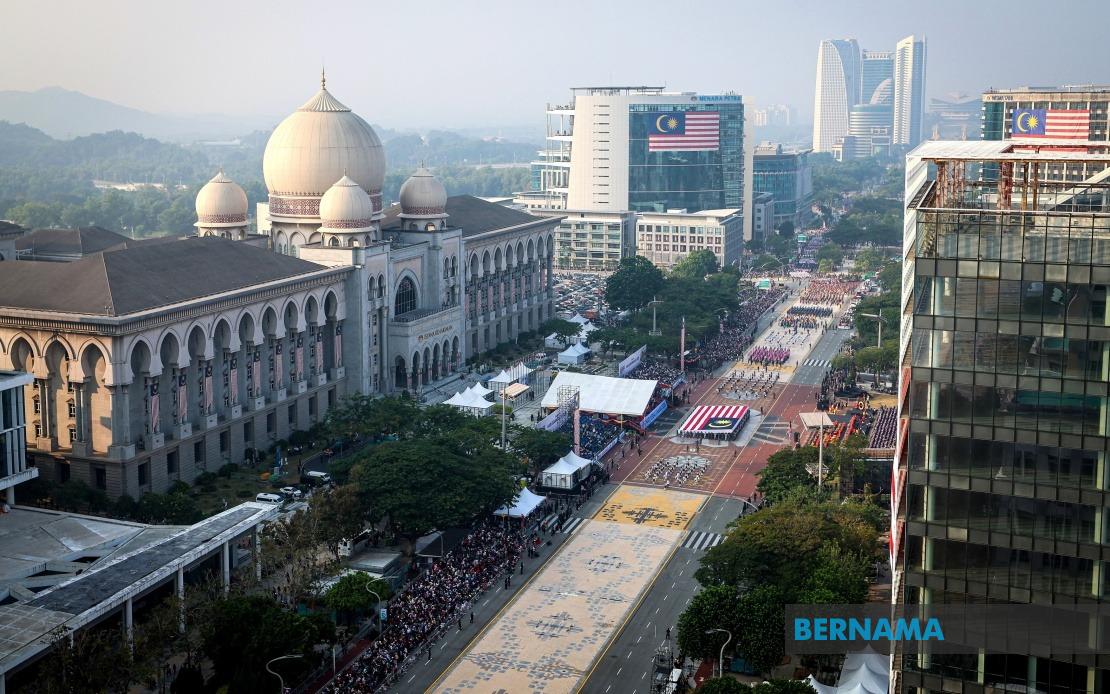
The Royal Malaysia Police (PDRM) has assigned a substantial security contingent of 2,354 personnel to safeguard Malaysia's 69th National Day celebration scheduled for August 31 at Dataran Putrajaya. This deployment represents a comprehensive approach to managing the anticipated crowd of more than 80,000 visitors expected to converge on the nation's administrative capital for the flagship civic event. The scale of the operation underscores the importance authorities place on delivering a secure and orderly celebration of the country's independence.
Putrajaya district police chief ACP Aidi Sham Mohamed outlined the operational scope during a media briefing following a full rehearsal of the ceremony attended by Communications Minister Datuk Seri Fahmi Fadzil. The police contingent will be distributed across two primary functions: maintaining static security positions at critical junctures and managing vehicle flow through the Dataran Putrajaya precinct and surrounding thoroughfares. This dual-track strategy reflects the complexity of orchestrating crowd safety while preserving accessibility for legitimate attendees.
The 2026 National Day celebration carries the theme "Malaysia MADANI: Kesejahteraan Dinikmati" (Malaysia MADANI: Prosperity Enjoyed), continuing the government's emphasis on shared prosperity and inclusive development. The choice of Dataran Putrajaya as the venue carries symbolic weight, positioning the celebration within the administrative heart of the federation and reaffirming the connection between national identity and institutional governance. The projected attendance of 80,000 visitors makes this event one of the year's most significant public gatherings in the Klang Valley region.
Authorities have issued a series of directives aimed at ensuring both security and public cooperation. ACP Aidi Sham appealed to attendees to arrive early, allowing time for security screening and orderly entry procedures. This advance arrival recommendation also distributes crowd pressure across a longer time window, reducing congestion and minimising the risk of incidents arising from bottlenecks or crush situations. Early entry further permits families with elderly members and children to navigate the venue without rushing.
Parking management forms a critical component of the operational plan. Police have explicitly warned against unauthorised parking in prohibited zones within and around Dataran Putrajaya, a directive reflecting experience from previous large-scale events where unregulated vehicle placement created traffic chaos and safety hazards. The emphasis on not blocking traffic corridors indicates that maintaining clear emergency access routes remains a paramount concern, allowing rapid response by medical and security personnel should incidents occur.
Personal security and property protection have been highlighted as individual responsibilities. The district police chief advised attendees to exercise heightened vigilance regarding their own safety and that of dependants, particularly children, while also guarding against theft of belongings. Large public gatherings historically present opportunities for pickpocketing and bag snatching; this public messaging attempts to activate community awareness as a preventative measure, effectively enlisting visitors as partners in maintaining a secure environment.
A particularly significant prohibition concerns the carrying of weapons or dangerous implements to the celebration. ACP Aidi Sham's explicit warning against bringing weapons reflects post-incident protocols adopted by Malaysian authorities in response to security developments in the region and globally. The messaging is designed to be clear and unambiguous, leaving no room for misunderstanding regarding what constitutes unacceptable conduct. The police have invested considerable effort in communicating this boundary in advance, signalling that enforcement will be rigorous.
The full-scale rehearsal conducted prior to the announcement demonstrates the comprehensive preparation undertaken by relevant agencies. Such rehearsals allow coordination teams to identify potential bottlenecks, test communication systems, verify crowd management barriers and signage, and practise response protocols in a controlled environment. The participation of Communications Minister Datuk Seri Fahmi Fadzil signals high-level government engagement with the operational requirements, ensuring that any concerns identified during rehearsal receive prompt executive attention.
Communications Minister Fahmi Fadzil confirmed that the 2026 National Day celebration will proceed according to established protocols and traditions. This assurance carries particular relevance in a regional context where public events have occasionally been subject to disruption or modification due to unforeseen circumstances. The minister's statement provided clarity to the public and to organisational partners about the government's commitment to delivering a normal, full-scale observance of the national holiday.
For Malaysian residents in the Klang Valley and visitors from other states, the August 31 event presents an opportunity to participate in national civic life while contributing to a broader sense of shared identity. The police mobilisation is designed not as an oppressive presence but as an enabling framework that permits large-scale public gathering to occur safely. For international observers and regional partners, Malaysia's capacity to organise such events demonstrates institutional competence and organisational maturity.
The anticipated attendance of 80,000 visitors places this celebration among Malaysia's most significant annual public assemblies, comparable in scale to major sporting events or religious observances. The logistical challenge of accommodating this volume of people safely requires coordination across multiple agencies including police, municipal authorities, traffic management, medical services, and venue management. The 2,354-officer deployment should be understood as the visible security component of a broader, multi-agency operational framework.
Looking forward, the success of the 2026 National Day celebration will be measured not merely by the absence of incidents but by the quality of the experience delivered to attendees. Smooth traffic flow, accessible parking arrangements, clear communication, and visibly professional security personnel contribute to public confidence and satisfaction. For future large-scale events, the operational lessons learned during the 2026 celebration will inform refinements to crowd management protocols and resource allocation strategies.

