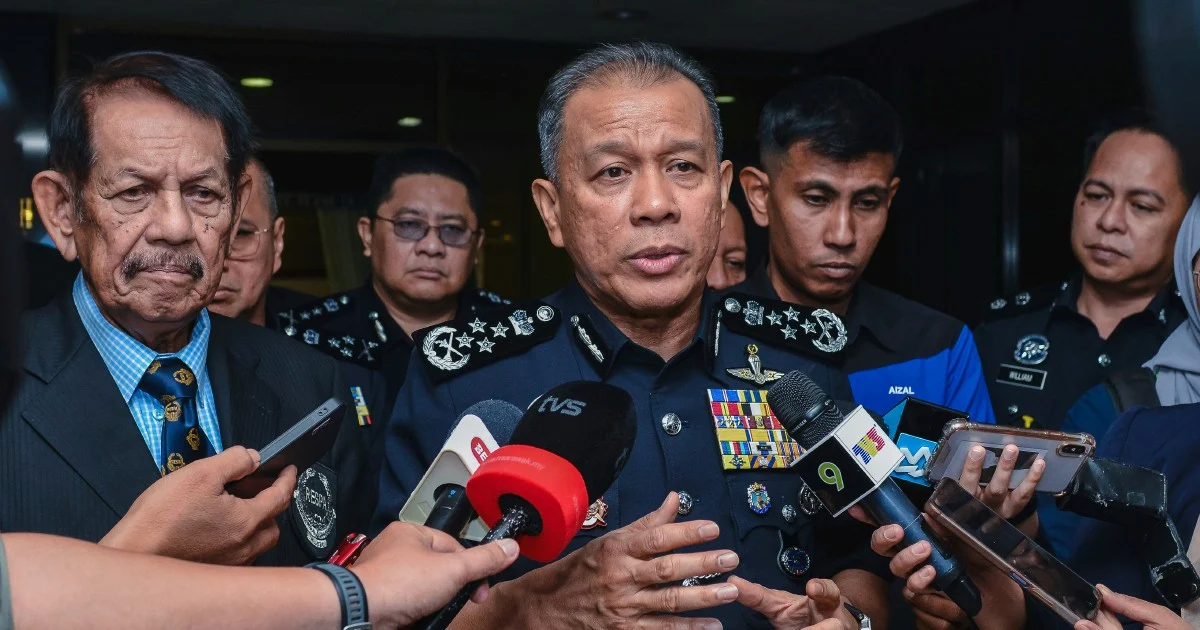
The Royal Malaysia Police has initiated formal disciplinary proceedings against one of its personnel following the emergence of a viral video that has drawn considerable public attention over the past week. The incident centres on allegations that the officer behaved disrespectfully toward Malaysian nationals while both were travelling in China, according to a statement from the Inspector-General of Police. The investigation represents the force's commitment to maintaining professional standards among its ranks and addressing concerns raised by the public regarding officer conduct.
The video, which circulated widely across social media platforms, triggered immediate scrutiny and debate within Malaysian online communities. Viral content involving uniformed personnel typically generates heightened public interest, particularly when the allegations involve discourteous treatment of fellow citizens abroad. This case has resonated with Malaysians concerned about the conduct of law enforcement representatives operating outside formal duty contexts or serving as unofficial representatives of the nation during overseas travel.
Disciplinary investigations conducted by the police force follow established protocols designed to gather evidence, interview relevant parties, and determine whether breaches of conduct standards have occurred. The fact that the Inspector-General made a public announcement signals the seriousness with which police leadership regards the matter and their determination to demonstrate accountability to the public. Such transparency in acknowledging investigations can help restore confidence in institutional processes, particularly when misconduct allegations gain widespread visibility.
The incident underscores broader questions about police officer conduct beyond official duties. Unlike military personnel who maintain strict protocols even during leave, police officers in Malaysia operate within more fluid boundaries between duty and personal time. Nevertheless, expectations exist that uniformed personnel should maintain composure and respect standards regardless of location or context, as they remain ambassadors of their institution and country. The conduct of Malaysian authorities abroad also reflects on the nation's image internationally, making such incidents matters of broader concern than just individual disciplinary issues.
Viral videos involving Malaysian authorities have increasingly prompted swift institutional responses in recent years, reflecting both the power of social media to amplify concerns and the willingness of leadership to act visibly. This case follows similar patterns where video evidence has triggered investigations into police conduct. The prevalence of smartphones and recording technology has created a new accountability mechanism parallel to traditional complaint channels, often forcing faster responses to potential misconduct than internal reporting alone would generate.
China has become an increasingly common destination for Malaysian travellers, whether for tourism, business, or studying abroad. A significant number of Malaysian nationals reside or work there temporarily. The dynamics of interaction between Malaysian police officers and other Malaysian nationals in Chinese territory introduces complexities around jurisdiction, institutional authority, and appropriate conduct. Police officers lack formal authority in foreign countries, yet may still be expected to maintain professional demeanour, particularly when interacting with fellow citizens experiencing difficulties.
The investigation will likely examine several dimensions: the context in which the interaction occurred, the specific nature of the allegations regarding insulting behaviour, whether the officer's conduct violated established codes of conduct, and whether any systemic issues contributed to the incident. Disciplinary processes typically involve gathering statements from the officer involved, witnesses, and the affected parties, reviewing any available video or photographic evidence, and determining the severity of any breach. The outcome could range from counselling and warnings to suspension or dismissal, depending on substantiated findings.
Public confidence in police institutions depends significantly on demonstrable consequences for misconduct. When officers' behaviour outside formal duty becomes subject to investigation and potential discipline, it signals that the institution takes its reputation seriously and does not tolerate behaviour that undermines public trust. This is particularly important in Southeast Asia, where concerns about police accountability remain relevant across multiple countries. Malaysia's willingness to investigate and publicly address such matters can strengthen perceptions of institutional integrity.
The case also reflects evolving expectations around social media as an accountability tool. The viral spread of the video created public pressure that likely influenced the decision to launch an investigation. While this democratisation of accountability has positive aspects—potentially addressing incidents that might otherwise be overlooked—it also introduces challenges around due process and proportionality. The formal disciplinary procedure can now incorporate evidence and context that social media discussions may not adequately address.
For Malaysian communities abroad, incidents involving compatriots and authorities carry particular significance. When Malaysian officials are perceived as treating fellow citizens poorly, it raises concerns about protection and representation. Conversely, swift institutional responses to such allegations can reassure Malaysians working or studying internationally that their country takes their dignity and fair treatment seriously, even in contexts where formal protections may be limited.
The investigation's outcome will likely influence broader discussions about police training, professional conduct standards, and expectations for officers in international contexts. It represents an opportunity for the institution to reaffirm its commitment to professionalism and to examine whether additional guidance or training regarding officer conduct abroad would be beneficial. As the force completes its inquiry, the results may inform future policies regarding officer behaviour standards beyond Malaysia's borders.