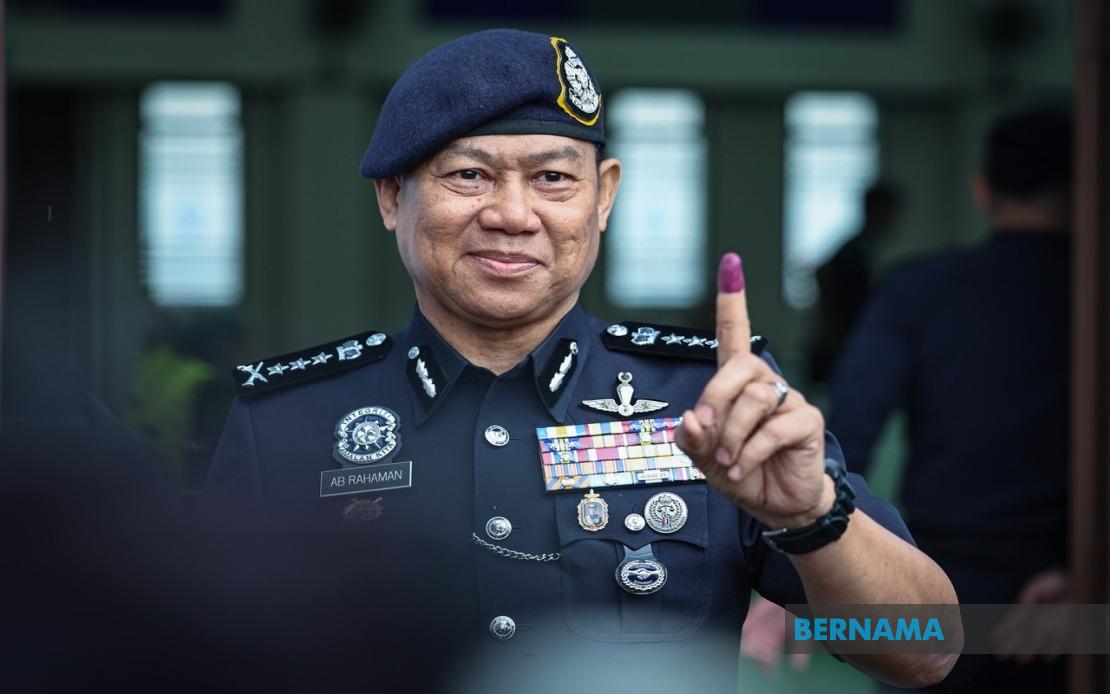
In the opening phase of early voting for Johor's 16th state election on July 7, security force personnel demonstrated brisk participation, with 4,257 police officers in the state casting ballots by 10:30 am, representing 36.3 percent of those eligible to vote ahead of the general poll. The early voting process, which extended to members of the Malaysian Armed Forces as well, unfolded without disruption across the 53 designated centres operating throughout the state, according to law enforcement authorities monitoring the exercise.
Johor police chief Datuk Ab Rahaman Arsad emphasised that the conduct of early voting remained orderly and incident-free, with no reports of disturbances or irregularities that might compromise the integrity of the electoral process. Speaking to journalists after fulfilling his own voting duty at the Johor Police Contingent Headquarters in the state capital, he noted that the true scale of early voter turnout would only become apparent once all polling stations concluded operations during the afternoon. His observation underscored the provisional nature of the mid-morning figures, reflecting participation levels among uniformed personnel rather than the broader electorate.
The infrastructure supporting early voting encompassed 64 dedicated polling centres that commenced operations simultaneously at 8 am, accommodating a total of 20,607 registered early voters drawn from security and defence establishment circles. The staggered closure schedule, with centres shutting down between noon and 6 pm depending on their specific locations and the volume of registered voters assigned to each, demonstrated logistical planning aimed at managing voter flows efficiently. This phased approach reflected the geographical spread of polling sites across Johor's expanse and the varying concentration of eligible early voters in different regions.
Ab Rahaman acknowledged that no grievances, complaints, or security breaches had surfaced that could threaten the smooth administration of early voting procedures. His public reassurance carried particular significance given the charged political atmosphere surrounding the election, with potential tensions always present during campaigns. The absence of reported incidents at this stage suggested either effective security arrangements or, at minimum, that the early voting environment had remained relatively calm compared to the broader campaign period.
The campaign phase leading up to the election had generated numerous police reports, with the majority concerning vandalism and the destruction or defacement of campaign materials. Political parties and candidates compete vigorously during elections, and such incidents involving flags and billboards represent commonplace expressions of this rivalry, though their documentation nonetheless signals an undercurrent of heightened political activity. These episodes, while typically minor, collectively indicate the intensity of the electoral contest and the investments candidates and parties have made in their campaign infrastructure.
One particularly contentious matter remained under investigation: allegations levelled by former Johor State Assembly Speaker Datuk Dr Mohd Puad Zarkashi regarding supposed Palace interference in the state legislative assembly's dissolution. Police had received 153 reports nationwide as of the afternoon preceding the early voting exercise, reflecting the inflammatory nature of the claims and the public concern they had generated. The ongoing investigation into this matter signalled that law enforcement was treating the accusations with appropriate seriousness, though the police chief provided no details regarding the trajectory or timeline of the inquiry.
The broader electoral context involved a substantial number of contestants vying for representation, with 172 candidates registered to contest across the 56 state assembly seats that comprise Johor's legislature. This candidate-to-seat ratio suggested a reasonably competitive field, with multiple aspirants pursuing many positions and creating complex three-way or multi-cornered contests in various constituencies. The diversity of candidacies reflected both the political dynamism within the state and the competitive positioning of different parties and independent candidates seeking to influence the composition of the state assembly.
Johor's registered voter population, exceeding 2.7 million, positioned the state as a significant electoral battleground within Malaysia's broader political landscape. The forthcoming Saturday polling day represented the culmination of weeks of campaigning and would determine which parties and individual candidates secured the mandate to govern the state for the ensuing term. The scale of the electorate underscored Johor's demographic weight and its importance to national political calculations, as outcomes here carry implications extending beyond the state's boundaries.
Early voting systems, while facilitating participation among uniformed personnel who may face scheduling constraints on general polling day, also serve as an indicator of engagement levels and procedural effectiveness before the main election unfolds. The 36.3 percent participation rate among eligible police voters suggested reasonable enthusiasm for exercising the franchise, though the figure neither definitively predicted nor precluded strong turnout when the broader civilian electorate votes on Saturday. Security personnel's voting patterns have historically reflected high engagement rates compared to the general population, reflecting both their organisational structure and the emphasis placed on civic participation within uniformed services.
The smooth administration of early voting, assuming the police chief's accounts prove accurate, would likely reinforce confidence in the Electoral Commission's operational capabilities heading into the main polling exercise. Any disruptions or administrative failures at this preliminary stage could have generated questions about readiness for managing the significantly larger voter turnout anticipated on Saturday. The professional conduct of early voting, therefore, carries symbolic importance beyond the mere logistics of securing 4,257 police votes, representing institutional competence and the state's readiness for the democratic exercise ahead.
The Johor election carries significance for understanding regional political dynamics and factional alignments within Malaysia's complex political ecosystem. The state has historically served as a barometer for broader national political trends, and outcomes here frequently influence perceptions of momentum and viability among competing political coalitions. The competition across 56 seats would determine not only local representation but potentially influence calculations regarding state and federal political alignments, making the Saturday polling day consequential for Malaysian politics beyond Johor's immediate jurisdiction.

