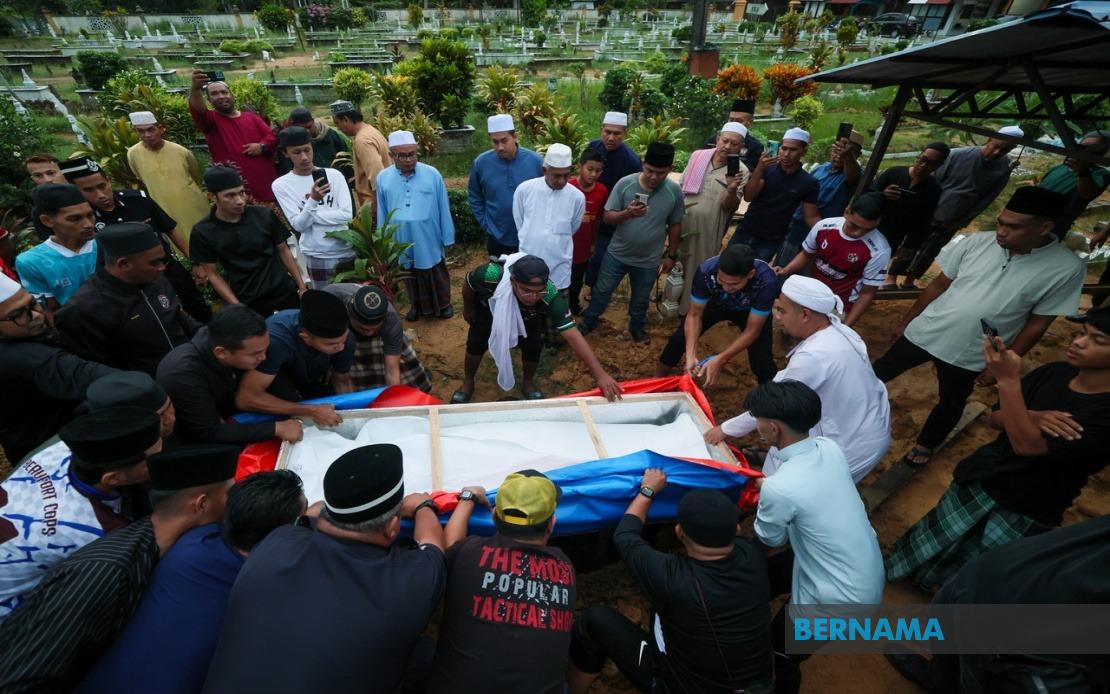
Corporal Mohamad Nur Hafiz Rahim, 29, was laid to rest at the Kampung Pangkal Kuang Muslim Cemetery in Ketereh, Kelantan on the morning of August 8, concluding a sombre farewell for the police officer who died in an electrical accident at Weston Police Station in Beaufort, Sabah. The funeral service was held at his family home in Kampung Hutan Pasir before the burial took place, marking the end of a tragic chapter for his relatives who had maintained close contact with him throughout his posting in Malaysian Borneo.
The incident that claimed Mohamad Nur Hafiz's life occurred at 5.50 pm when he and two fellow officers were electrocuted while handling a 29-foot metal pole designed to harvest coconuts. The pole, positioned outside the police station near Sekolah Kebangsaan Weston, came into contact with electrical lines while being moved by the three personnel. The accident instantaneously claimed all three lives, representing a devastating loss to the Royal Malaysia Police and their respective families across the country.
Besides Mohamad Nur Hafiz, two colleagues perished in the same incident. Corporal Chiu Teck Siong, a 40-year-old officer from Sarawak, and Constable Muhammad Raimi Ismarubee, 26, from Terengganu were also killed. The deaths underscore the occupational hazards faced by law enforcement personnel and raise serious questions about workplace safety protocols at police installations throughout the nation.
Modamad Nur Hafiz's eldest sister, Nurlella Rahim, 34, expressed gratitude to the Royal Malaysia Police for its assistance in coordinating the return of her brother's remains to their hometown. Speaking to journalists at the cemetery, she noted that his body had arrived early in the morning at 4.45 am, allowing the family to proceed with funeral arrangements according to Islamic traditions and family wishes. The logistical support provided by PDRM demonstrated institutional responsibility during a moment of profound loss.
Family members painted a portrait of a devoted officer who maintained strong bonds with his relatives across geographical distances. The five siblings were exceptionally close, regularly connecting through video calls and digital communication platforms. Despite being stationed in Sabah while other family members lived in peninsular Malaysia—including Nurlella in Ipoh, Perak—Mohamad Nur Hafiz made deliberate efforts to participate in family life through technology, participating in daily video calls and engaging actively in their shared family WhatsApp group.
The nature of these connections revealed a man committed to his loved ones despite professional responsibilities. His interactions with his mother in his final days illustrated his character; during their last video call on Thursday afternoon, though visibly fatigued from work, he made effort to communicate and reassure her despite his tiredness. He prioritised family contact even during brief breaks in his shifts, demonstrating the importance he placed on maintaining relationships across the distance.
Nurlella recounted that her most recent video call with her brother occurred on Sunday, when he had taken his wife Fatimah Shahira and their child to the beach—a moment capturing the normalcy of family life that would be shattered just days later. These small details, cherished in memory, underscore the unexpected and arbitrary nature of workplace accidents that can extinguish lives in seconds without warning.
The tragedy prompted immediate high-level attention from Malaysia's political leadership. Prime Minister Datuk Seri Anwar Ibrahim ordered a comprehensive, transparent, and expedited investigation into the incident, recognising the gravity of losing three officers simultaneously. Through a Facebook statement, Anwar emphasised that understanding the root causes was essential not merely for answering questions about what went wrong, but for implementing preventive measures that could shield other officers from similar fates in future.
The investigation carries significant implications for police workplace safety standards nationwide. The use of extended metal poles near electrical infrastructure at police facilities suggests potential gaps in hazard assessment and operational procedures. Whether inadequate warning systems, insufficient safety equipment, or deficient training protocols contributed to the tragedy remains to be determined through formal inquiry. Malaysian law enforcement agencies will likely face scrutiny regarding how comprehensively they evaluate environmental risks and equip officers to manage potentially lethal situations.
This incident resonates across Southeast Asia's security apparatus, where occupational hazards and workplace safety remain inconsistently addressed concerns. For Malaysia specifically, the loss of three experienced officers—including two corporals with significant service tenure—represents not only a human tragedy but potential operational capacity reduction within Sabah's policing operations. The psychological impact on colleagues at Weston Police Station and similar installations across the state will undoubtedly require institutional support and transparent communication about preventive measures implemented subsequently.
The investigation will likely examine whether standard operating procedures existed for handling equipment near electrical infrastructure, whether proper risk assessments were conducted before the operation commenced, and whether personal protective equipment or isolation protocols could have prevented the tragedy. These findings will shape future safety frameworks affecting thousands of officers nationwide who perform outdoor operations under comparable conditions.

