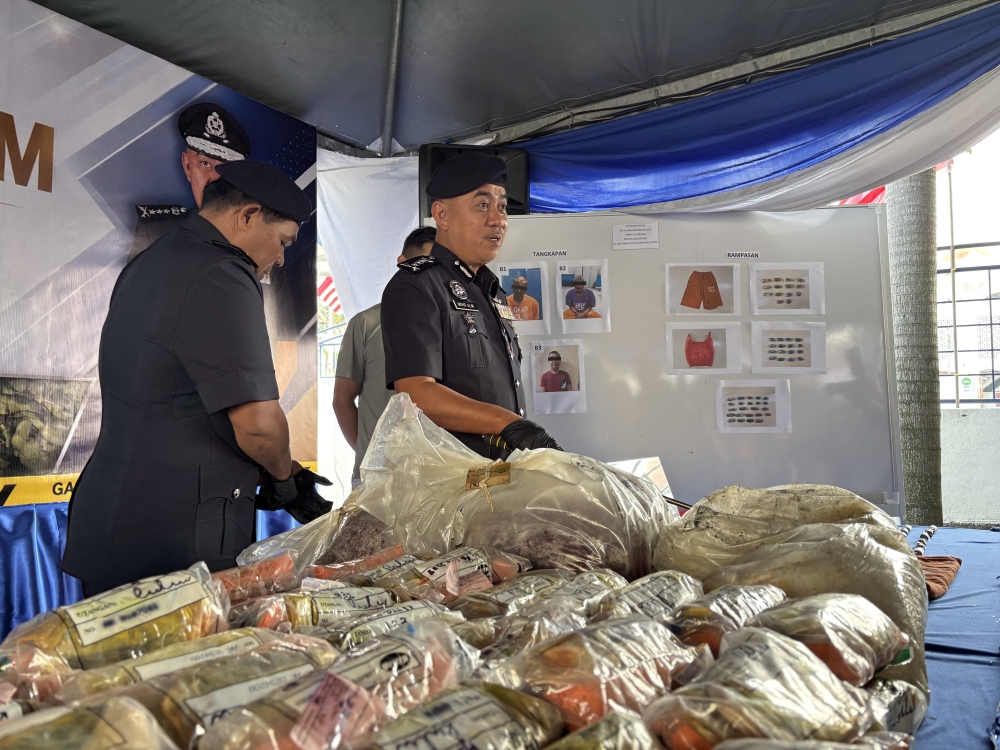
A serving police constable in Perak now faces serious charges after becoming entangled in a major drug investigation centred on a discovery made within the Lumut police station itself. The officer was among three men taken into custody following a raid that uncovered methamphetamine, heroin and cannabis with a combined street value of RM18,534. The incident has raised fresh concerns about security and oversight within police holding facilities in the northern region, and serves as a sobering reminder of the persistent challenge of substance abuse infiltrating law enforcement ranks.
The arrested individuals were detained following what authorities describe as a routine security inspection that yielded the illicit haul. The specific circumstances surrounding how the drugs came to be stored within the cell remain under investigation, though the involvement of an active-duty police officer suggests potential breaches in facility protocols and custody procedures. Such discoveries are particularly damaging to institutional credibility, as police stations are meant to serve as secure environments where evidence is preserved and detainees are safely held under controlled conditions.
The seizure itself comprises a significant quantity of controlled substances. Methamphetamine, commonly known as ice or shabu in Malaysia, remains among the most sought-after recreational drugs in the region and carries substantial street value. The presence of heroin alongside crystal methamphetamine indicates a sophisticated operation, as traffickers typically maintain diverse drug inventories to serve different customer segments and maximise profitability. Cannabis, though increasingly decriminalised or legalised in other jurisdictions worldwide, remains a controlled substance under Malaysian law with serious penalties for possession and trafficking.
The arrest of a police constable introduces an additional layer of complexity to the investigation. Law enforcement personnel occupy positions of significant trust within society, and their involvement in drug trafficking undermines public confidence in the broader police institution. The Royal Malaysia Police has in recent years implemented enhanced screening and integrity testing programmes to prevent such infiltration, yet cases continue to emerge, suggesting that determined individuals can circumvent existing safeguards. The constable's specific role and access level at the Lumut station will likely form a crucial component of the prosecution's case.
From a systemic perspective, this incident reflects broader vulnerabilities in the Malaysian drug control architecture. Despite substantial investment in enforcement and interdiction operations, traffickers continue to exploit weaknesses within institutional structures. The involvement of police personnel, whether through direct participation, negligence or coercion, represents a critical vulnerability that undermines the effectiveness of drug prevention efforts. Investigations into such cases typically examine not only the individuals directly involved but also the management systems and oversight mechanisms that permitted the breach to occur.
The Lumut station discovery also highlights the ongoing struggle with methamphetamine availability throughout the peninsula. Despite aggressive campaigns targeting production and smuggling routes, the drug maintains a strong presence in Malaysian communities. The street value of RM18,534 suggests volumes substantial enough to supply local distribution networks for an extended period, indicating that this particular seizure likely represents only a portion of the wider trafficking operation.
For law enforcement agencies in Perak and nationwide, such incidents necessitate reassessment of security protocols within police facilities. Enhanced compartmentalisation of access, improved surveillance systems, more frequent integrity audits and stronger custody documentation procedures are among measures typically recommended following breaches of this nature. The challenge lies in implementing such measures without creating excessive bureaucratic burden that impairs operational efficiency.
The investigation into the three arrested individuals will inevitably focus on establishing supply chains, identifying buyers and disrupting the networks through which these drugs reached Lumut. Police have typically found that drug seizures of this magnitude often reveal connections to larger trafficking syndicates, particularly those operating across state borders or involving cross-border smuggling through Thailand or other neighbouring territories.
International dimensions may also emerge during the investigation. Methamphetamine available in Malaysia frequently originates from clandestine laboratories in Myanmar and Thailand, where production continues despite regional enforcement efforts. The presence of such quantities within a police facility suggests either domestic production or established smuggling pipelines, both of which carry implications for broader regional drug control efforts and bilateral cooperation agreements.
For Malaysian observers, this case underscores the persistence of drug-related challenges despite substantial law enforcement resources directed toward the issue. The involvement of a police officer, rather than external traffickers, indicates that prevention strategies must extend beyond external interdiction to encompassing rigorous internal discipline and institutional integrity monitoring. The coming months will reveal what organisational failures permitted this situation to develop and what systemic reforms emerge in response.

