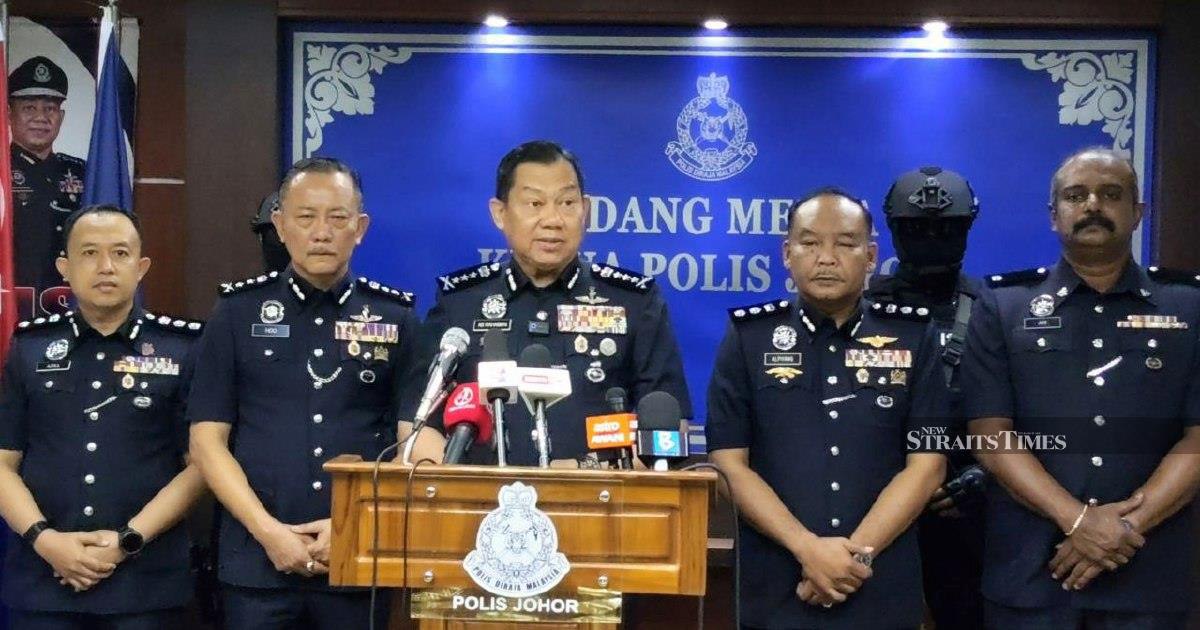
In a major blow against drug trafficking in southern Malaysia, Johor Baru police executed coordinated raids on Saturday that resulted in the seizure of 60.78kg of methamphetamine with a street value of RM3.04 million and the arrest of eight men suspected of involvement in a sophisticated narcotics distribution network. The operation represents one of the most significant drug busts in the state's recent months, underscoring both the scale of the methamphetamine problem in the region and the escalating determination of law enforcement to dismantle trafficking operations at their source.
The revelation that one of the detained individuals was a school dropout acting as a transporter illustrates a troubling trend across Southeast Asia, where criminal syndicates deliberately recruit young people with limited legitimate economic prospects to serve as couriers and handlers. The youthful transporter's involvement suggests that organised crime groups are deliberately expanding into recruitment pools that may offer less resistance from authorities and greater desperation for money. Such practices have become increasingly common not only in Malaysia but throughout the region, as trafficking organisations seek to insulate their senior operatives from direct law enforcement contact.
Methodology in drug trafficking networks typically follows clear operational patterns. The seizure of such a substantial quantity suggests this was not merely a street-level operation but rather part of a more organised structure with supply chains, distribution channels, and multiple layers of personnel. The concentration of arrests in a single jurisdiction during a single day indicates that police intelligence operations had been tracking the network's movements for some time, likely through surveillance, informant networks, or international tip-offs from counterparts in Thailand or other neighbouring jurisdictions.
The valuation of RM3.04 million attached to this seizure reflects current market prices for methamphetamine in Malaysia, where the drug commands premium prices due to stringent supply constraints imposed by enforcement operations. These economics make the risks attractive to trafficking organisations operating in the Golden Triangle region, where production facilities in Myanmar and Laos maintain steady supply pipelines flowing into Malaysia, Thailand, and Singapore. The sheer profitability of methamphetamine trafficking creates powerful incentives that persist despite heavy penalties, including potential death sentences under Malaysia's drug laws.
Johor Baru's position as a major transit point has made the state a persistent focal point for drug enforcement activities. Situated directly across from Singapore and with well-developed road, rail, and sea infrastructure, the Iskandar region has become an attractive corridor for traffickers seeking to move drugs southward toward the Singapore market, where prices are even higher than in Malaysia. The port facilities and highway networks that have driven Johor's economic development have inadvertently created infrastructure that facilitates illicit commerce.
The involvement of eight individuals in this single operation raises questions about the organisational depth of the network. Sophisticated trafficking groups typically employ specialised roles—wholesale handlers, mid-level distributors, street dealers, couriers, and lookouts—suggesting a vertically integrated structure. The fact that police arrested multiple personnel simultaneously indicates they had mapped out sufficient connections within the chain to justify simultaneous detention across several locations, rather than executing sequential arrests that might allow network members to flee or destroy evidence.
Young involvement in drug trafficking represents a critical vulnerability point for enforcement and a tragic social development for Malaysian society. When school-age youth become essential elements of trafficking operations, it reflects both the attractiveness of quick money for those without educational qualifications and the deliberate strategy of trafficking organisations to exploit demographic desperation. Johor, with its significant migrant worker populations and pockets of economic disadvantage despite overall development, creates environments where such recruitment becomes possible.
The methamphetamine trade in Malaysia differs fundamentally from heroin addiction patterns that dominated previous decades. Methamphetamine's stimulant properties, rapid addiction profile, and potential for rapid profits make it particularly attractive to trafficking networks. Southeast Asia has witnessed methamphetamine consumption surge dramatically over the past fifteen years, with production in clandestine laboratories across the Myanmar-Laos border supplying increasingly sophisticated crystalline forms that command premium prices and generate intense user demand throughout the region.
Forces underpinning this continued drug trafficking extend far beyond Malaysia's borders. Production in Myanmar, driven by insurgent groups and organised crime syndicates, creates constant pressure in supply chains. ASEAN nations lack coordinated enforcement mechanisms sufficient to address production at source, and international cooperation through the United Nations Office on Drugs and Crime remains inconsistent. Regional variations in sentence severity and enforcement capacity create gaps that sophisticated trafficking organisations exploit through route diversification and transshipment point rotation.
Beyond the specific network dismantled through these raids, law enforcement's continued success in intercepting major consignments demonstrates that Malaysian police and customs agencies maintain operational capability despite resource constraints. Intelligence-led enforcement operations that target trafficking infrastructure rather than focusing exclusively on street-level retail represent more effective policy approaches. However, sustained success requires maintaining pressure on distribution networks while addressing underlying demand through rehabilitation and education initiatives.
The detention of eight individuals creates opportunities for intelligence gathering that may extend investigation into broader network structures. Police interrogation of these suspects can potentially uncover upstream suppliers, downstream distribution contacts, and financial mechanisms used to launder trafficking proceeds. Such intelligence, when properly analysed and shared across ASEAN law enforcement agencies, contributes incrementally toward degrading network capabilities and disrupting supply chains entering Malaysia.
The RM3.04 million seizure, while substantial, represents merely a fraction of methamphetamine passing through Malaysian territory toward final markets in Singapore and beyond. Industry estimates suggest that law enforcement agencies typically intercept only a small percentage of total illicit drug flows. Nonetheless, these operations demonstrate that Malaysia's drug enforcement capacity remains active and capable of mounting significant operations against organised trafficking groups.

