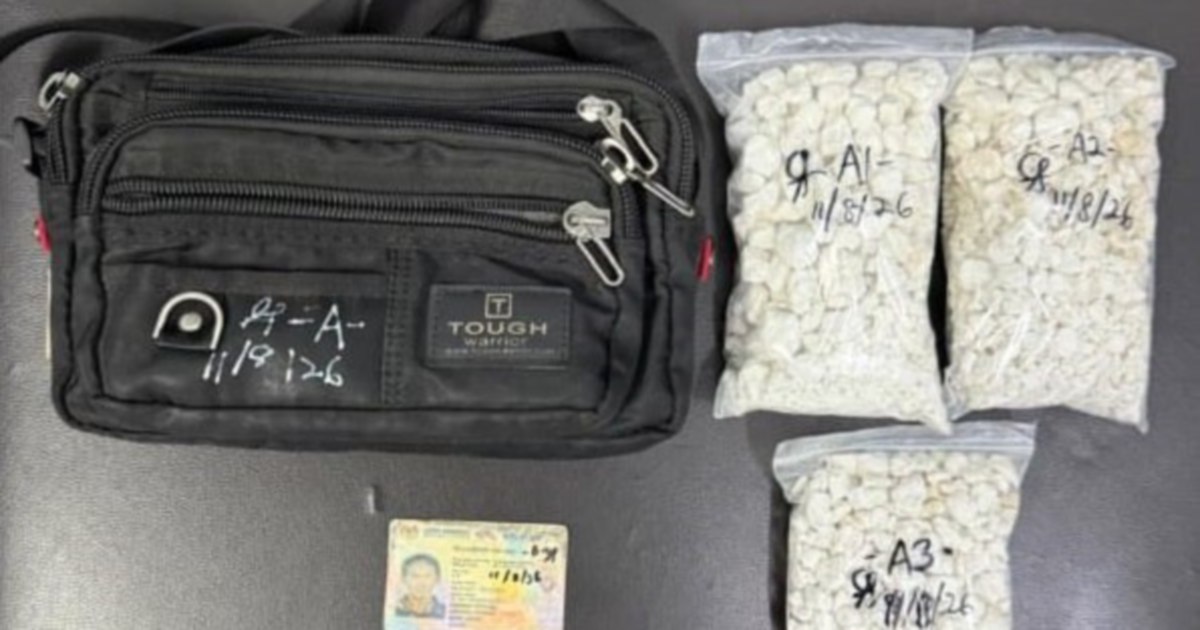
Law enforcement authorities in Johor have successfully intercepted a significant quantity of heroin during an early morning raid conducted in the Simpang Renggam district. The operation, which forms part of ongoing efforts to combat narcotics trafficking in the region, culminated in the recovery of 1.055 kilogrammes of the controlled substance and the apprehension of a single individual aged 42 years. Police have valued the seized material at approximately RM10,128, reflecting current street prices for heroin in the area.
The timing of the raid, carried out in the predawn hours, demonstrates the tactical approach adopted by narcotics units to maximise the element of surprise and prevent suspects from disposing of evidence or fleeing before arrest. Such operations require substantial coordination between various police divisions and often involve weeks of surveillance and intelligence gathering. The decision to move in at this particular moment suggests that officers had built sufficient probable cause to justify the operation, with the results validating their investigative groundwork.
Simpang Renggam, situated within the Kluang district of Johor, occupies a strategically significant position in Peninsular Malaysia's drug trafficking networks. The area's location along major transport routes makes it vulnerable to becoming a transit point for narcotics moving between regions. Recent years have witnessed escalating drug-related activity throughout Johor, prompting authorities to intensify enforcement operations in towns and rural areas alike. This particular seizure represents the type of granular, community-level intervention that police hope will disrupt supply chains at their most vulnerable points.
The arrested individual now faces serious criminal charges under Malaysia's harsh drug laws, which distinguish between trafficking and possession based on quantity thresholds. The 1.055 kilogramme quantity falls well above levels typically associated with personal use, placing the suspect firmly in trafficking territory under the Dangerous Drugs Act 1952. Conviction for trafficking in heroin carries mandatory minimum sentences and potential capital punishment for quantities exceeding 15 grammes, creating severe legal jeopardy for the accused.
This operation aligns with broader national drug enforcement priorities articulated by the Royal Malaysia Police. The force has consistently emphasised its commitment to dismantling trafficking networks that flood Malaysian streets with opioids and other substances. Heroin remains among the most destructive drugs affecting Malaysia's communities, driving addiction rates and associated crimes including robbery and violence. Each successful seizure removes product from circulation and sends deterrent messages to potential traffickers considering similar operations.
The Johor Narcotics Task Force and regional units have demonstrated notable effectiveness in recent months, with multiple large seizures indicating sustained pressure on supply networks. The cumulative impact of such arrests and confiscations theoretically reduces availability and increases prices, potentially discouraging some potential users. However, law enforcement alone cannot resolve Malaysia's drug epidemic, which demands simultaneous investment in treatment facilities, rehabilitation programmes, and demand reduction initiatives.
International factors complicate Johor's drug enforcement landscape considerably. The region lies within accessible distance of major heroin production zones in Southeast Asia, particularly Myanmar and Laos, where opium cultivation remains endemic despite eradication efforts. Transnational trafficking organisations have developed sophisticated distribution networks exploiting porous borders and coastal vulnerabilities. These criminal enterprises employ couriers who move product through Malaysia towards Singapore and Australian markets, generating enormous profits that fuel further criminal activity and corruption.
The socioeconomic dimensions underlying Malaysia's drug problem require examination alongside enforcement operations. Youth unemployment, limited educational opportunities in rural areas, and inadequate social services create vulnerability factors that traffickers exploit. Individuals facing economic desperation sometimes accept employment within trafficking organisations, unaware of or accepting the extreme legal and personal risks. Addressing these root causes demands sustained government investment in education, vocational training, and economic development programmes alongside police operations.
For Malaysian communities grappling with drug-related harms, this seizure represents a tangible victory but not a complete solution. Heroin addiction destroys families, perpetuates cycles of poverty, and generates secondary crimes that ripple through neighbourhoods. Every successful police operation prevents harm to vulnerable individuals and potential victims of drug-related violence. The arrest and prosecution of traffickers sends signals that Malaysia takes drug enforcement seriously, though observers note that sentencing inconsistencies sometimes undermine deterrent effects.
Looking forward, this operation exemplifies the type of intelligence-driven policing that regional authorities must prioritise. Strategic cooperation between federal, state, and local agencies, combined with intelligence sharing across borders, offers the most promising approach to disrupting trafficking networks. Malaysian police have increased such cooperation with international partners, recognising that narcotics represent a transnational threat requiring transnational responses. Investment in forensic capabilities, financial investigation units, and precursor chemical monitoring strengthens enforcement effectiveness beyond simple street-level arrests.

